Tag Archives: british columbia

Katzie Artifact Gallery

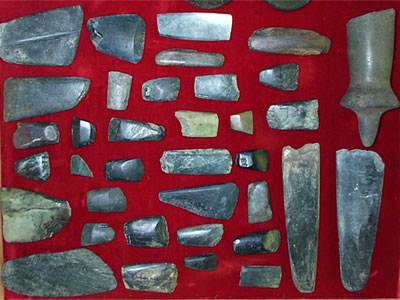
Ground stone celts (adze and chisel blades). Source: Katzie.ca

Hmmm: the pictures are low resolution, there isn’t much annotation, many are of replicas, and the page design HTML is wonky, causing a lot of sideways scrolling.  Yet I really like the Katzie First Nation’s artifact gallery.  And no, its not only because they give ground stone its rightful pride of place.  Though, in the image above, feast your eyes on the uppermost left specimen – an unusual yet definitive example of a broad celt being bisected to form two narrow ones.  In essence, an adze is being turned into two chisels.  Chew on that, Spaulding and Ford. Also check out the specimens in the centre-right, where the sharpened bits differ in colour from the bodies.  These are either patinated specimens subsequently reground and recycled, or speak to a process of heat treating or oiling or similar to enhance the raw material.  You could read all about this in my M.A. thesis if it were online, which it isn’t.  Or wasn’t until five minutes ago.  But I digress.

What I like is the text associated with these images.

Continue reading

CRM problem at Englishman River

Excavation of house foundations at Englishman River. Source: CBC

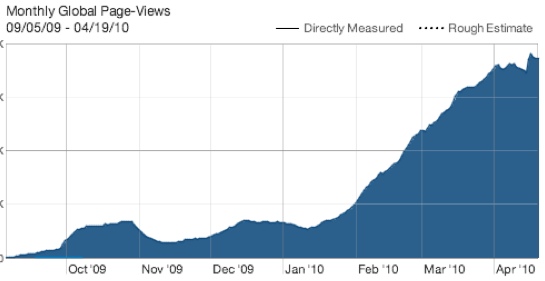
Hmm, I just noticed today is the first anniversary of this blog.  Mind you, it was a slow and intermittent affair at first but with more regular posting has come steady increase in readership.

But you know who else had a birthday on April 20th?

With that in mind, what better way to celebrate than by checking out the firestorm brewing on the Englishman River, where some landowners, perhaps wilfully ignorant, have had an unfortunate series of events transpire regarding an archaeological site on their property. The Archaeology Branch has responded to the story with a terse memo.

A little background to start:

All archaeological sites in B.C. dating to before 1846 A.D. are protected under the Heritage Conservation Act.  This is true whether or not they are known to the Archaeology Branch or unknown and unrecorded.  In some ways, then, it is not relevant that the site under these people’s house was first recorded, I am told, in 1975.  Even if it was first discovered by the application of a backhoe in April 2010, it would be accorded the same protection under the law. The fact that the landowners claim to have not known about the site until recently is an interesting issue that does not really materially affect the facts of this case. And, under the standard procedures in place, they are indeed responsible for paying the costs of the archaeological investigations, in this case reported to be $35,000.  Whether or not they have the money also doesn’t affect the facts of the case – incidentally, these people who self-portray as poor and unemployed are finding archaeology because they are building a new house on their property, which must be costing them several hundred thousand dollars.

So, these facts may not actually alter the legal responsibilities, but they do however very strongly affect the way this issue is seen to be unfolding.

Continue reading

Aboriginal Bridges of Northwestern B.C.

Bridge at Hagwilget, 1881. Source: B.C. Archives.

I don’t know that much about the “Living Landscapes” program, which includes a series of small web exhibits.  While related to the Royal B.C. Museum in Victoria, and covered by their insane legal language (see below), they seem to have outsourced the actual expertise to non-RBCM people.  Not that surprising, really, since they have hardly any in-house expertise left after decades of cuts!  But all credit to them for their role in the informative series, even if the program is now (2006) finished with nothing for Vancouver Island.

I’ll probably review a few of these pages, but for now the exhibit which caught my eye, mainly because of its cool illustrations, is the one of Aboriginal Bridges of Northwestern B.C. The author, Brenda Guernsey, has put together a great set of images from various public archives to illustrate these amazing features.

Continue reading

Photos of Victoria and Esquimalt, 1859

Victoria 1859. Source: LOC

In 1846, the Oregon Treaty established the boundary between British and American territory west of the Rockies (and unintentionally established the benchmark date for whether archaeological sites are automatically protected under the Heritage Conservation Act, but that’s another story).  Vancouver Island was to remain in British hands in its entirety, but otherwise the 49th parallel was to be the boundary on land.  The ocean boundary through the Salish Sea was resolved later, after the armed standoff on San Juan Island known as the “Pig War“.   An International Boundary Commission was struck, with the mandate of surveying the 49th parallel and one of its base camp headquarters in 1858 and 1859 was Esquimalt.  At this time, a series of photographs of the young Fort Victoria and surrounding buildings were taken, some of the earliest photographs from British Columbia I know of – including some remarkable pictures of First Nations people.

Continue reading

Edenshaw Compote

Argillite and ivory compote attributed to Haida master carver Charles Edenshaw. Height: 30 cm. Source: Liverpool Museum.

I only have a short post today since I am up to my neck in alligators, courtesy of my day job.  So, take a moment and check out the spectacular argillite compote (a pedestaled serving dish), attributed to Haida master carver Da.axiigang, Charles Edenshaw.  This particular dish is in the collection of the Liverpool Museum – an institution that  holds a collection donated by well-known coastal collector, casual ethnographer, and (apparently) former Liverpudlian, Dr. Charles Newcombe – many of the items in their Northwest Coast section must come from this source.  It is one of the more striking pieces of Argillite I have seen in that the form is so clearly derived from silverware: it is sublimely ridiculous, and I can’t help but feel that Edenshaw was in on the joke.  Yes, he would make what would sell, but a piece like this makes me wonder if he wasn’t slyly pulling the touristic leg, somewhat.

Continue reading

Arrow from Tsitsutl Peak Glacier, Western B.C.

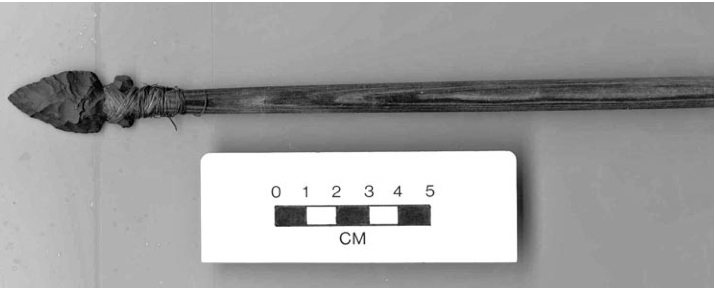
400 year old arrow or dart from Tsitsutl glacier, B.C. Source: Keddie and Nelson: 2005.

In 1924, a land surveyor found an arrow at an elevation of 2,100 metres near Tsitsutl Peak in west-central British Columbia (map).  The arrow made its way to the Royal BC Museum where it lay for over 80 years, until a timely inquiry and increased awareness of ice-patch archaeology stimulated a small research program.  This research, initiated by RBCM curator Grant Keddie and reported in the Canadian Journal of Archaeology (Keddie and Nelson 2005), establishes that the arrow is about 400 years old.

Continue reading

Historic Pamphlets and Booklets on First Nations Topics

Skeena River pole ca. 1920s: On back: ""Named Waum Gana'o 14' high / erected 1845 / 4 Bottom figure, is of the big hog, upside down." Source: USASK."

The University of Saskatchewan has a comprehensive Indigenous Studies portal, with links to a massive corpus of published and unpublished documents – some of which are available online, free of institutional restriction.  One section which I found interesting was the large collection of pamphlets and booklets.  I know this web site isn’t always 100% archaeological – but you can’t separate the practice of archaeology from the social context in which it occurs. Among these pamphlets are:

  • CBC Radio and Department of Indian Affairs 1939: The Indians Speak to Canada (transcript of a remarkable series of 1939 CBC radio broadcasts in which aboriginal people address the nation; Haida representative Rev. Peter Kelly starts on page 28; White Man’s Burden is found in the closing remarks by the Minister of Mines and Resources)

Continue reading

Thoughts on a WSU Archaeological Perspective

Pioneering WSU archaeologist Richard Daugherty instructs students on the beach at Ozette, late 1960s. Source: WSU.

Washington State University (WSU) has one of the oldest and most notable programs in Northwestern North American archaeology, with pioneers such as Richard Daugherty and William Ackerman leading the way.  The WSU magazine has a nice interview with a number of their distinguished alumni and faculty, including William Andrefsky, Dale Croes, Colin Grier, and Gary Wessen.  There are some interesting quotes in it, notably, to my mind – and perhaps yours, if you are a university nerd like me: Continue reading

Ucluelet, 1859

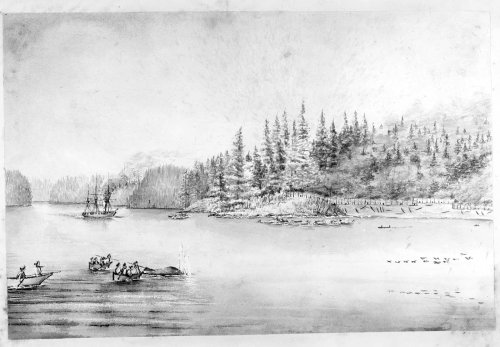
"Euclueliat village, Barclay Sound, Vancouver Island, N.W. Coast. H.M.S. Satellite" pen and ink and watercolor drawing 1859 Mar. Source: Yale. Click for original, click through for large size.

The above is a rendering of Ucluelet Inlet on the west coast of Vancouver Island, made in 1859.  You can clearly see the aboriginal village to the right. Artfully, the artist has caught a whale hunt at the exact moment of harpooning in the foreground.   I’ve zoomed in on the village below.

Detail of Ucluelet Inlet village.

Interestingly, the next picture in this folio from Yale University is labelled as a “Songhee” Village (below), yet rather than a Victoria area settlement, it fairly clearly shows what I think is another Ucluelet-area village, with the distinctive saddle-shaped hill to the east side of the inlet.  (The trees are different which makes me think it is a different one than above) Anyway, nothing earth-shaking but I had never seen these historic drawings before.

Songhee? Village. North West Coast Vancouver Island. Barclay Sound. H.M.S. Satellite." pen and ink and watercolor drawing 1859 Mar. Source: Yale. Click for original, then click through for large size.

Historic Sketchbook of Heywood W. Seton-Karr

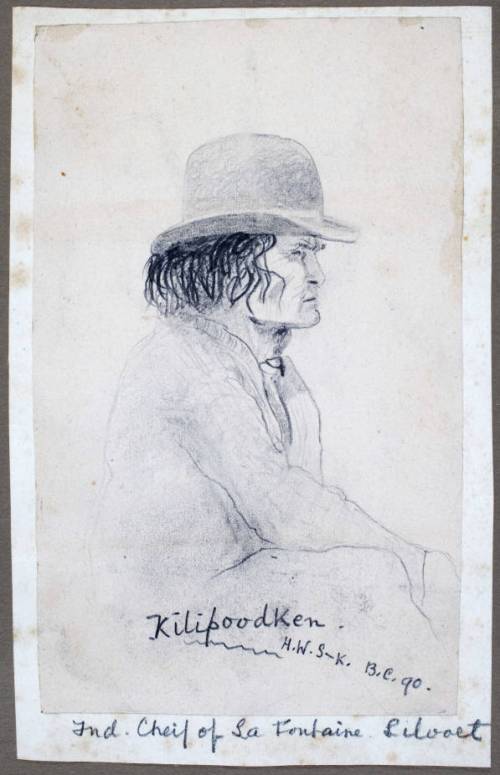
Portrait of Kilipoodken by Heywood Seton-Karr, ca. 1890. Source: Alaska Digital Archives.

I’ve just come across a remarkable sketchbook in the Alaskan digital archives.  It covers the wide-ranging travels of one Heywood W. Seton-Karr, a British Army officer, big game hunter, amateur archaeologist, and talented artist (about whom, more below).  While I could probably fill 10 blog posts from this sketchbook, (and may do so!) a very interesting find is the portrait sketch above.  The caption reads,

Kilipoodken. Ind. [Cheif]  of La Fontaine Libooet. H.W.S-K. B.C.90.

This certainly refers to the Xaxli’p First Nation, also known as the Fountain First Nation, one of the Lillooet (not Libooet!) Tribal Council from the central Fraser River region of British Columbia.  Since googling for “Kilipoodken” only returns the Alaska Digital archives source, it seems to me possible that this mislabelled portrait is unknown to the Xaxli’p Nation, where it is more than likely some of this Chief’s descendants still live.   I hope they find this portrait.

Otherwise, there is much of interest in these sketchbooks. Continue reading