Category Archives: Technology

Oregon’s weird weirs

Dense fish trap / weir in an Oregon estuary. Source: Byram pdf @ WARP website

(edit: I completely stupidly mixed up who did the poster under discussion. Apologies all around, fixed the text below)

I mentioned the Wetland Archaeology Research Project (WARP) and their revamped website once before in reference to Nancy Greene’s pioneering fishtrap work at Comox.  I’m glad to see they have another interesting conference-style poster available for download, this one by Robert Losey (now at the University of Alberta) Scott Byram on the topic of Oregon fish weirs in unusual settings (PDF).

If a cow patch strikes you as an unusual setting, of course.

Continue reading

Yukon River Canoe Project 2009 Blog

Work on the log begins. Source: Yukon Canoe Project.

I just found an interesting blog that traces a community project to carve a Tlingit style dugout canoe on the banks of the Yukon River near Whitehorse:

Nineteen young Yukon carvers made history by creating a 30-foot red cedar dugout canoe. Under the leadership of Tlingit Master Carver Wayne Price, the carvers went on a journey of discovery.

An island on the east side of the Yukon River became their home for the next two months as went go back on the land to learn the traditional techniques for carving a dugout canoe.

Continue reading

Bella Coola Lichen

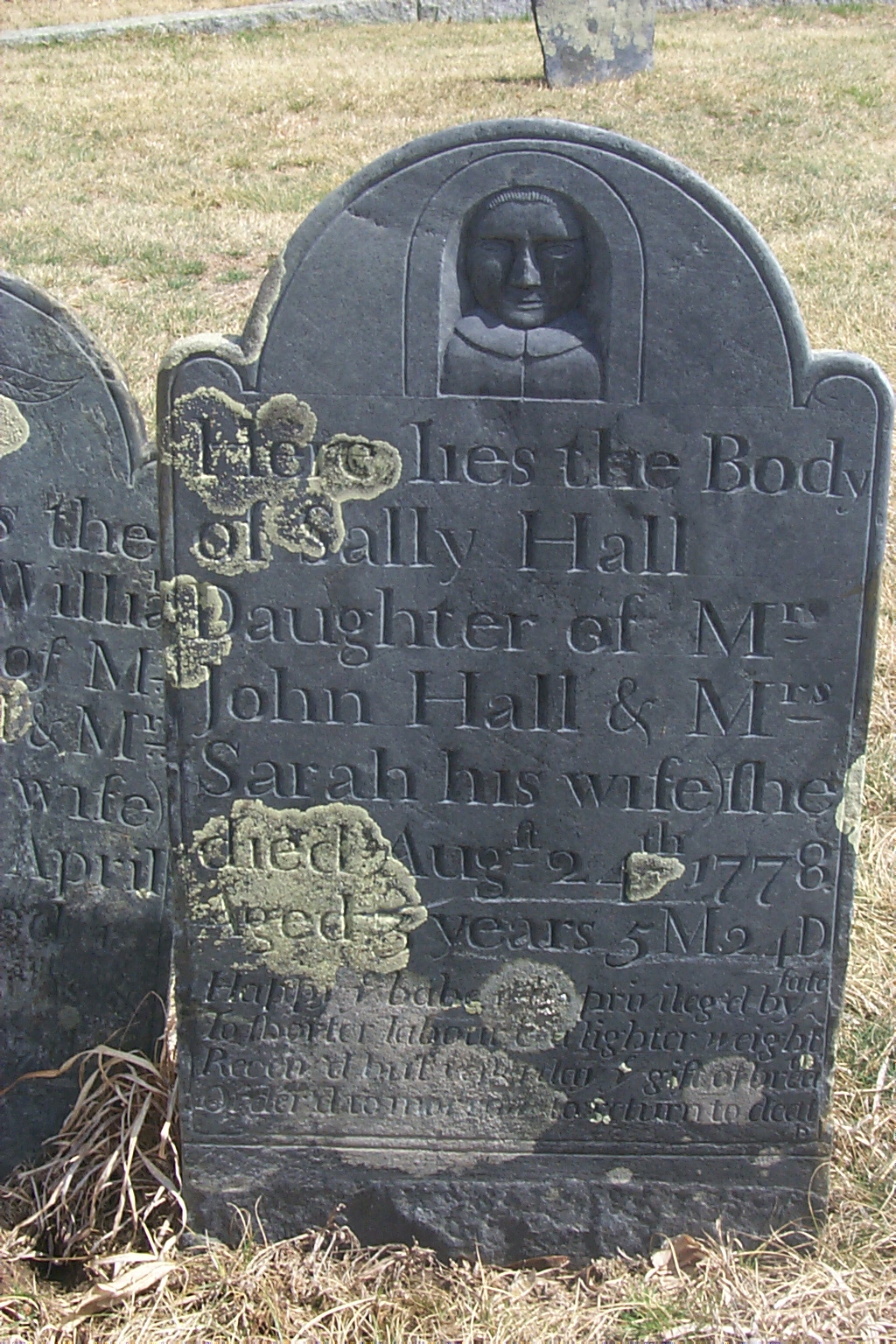
A gravestone with lichen growth. Source: designscience.com

I was reading the charming Bella Coola Blog the other day and came across an interesting post discussing how lichen had been used to date glacial features in the area.  So-called lichenometry is a well-established dating technique which relies on the principle that lichen grows in roughly circular patterns, and that there is a linear relationship between the diameter of the circle and the age of the lichen patch.  Now, such patches can be many hundreds of years old.  So for an event where rock is newly exposed and then lichen grows on it, the lichen will give a minimum date on when the bare rock was first available as a lichen environment.  Anytime you have a bare rock and a dating technique for when the rock became bare, the archaeology antennae rise.

Continue reading

More ice patch archaeology bork bork bork

3400 year old shoe from a Norwegian ice patch. Source: Reuters.

It’s interesting to see some ice patch archaeology emerging in Norway now.   Reuters has a good story and short video about some cool finds from 1800 metres above sea level in the Jotunheimen Mountains, which lie northeast of Bergen.  The most spectacular find is the 3,400 year old leather shoe, shown above.

Continue reading

Yellowstone Ice Patch Atlatl Dart

Dr. Craig Lee holds atlatl dart shaft. Source: Dailycamera.com

We’ve looked at the exciting finds from melting ice patches before on this blog so they may not need a lot of introduction: ancient hunters would target large game which sheltered from the heat and insects on these fairly static patches of ice.  In so doing they left behind a material record which quickly became frozen into the ice itself, thus preserving organic technologies which seldom preserve otherwise.  Now, with global warming, these artifacts whch were deposited on ice are melting out for the first time, some of them after many millennia of continuous freezing conditions.

Most of the current research on this topic has been from the Yukon, from the Northwest Territories, and Alaska, though arguably there is a lot of potential elsewhere in western North America, especially British Columbia.  So I was pretty interested to see a news report from the University of Colorado on a birch wood atlatl dart (the projectile shaft associated with a spearthrower) from the Yellowstone area, which dates to a remarkable 10,300 years ago.

At the University of Colorado website there is a good press release and an informative video on the find.  The video incorporates some National Geographic footage (some of it cheesey) which overall gives a good idea of the context of the find and its importance.  In the video you can see what is interpreted as a split U-shaped haft element which presumably received a stone projectile point.  Unusually for atlatl technology, this would imply there was no foreshaft.  The date of 10,300 is presumably a calibrated date which would make it about 9,250 14C BP – around one thousand years older than the oldest reported Yukon ice patch material.  The video also has glimpses of other finds which are not discussed but which whet the appetite! And, by the way, the National Geographic web site has a clip about Alaskan ice patches which gives a great overview of the fieldwork and the finds.

The lead researcher is Dr. Craig Lee of the University of Colorado / INSTAAR, who is also known on the Northwest Coast for his Ph.D. dissertion on microblade technology from Southeast Alaska and PET-408 / On Your Knees Cave  (I have a PDF of this but can’t find it online, I think Craig must have sent it to me directly). Some news reports (not many news items on this yet) suggest the find was made in 2007 and the date was obtained in 2008 and then embargoed because of publication restrictions imposed by a journal. A quick check on Web of Science doesn’t turn up anything new on it (though “in press” material likely wouldn’t be there yet), and it is not that easy to sift through all the surname “Lee” folks who publish in sciencey journals!

An important point of added interest in the additional report (oddly, not the UC press release) is that Lee and his colleagues have received a 3 year grant worth US $651,00 to investigate ice patches in and around Glacier National Park, just south of the BC-Alberta border.  Congratulations Craig!  This amount of money is impressive, though I can imagine how expensive the combination of high altitude helicopter time and numerous radiocarbon dates will be.  For us in BC/Canada, we can only dream of such riches: as I have noted several times, bafflingly there has been essentially no research on this topic in British Columbia.  Craig’s money is coming from the US National Park Service, who take their cultural resources much more seriously than we do – I mean, Parks Canada archaeologists do a great job (as I know very well, having just been on a month long field trip with them)  but the importance given to archaeology in National and, especially, BC Provincial Parks pales in comparison to what the Americans do and no one is throwing C$651,000.00 or even C$651.00 at this urgent Cultural Resource Management problem in this country.  Anyway, I really look forward to seeing what comes out of this promising study.

Cheesy depiction of the Ice Free corridor from the National Geographic video clip. Source: U. Colorado.

Mount St. Helens and experimental archaeology

Paul Kane: Mt. St. Helens erupting by night, 1847. Source: Wikipedia

Today is the 30th anniversary of the cataclysmic eruption of Mount St. Helens, an explosion so large that it could be heard as far north as southern Vancouver Island.  The mountain has erupted many times in the past – one of which was captured by the well known painter Paul Kane (above) – and will continue to erupt indefinitely.  Many of these eruptions and its fickle nature loom large in oral histories.  The ash from prior eruptions forms important geological marker horizons all over the Northwest.  Judging by this map, there are no known obsidian sources directly associated with Mount St Helens.  These are the more obvious kinds of connections to archaeology and they shouldn’t be discounted. Another approach exemplifies a kind of morbidly creative lateral thinking.

Continue reading

More on Comox Harbour Fishtraps

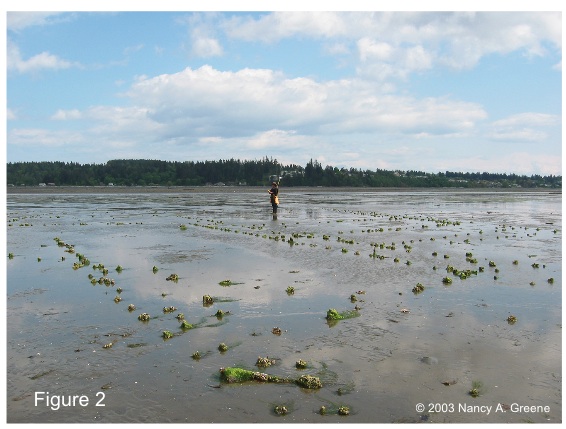
Fishtrap stakes delineating chevron patterns in the intertidal zone of Comox Harbour. Photo credit: Greene 2010.

I posted once before some time ago on the incredible fishtrap complexes in Comox Harbour on eastern Vancouver Island, highlighting Megan Caldwell’s M.A. thesis (downloadable) on the topic, and mentioning in passing that primacy of investigation should perhaps go to Nancy Greene, who has been mapping and dating these features for about a decade.  I was glad to find the other day that Nancy Greene has a 2010 downloadable poster on the topic (link starts a 4 meg PDF)  from an academic conference: WARP, the Wetland Archaeological Research Project, which itself has a nifty new website.

These Comox Harbour fishtraps are one of the wonders of B.C. Archaeology and it is highly welcome to see some more of Greene’s reconstructions and mapping.

Continue reading

How to Make a Petroglyph

Replica sandstone petroglyph made by Christine Stathers. Photo credit: Stathers.

I’ve often said the graduate student work is the backbone of the archaeological discipline in British Columbia.  Today I get to report on more student work – but this time its a fascinating study done by an undergraduate student at Camosun College here in Victoria.  The student, Christine Stathers, did an experimental archaeology project for her Anthropology 240 course, and she kindly agreed that I could post some of the results here.  The results are highly informative for our interpretation of petroglyphs, I think.

Continue reading

Basket Conservation at the Langley Centennial Museum

N'laka'pamux Basket undergoing conservation treatment. Source: LangleyMueum.org

I know I occasionally grumble about how regional, publicly funded museums in B.C. are almost devoid of archaeological and aboriginal substance, especially on the web.  A happy exception to this is the Langley Centennial Museum near Vancouver, which has an unusual and interesting virtual exhibit of N’laka’pamux basketry.  The museum is in the possession of a large collection of these baskets, made by an interesting historical figure from the Yale-Lytton area of the Fraser River: one Kathleen Pearson. The exhibit consists of a number of pages, including a short essay (5 pages) which is strangely not clearly linked, based around Boas et al.’s 1928 Bureau of American Ethnology Publication.  The museum goes beyond the historical frame by discussing recent named weavers such as Mary Ann James, and the continuing tradition of N’laka’pamux basket making.

It is really great to see a relatively small museum explicitly recognizing that the world didn’t begin in 1846 and going beyond the story of white settlers as if they were a self contained pod of culture beamed down from Queen Victoria’s forehead.  The other thing  I particularly like about this small web exhibit is that the museum highlights the activities of another group of unsung heroes in the world of heritage conservation: the conservators who restore, stabilize and protect the artifacts entrusted to museums.

Continue reading

New Finds from NWT Ice Patches

340 year old bow made from willow wood - bow was found in multiple fragments. Photo: Tom Andrews via livescience.com.

In many parts of Northwest North America glaciers and ice patches are melting at unprecedented rates.  In some cases, these are revealing extraordinary archaeological remains, as I have noted before for Alaska.  There’s recently been some short news reports about new finds in the Northwest Territories, to add to the substantial work already done there.  Most of these reports rehash the same news release from the Arctic Institute of the Americas, which sponsored the research through International Polar Year funding (now ended).  Only a few sites have photos, though.

Continue reading