Category Archives: Northwest Interior

Fish Bones at Portland State University

Maxillae of the Great Sculpin. Source: PSU

OK, I have written more exciting headlines in my life.  But as I noted before, zooarchaeologists – the specialists in identifying and interpreting animal remains – are some of the unsung heroes of archaeology.  The discipline requires encyclopedic knowledge of hundreds of animal skeletons,  the ability to relate even small fragments from archaeological contexts back to whole specimens of known species, and a thorough understanding of both culture and ecology – all this in addition to the normal skill set of a typical archaeologist.  Master all this, and your reward is to be called “Bone Guy” (or worse) for the rest of your professional life.

Anyway, it is welcome to find another online guide to some common archaeological animal remains from the Northwest.  While I know it is a bit too much information for many readers of this web site, it is important to share the link and information, since considerable time and effort was put into this admittedly niche set of illustrated fish bones, and archaeologists need to be aware of it.

Continue reading

New Finds from NWT Ice Patches

340 year old bow made from willow wood - bow was found in multiple fragments. Photo: Tom Andrews via livescience.com.

In many parts of Northwest North America glaciers and ice patches are melting at unprecedented rates.  In some cases, these are revealing extraordinary archaeological remains, as I have noted before for Alaska.  There’s recently been some short news reports about new finds in the Northwest Territories, to add to the substantial work already done there.  Most of these reports rehash the same news release from the Arctic Institute of the Americas, which sponsored the research through International Polar Year funding (now ended).  Only a few sites have photos, though.

Continue reading

Aboriginal Bridges of Northwestern B.C.

Bridge at Hagwilget, 1881. Source: B.C. Archives.

I don’t know that much about the “Living Landscapes” program, which includes a series of small web exhibits.  While related to the Royal B.C. Museum in Victoria, and covered by their insane legal language (see below), they seem to have outsourced the actual expertise to non-RBCM people.  Not that surprising, really, since they have hardly any in-house expertise left after decades of cuts!  But all credit to them for their role in the informative series, even if the program is now (2006) finished with nothing for Vancouver Island.

I’ll probably review a few of these pages, but for now the exhibit which caught my eye, mainly because of its cool illustrations, is the one of Aboriginal Bridges of Northwestern B.C. The author, Brenda Guernsey, has put together a great set of images from various public archives to illustrate these amazing features.

Continue reading

Historic Maps and Dioramas of Victoria and Environs

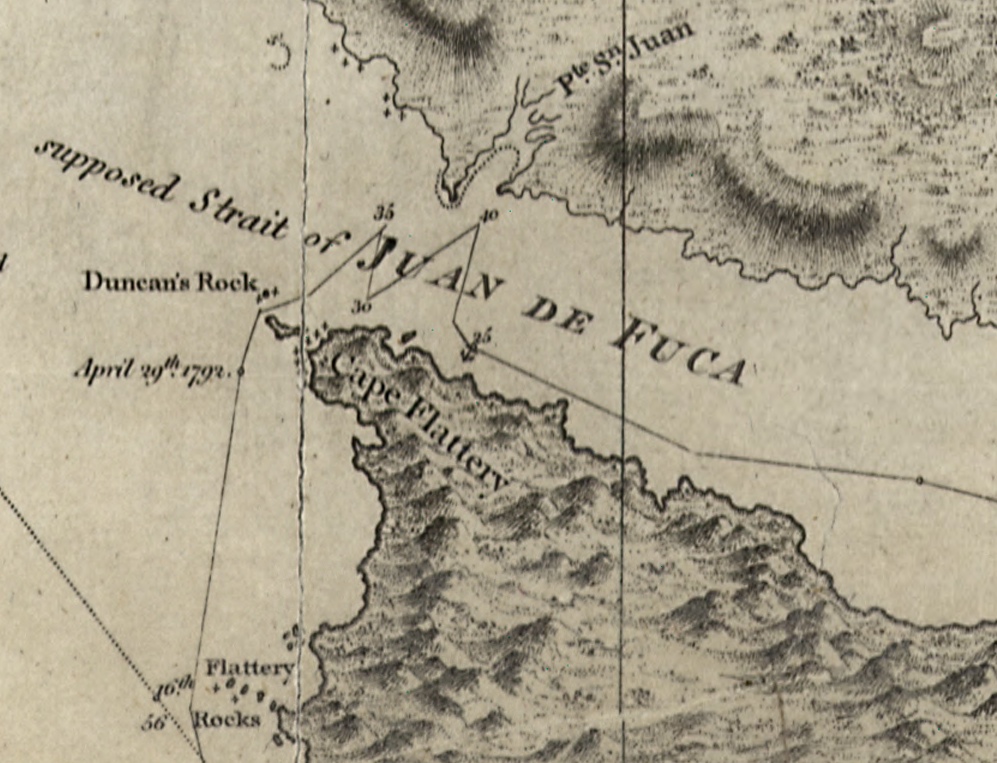
Detail of Capt. Vancouver's 1792 chart showing the "supposed strait of Juan de Fuca". Source: viHistory

vihistory is a web site designed to aid in historical research of Vancouver Island, at which it succeeds admirably.  You should poke around and have fun with their census data and the other worthy, if dreary, pursuits it affords the serious scholar.

One feature which is not immediately clear on first glance, perhaps deliberately as has entertainment potential, is a large selection of very high-resolution maps and images which you can download from this page. The file sizes are large, of course, but increasingly that is less of an obstacle in the past.  The maps are mostly of historic Victoria, but there are some regional maps such as telegraph and lighthouse maps of British Columbia, and a couple of maps of Nanaimo.  As usual, I have surfed through the maps so you don’t have to – and some of them are remarkably fun, and informative.

Continue reading

Bears, Humans and Deer: disambiguation at last.

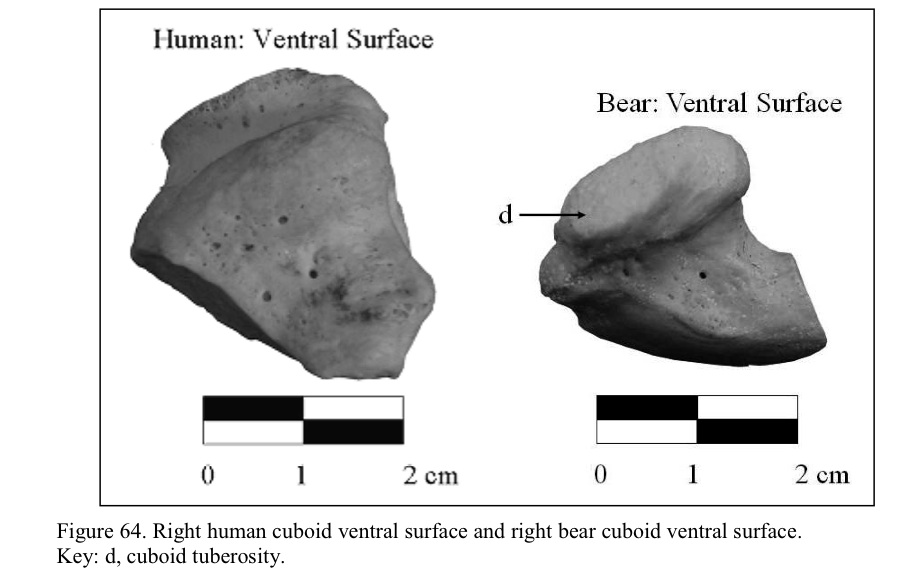
Human and Bear cuboid bones compared. Source: Smart 2009.

Some graduate theses are clearly meant to be both a research excercise and produce a demonstrably useful document.  I’m not saying these are any better than any other kind of thesis, but they do have an aura of public service and virtue about them.  The best example of these which I have seen recently is Tamela Smart’s 2009  Carpals and tarsals of mule deer, black bear and human: an osteology guide for the archaeologist.  If you click here it will start an automatic download of the 3.7 meg PDF from Western Washington University (unfortunately, no way to link to a download page).  (edit: try this link instead)

The premise of this research is that despite obvious differences on the outside, there are surprising similarities between the hand/wrist and ankle/foot bones (carpals and tarsals) of bears, deer, and humans.

Continue reading

Mammoth Wenas

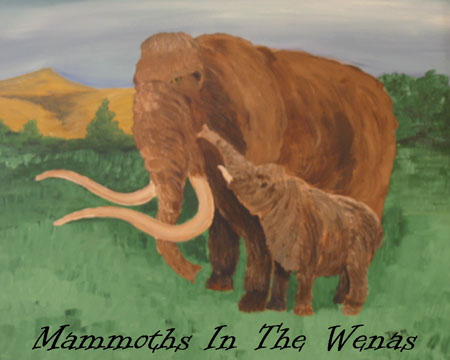
Mammoth Wenas. Source: CWU.edu; painting by Bronwyn Mayo.

For the past few years, students and faculty from Central Washington University have been excavating terminal Pleistocene fauna, including a partial mammoth skeleton, from the Wenas Creek area just north of Yakima (map), and they have a nice website documenting their work.  Radiocarbon dates on the mammoth came back at 13,400 and 14,000  radiocarbon years ago, or about 16,000 calendar years ago.  Too old for archaeological interest!  Right?

Continue reading

The Schieffelin Brothers Yukon River Prospecting Trip of 1882

Tanana woman returning from the hunt, 1882. Source: AKDC

Browsing in the Alaska Digital Archives I found an interesting photo album documenting a prospecting trip up the Yukon River by the Schieffelin Brothers, Ed and Al, who just a few years earlier had founded the famous desert mining town of Tombstone, Arizona.  Two pictures from this album struck me as particularly interesting, though the whole thing is worth browsing.

The first of these is the remarkable picture above, showing a Tanana woman with a long-gun, powder horn, and a couple of large rabbits.  While anthropologists and archaeologists have grudgingly revised their “Man the Hunter” stereotypes in recent years, it is nonetheless rare to see such a frank portrait of a competent woman with her prey.  I’ll be using this one in class, starting next week.

Continue reading

Caribou Metatarsal Hide Scraper

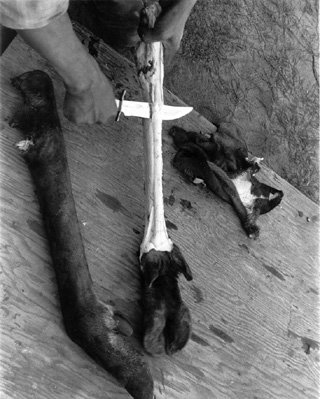
John Shea stripping ligaments from a caribou metatarsal in preparation for making a hide scraper. Source: SFU.ca

I haven’t really mined the SFU Archaeology museum website yet – they seem to have had a bit of a makeover recently, though many of their online resources are achieving “vintage” status.  One such is the photo-essay on making a hide scraper from a caribou metatarsal, or the long, straight bone between the caribou ankle and its hoof – the long bone of the foot (ungulates walk on their tip toes).

The essay is a series of over 20 pictures showing step-by-step the process of making the scraper:

Continue reading

Northwest Research Obsidian Studies Lab

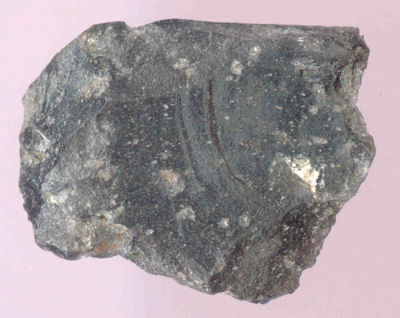
A flake of obsidian from DhRr-18, southern British Columbia. This visually-distinctive glass is from the Mount Garibaldi obsidian source.

Obsidian is a kind of volcanic glass and was highly prized for making certain kinds of stone tools.  Obsidian forms at places of relatively small outflows of magma, or liquid rock.  Small flows can cool quickly, which allows the formation of a glassy crystalline structure ideal for stone tool manufacture.  Small flows also represent a small sample of well-mixed magma, and thus each little patch of obsidian may share a very distinctive chemical signature.  This signature, usually identified by trace elements such as Strontium, Zirconium, Yttrium and Rubidium, then allows for the chemical fingerprinting of each source.  Any obsidian artifact found, whether at a source or not, can also be “fingerprinted” and then compared to a catalogue of known obsidian ources.  Since the artifacts don’t move around on their own but only through the agency of humans, the distribution of obsidian artifacts is a proxy measure for the movement and interaction of people.  When you have hundreds or thousands of such artifacts and a large database of known sources, then you can start to see large scale, long-term social interaction emerge from the silent archaeological record.  Most obsidian isn’t visually distinctive enough to sort out by eye alone, so these geochemical methods are essential.

So far, so Archaeology 101.  I was really happy to find that Oregon’s Northwest Research Obsidian Studies Laboratory has a web site not which not only solicits business, but is a highly educational and informative site about many aspects of obsidian analysis, with a focus on the Northwest. Continue reading

Arrow from Tsitsutl Peak Glacier, Western B.C.

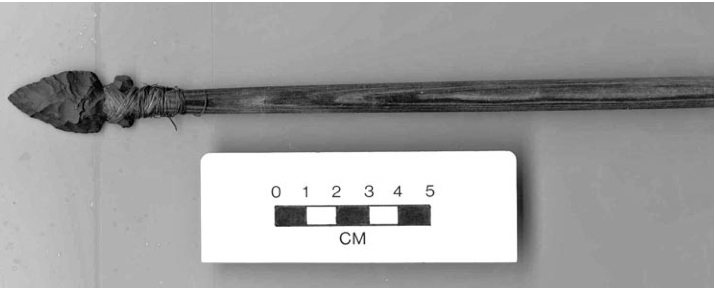
400 year old arrow or dart from Tsitsutl glacier, B.C. Source: Keddie and Nelson: 2005.

In 1924, a land surveyor found an arrow at an elevation of 2,100 metres near Tsitsutl Peak in west-central British Columbia (map).  The arrow made its way to the Royal BC Museum where it lay for over 80 years, until a timely inquiry and increased awareness of ice-patch archaeology stimulated a small research program.  This research, initiated by RBCM curator Grant Keddie and reported in the Canadian Journal of Archaeology (Keddie and Nelson 2005), establishes that the arrow is about 400 years old.

Continue reading