Category Archives: Technology

Making Yuxwch’ee Yakw, a Tlingit Spruce Canoe

Working on Yuxwch’ee Yakw, the Spruce Canoe. Source: Sealaska Picasa page.

Most people are familiar with the use of red cedar to make dugout canoes on the Northwest Coast.  It is not as commonly known that Sitka spruce was also used for this purpose, especially on the northernmost coast where red cedar did not thrive or was absent completely.

Via the Sealaska Heritage Institute Special Collections blog, I just found a nice, extensive photo set from 1987 of the carving of a spruce canoe near Hoonah, a Tlingit village in Southeast Alaska.  The introduction to the photo set reads:

As part of the bicentennial of the Constitution celebration of 1987, the National Park Service and the Sealaska Heritage Foundation (now Sealaska Heritage Institute) sponsored the carving of a Tlingit canoe using traditional tools and methods at Bartlett Cove, which is near Hoonah, Alaska. The canoe, called Yuxwch’ee Yakw in Tlingit, means Sea Otter Canoe, which was the indigenous canoe of Hoonah and was photographed by the Harriman Expedition in Glacier Bay in 1899. The canoe was constructed at Bartlett Cover in August 1987. George Dalton, Sr, born in Hoonah in 1879, and other elders with personal knowledge of canoe making traditions served as cultural advisors to the project. Lead carvers Nathan Jackson, Steve Brown, Richard Dalton, and Mick Beasley carved the canoe using a Sitka Spruce log using traditional tools, such as the xot’ah or Tlingit adze.

Continue reading

A Stillaguamish River Canoe

Roughly dressed block of cedar in preparation for carving. Source: flickr.com

The Stillaguamish Tribe live along the Stillaguamish River basin (map) of Northwestern Washington State.  They are a tribe which missed out on any reservation land in the 1850s and have struggled somewhat at times to maintain cultural identity as a diaspora.  Regaining Federal Status in 1976 was important to the tribe of about 200 members, as was 2009’s first “First Salmon” ceremonies in a generation.

An interesting and encouraging development seems to be the recent carving of the first Stillaguamish river canoe in a century.  While the larger dugout canoes (still being carved) of the outer coast nations, such as the Haida and Nuu-chah-nulth, are better known emblems of the Northwest Coast as a whole, these river canoes were equally important to the inland waterway and riverine nations of the Fraser Valley and Puget Sound.

According to an informative and well-written article in the Everett HeraldNet, the story starts with an interesting origin of the cedar log itself.

Continue reading

Aboriginal Bridges of Northwestern B.C.

Bridge at Hagwilget, 1881. Source: B.C. Archives.

I don’t know that much about the “Living Landscapes” program, which includes a series of small web exhibits.  While related to the Royal B.C. Museum in Victoria, and covered by their insane legal language (see below), they seem to have outsourced the actual expertise to non-RBCM people.  Not that surprising, really, since they have hardly any in-house expertise left after decades of cuts!  But all credit to them for their role in the informative series, even if the program is now (2006) finished with nothing for Vancouver Island.

I’ll probably review a few of these pages, but for now the exhibit which caught my eye, mainly because of its cool illustrations, is the one of Aboriginal Bridges of Northwestern B.C. The author, Brenda Guernsey, has put together a great set of images from various public archives to illustrate these amazing features.

Continue reading

BBC: History of the World in 100 Objects

Detail of a Clovis point from British Museum. Source: BBC.

The BBC is producing a series of 100 “podcasts” which explores the history of the world through the lens of 100 different objects.  Each episode is about 15 minutes long, and while you can subscribe to the series for your iPod or on iTunes, you can also listen to each episode individually on the web: thirty of the planned one hundred episodes are now available.

One interesting episode focuses on the Clovis Point.  They mainly give weight to a Clovis First model of the first peopling of the Americas (including a bizarre quote from Gary Haynes to the effect that yes, there is older material than Clovis but nonetheless Clovis is first), but they do also offer an indigenous perspective which is unusual.

Continue reading

Yuungnaqpiallerput: Yup’ik Science and Survival

Inflating the stomach of a beluga whale. Source: Yupikscience.org

Yuungnaqpiallerput (The Way We Genuinely Live): Masterworks of Yup’ik Science and Survival” is a fascinating and informative (and large!) website companion to a 2008 exhibition by the same name at the Anchorage MuseumBooks and catalogues are also available and look to be excellent.

I know that Yup’ik territory, on the southern flanks of the Bering Straits, is a long way from the Northwest Coast.  But there are many similarities in the ingenious tricks and tools of the trade needed for a maritime lifestyle, and this exhibition deftly combines historical, archaeological and ethnographic accounts into a compelling vision of people at ease on land and sea.

.

Continue reading

Montana Creek Fish Trap, Alaska

Montana Creek Fishtrap being excavated, 1989. Source: Sealaska

In 1989 a nearly complete fish trap was found in Montana Creek, near Juneau Alaska in Aak’w Kwáan Tlingit territory. The cylindrical trap, measuring 3 metres long and 1 metre in diameter, was excavated and found to date to about 600 years ago.  The trap was preliminarily reported in Kathryn Bernick’s 1998 book Hidden Dimensions (UBC Press).  Fishtraps were supported by wood and/or stone weir structures which also  act to direct fish into the trap.  The trap would be removed at the end of each season and stored nearby or at camp.  Of course, being wood, they intrinsically don’t preserve very well except in anaerobic and wet conditions.  They are therefore rather rare since they would need to be left in the creek after use in order to preserve.  So this one is very unusual, and especially so since it was essentially complete (other than being flattened).  All credit to the finder, Paul Kissner, for being alert, recognizing the trap, and reporting it promptly.

But now, the fishtrap has become very much a living object.

Continue reading

Caribou Metatarsal Hide Scraper

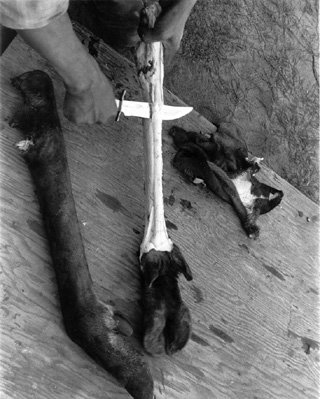
John Shea stripping ligaments from a caribou metatarsal in preparation for making a hide scraper. Source: SFU.ca

I haven’t really mined the SFU Archaeology museum website yet – they seem to have had a bit of a makeover recently, though many of their online resources are achieving “vintage” status.  One such is the photo-essay on making a hide scraper from a caribou metatarsal, or the long, straight bone between the caribou ankle and its hoof – the long bone of the foot (ungulates walk on their tip toes).

The essay is a series of over 20 pictures showing step-by-step the process of making the scraper:

Continue reading

Northwest Research Obsidian Studies Lab

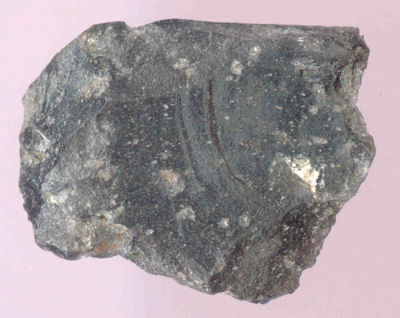
A flake of obsidian from DhRr-18, southern British Columbia. This visually-distinctive glass is from the Mount Garibaldi obsidian source.

Obsidian is a kind of volcanic glass and was highly prized for making certain kinds of stone tools.  Obsidian forms at places of relatively small outflows of magma, or liquid rock.  Small flows can cool quickly, which allows the formation of a glassy crystalline structure ideal for stone tool manufacture.  Small flows also represent a small sample of well-mixed magma, and thus each little patch of obsidian may share a very distinctive chemical signature.  This signature, usually identified by trace elements such as Strontium, Zirconium, Yttrium and Rubidium, then allows for the chemical fingerprinting of each source.  Any obsidian artifact found, whether at a source or not, can also be “fingerprinted” and then compared to a catalogue of known obsidian ources.  Since the artifacts don’t move around on their own but only through the agency of humans, the distribution of obsidian artifacts is a proxy measure for the movement and interaction of people.  When you have hundreds or thousands of such artifacts and a large database of known sources, then you can start to see large scale, long-term social interaction emerge from the silent archaeological record.  Most obsidian isn’t visually distinctive enough to sort out by eye alone, so these geochemical methods are essential.

So far, so Archaeology 101.  I was really happy to find that Oregon’s Northwest Research Obsidian Studies Laboratory has a web site not which not only solicits business, but is a highly educational and informative site about many aspects of obsidian analysis, with a focus on the Northwest. Continue reading

Arrow from Tsitsutl Peak Glacier, Western B.C.

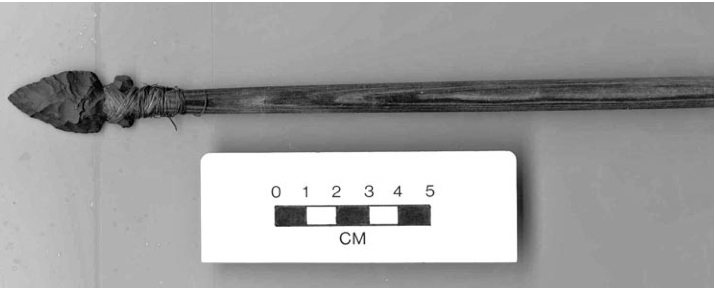
400 year old arrow or dart from Tsitsutl glacier, B.C. Source: Keddie and Nelson: 2005.

In 1924, a land surveyor found an arrow at an elevation of 2,100 metres near Tsitsutl Peak in west-central British Columbia (map).  The arrow made its way to the Royal BC Museum where it lay for over 80 years, until a timely inquiry and increased awareness of ice-patch archaeology stimulated a small research program.  This research, initiated by RBCM curator Grant Keddie and reported in the Canadian Journal of Archaeology (Keddie and Nelson 2005), establishes that the arrow is about 400 years old.

Continue reading

Ancient Basketry from the Biderbost Site

2,000 year old basketry from the Biderbost Site, Seattle. Source: Burke Museum.

The Biderbost site is on the Snoqualmie River near Seattle.   Since 1960, a series of excavations have revealed a remarkable set of artifacts made from organic materials, preserved because of the water-saturated, anaerobic conditions of deposition.  The Biderbost site was the first site of its kind to be excavated in the Northwest, at least to a professional standard.  The Burke Museum has an excellent page on this site, including a page of basket photos (reasonable resolution, yay), weaving techniques, and conservation of these delicate artifacts.  There are also three informative (if not exciting) videos on YouTube about:

These artifacts, which include a large number of basketry pieces, date about 2,000 years ago.  Since most archaeological sites in the Northwest preserve stone, shell and bone fairly well but not wood, bark or root, these sites (which also includes Ozette, Hoko River (pics now broken fixed), Pitt Polder, Qwu?gwes, Kilgii Gwaay, and others) offer remarkable insight into the organic technology.  Ordinarily, we don’t see this stuff at all archaeologically and yet it may be the majority of the traditional technology; it may be stylistically distinctive and different compared to stone and bone tools; and it may be disproportionately representative of the lives of women.

Why there aren’t more archaeologists focusing research questions on these sites is unclear to me: yes, they are awkward sites and expensive and time consuming, but then so are shell middens.  I suspect it boils down to the unfortunate fact that the key NW wet-site researchers in the last thirty years (Dale Croes and Kathryn Bernick) were never in the kind of academic position where they routinely supervised graduate students and hence they were never able to harness the energy and intellect of that backbone of NW Coast Archaeology: the Master’s student and their diverse and often excellent theses.

I would be remiss in not mentioning that the Burke Museum has a Biderbost “Adopt a Basket” program to help with long term conservation of this remarkable suite of artifacts.

Basket rim and body fragment from Biderbost. Note the mud embedded in the weave. Source: Burke Museum.

Fishing weight wrapped in basketry with sticks attached. At a normal site this would appear to be an unmodified pebble. Source: Burke Museum.