Category Archives: Northwest Coast

Dixon’s Underwater Entrance

Waters around OYK Cave. Source: Polarfield.com

E. James (Jim) Dixon, now at the University of New Mexico,  is pretty well known on the Northwest Coast for his pioneering work at the 10 to 12,000 year old 49-PET-408 (“On Your Knees Cave”) in the Alaskan Panhandle, and more recently for his exciting work on Alaskan Ice Patches. I see now that he apparently received some funding to go underwater during the summer of 2010 in the waters around PET-408, not far north from the aptly named Dixon Entrance, in Southeast Alaska (map).  This work could have implications for the coastal route of First Peopling of the Americas.

Continue reading

Long term salmon resilience

Salmon lice infestation. Source: Georgia Strait Alliance.

I’ve just dipped into an interesting paper (PDF) by Sarah Campbell and Virginia Butler, which explores 7,500 years of relationship between First Nations and Pacific Salmon.  While, as ever, the archaeological evidence is discontinuous and somewhat patchy, the authors reach profound conclusions that go far beyond the usual archaeological focus on the past, as if the past still exists other than in the present.

The Northwest Coast was estimated to have the second highest indigenous population density in North America (after California) at European contact, with population estimates ranging from 102,100 to 210,100 (Ubelaker 2006). Haggan et al. (2006) propose an annual average per person consumption rate of 230 kg/yr based on two 19th- century estimates. At this rate, 200,000 people would annually consume 46,000 metric tons (50,706 tons) of salmon, comparable in magnitude to the average yearly commercial catch between 1901 and 2000 (Jones 2002). (emphasis added)

Continue reading

Signs of Lekwungen

Signs of Lekwungen "Walk in Two Worlds", near corner of Fort and Wharf Street in Victoria. Source: Flickr.com user ngawangchodron

The city of Victoria in collaboration with the Songhees and Esquimalt First Nations has fairly recently created a series of outdoor art installations which mark culturally-significant places.   As the City’s online brochure explains,

Established in 2008, the Signs of Lekwungen (pronounced Le-KWUNG-en) is an interpretive walkway along the Inner Harbour and surrounding areas that honours the art, history and culture of the Coast Salish people who have resided in the Victoria area for hundreds of years.

The Songhees and Esquimalt Nations are part of the Coast Salish family and are descendants of the Lekwungen family groups. Lekwungen is the original language of this land.

The Signs of Lekwungen consist of seven unique site markers – bronze castings of original cedar carvings, conceptualized and carved by Coast Salish artist, Butch Dick. The markers depict spindle whorls that were traditionally used by Coast Salish women to spin wool. The spindle whorl was considered the foundation of a Coast Salish family.

Continue reading

Bella Coola Lichen

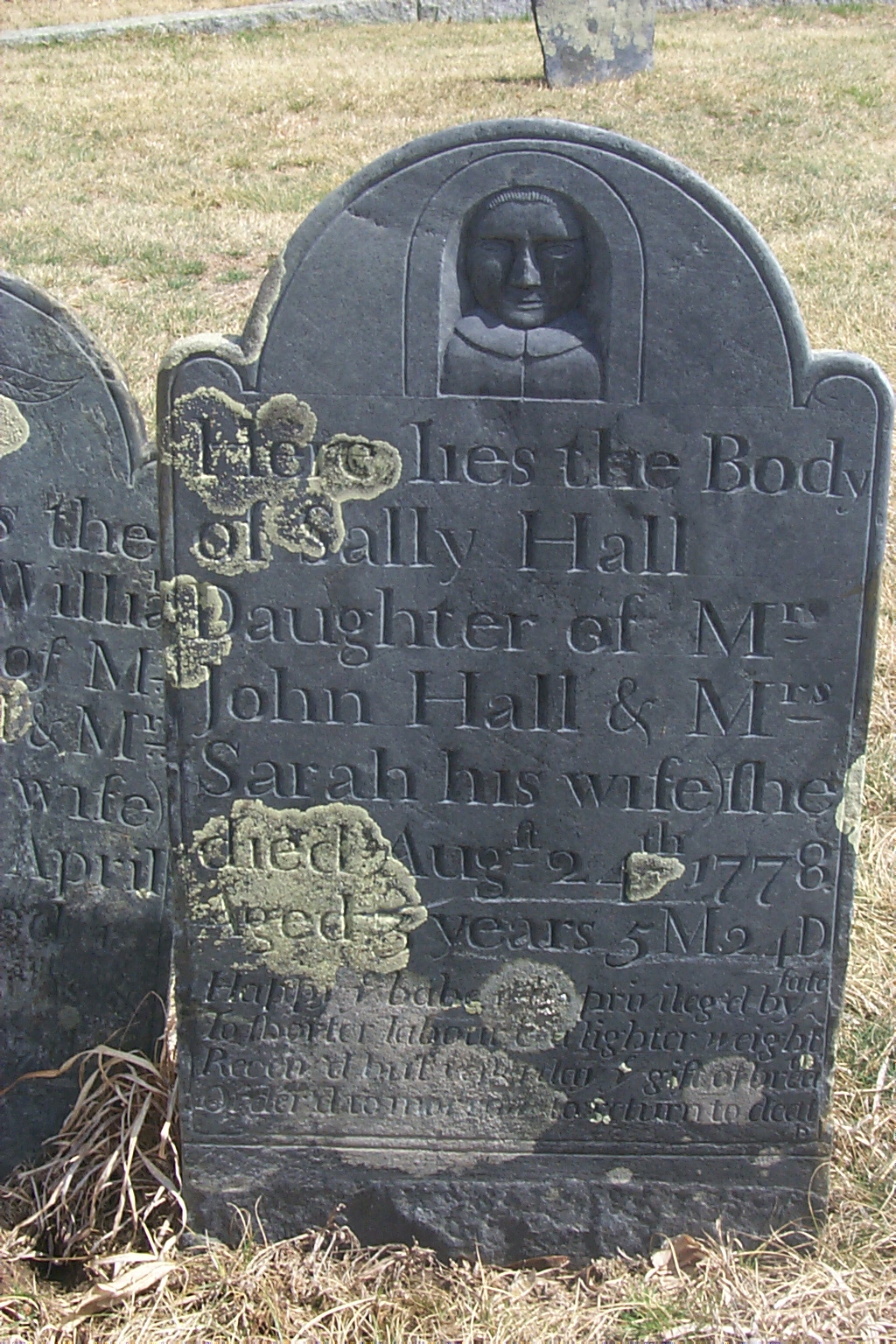
A gravestone with lichen growth. Source: designscience.com

I was reading the charming Bella Coola Blog the other day and came across an interesting post discussing how lichen had been used to date glacial features in the area.  So-called lichenometry is a well-established dating technique which relies on the principle that lichen grows in roughly circular patterns, and that there is a linear relationship between the diameter of the circle and the age of the lichen patch.  Now, such patches can be many hundreds of years old.  So for an event where rock is newly exposed and then lichen grows on it, the lichen will give a minimum date on when the bare rock was first available as a lichen environment.  Anytime you have a bare rock and a dating technique for when the rock became bare, the archaeology antennae rise.

Continue reading

Two upcoming events in Vancouver and Victoria


1936 Field Trip by the Vancouver Natural History Society to Musqueam. Source: Vancouver Public Library. VPL Accession Number: 19483

In Vancouver this Sunday, September 19 at 1.00 there is a guided walk of the Ancient Salmon Stream and Musqueam Village, starting at Jericho Beach (details here) with Victor Guerin, “a cultural/linguistic consultant and historian, a member of the Musqueam First Nation and a speaker of the Musqueam dialect of the Central Coast Salish language Halkomelem. He has been learning about his people’s culture and history his entire life, including some 16 years of consultation and documentation with family elders and 4 years formal training in the Musqueam language with linguistic analysts at UBC.”

This talk/walk is one in a series from the False Creek Watershed Society, most of which look like they hold promise for an interesting conversation between historical ecology, traditional knowledge, and landscape development.  It would be good to see connections built or strengthened between restoration groups and archaeologists, who share many of the same values.  You can see the other talks and walks they sponsor here – two of them are actually today, Saturday September 18th.  OK, go to those as well!

The other upcoming event is the  Archaeology Society of B.C. monthly public lecture in Victoria, which is on Tuesday 21 September.  This month’s speaker is Grant Keddie from the Royal B.C. Museum.

Continue reading

Fieldschool Update, and Public Lectures

Screenshot of Times Colonist article - click to go to the story.

I am in town briefly and see the Time-Colonist has an article and photo gallery about the UVIC-Parks Canada archaeological fieldschool in the Gulf Islands.  It’s a pretty good article with some nice quotes from the students about their experience, and which emphasizes how threatened some archaeological sites are.  It would have been nice to see more acknowledgment of local First Nations and of the hard work Parks Canada’s liaison team is doing to help build relationships around cultural resource management.  It’s very early days for the field school but in the medium term it hopes to be of service to First Nations and their archaeological questions and concerns. A big part of that is the specific focus on archaeological site assessment and management skills being taught by the course instructor, Dr Duncan McLaren, and another big part is the presence of paid First Nations interns who will be taking the field school – only one this year but more in the future it is hoped.  Anyway, the article tells part of the story very effectively and the reporter and photographer had an interesting time with the fieldschool and vice versa.

In related news, I’ll be giving a public talk about Salish Sea archaeology with a fieldschool update this Friday July 30 on Pender Island at 7.00 in the Anglican Hall.  Then, my mini road trip takes me to Saturna Island on July 31 for a talk at 7.30 at the Community Hall.  Otherwise, there probably will be no updates here until the middle of August.

Times-Colonist screenshot - click to go to story.

Tongass Timeline

Detail of diorama of Paleomarine Period, Southeast Alaska. Source: Tongass NF

The Tongass National Forest in Southeast Alaska has a lot of interesting stuff online.  I’ve just found they have a cool set of dioramas illustrating different time periods from the last 10,000 years of human history (scroll to the bottom of this page).  These start with the palaeomarine period, about 10,000 years, a section of which is seen above.  Some of it is conjectural of course and I am not going to go to the wall defending its veracity, but I do appreciate the National Forest making an effort to present the past in an accessible way.

Continue reading

Images from the Likeness House

Cover of Dan Savard's new book. The RBCM caption reads: "This man has been variously identified as a chief from four different areas of BC’s interior, including possibly Tyee Jim from the central interior (tyee means “chief” in Chinook, a trade language). John Wallace Jones or Thomas McNabb Jones photograph, about 1897." Source of this photo: Amazon.ca

There is an exciting new book in the pipeline on early photography and First Nations of the historic period.  The author, Dan Savard, is senior collections manager of the Royal BC Museum’s anthropology audio and visual collection.  The promotional blurb reads:

On a winter’s day in 1889, Tsimshian Chief Arthur Wellington Clah visited Hannah and Richard Maynard’s photography studio in Victoria to have his portrait taken. “Rebekah ask if I going likeness house,” Chief Clah wrote in his diary, “So I go, to give myself likeness. Rebekah stand longside me.” In Images from the Likeness House, Dan Savard explores the relationship between First Peoples in British Columbia, Alaska and Washington and the photographers who made images of them from the late 1850s to the 1920s.

I won’t be here (have some bottom sampling to attend to in Haida Gwaii), but Dan is giving a free public lecture and will sign copies of his book next week at the RBCM.

Continue reading

Seattle waterfront archaeology

"Native American encampment on landfill, circa 1900, south of South Royal Brougham Way and east of First Avenue South." Source: crosscut.com

At the ASBC talk last night it was clear that major industrial development can still leave substantial and highly significant archaeological materials interspersed even within the boundaries of heavy impact – in this case within a few dozen metres of a major hydroelectric dam.  This reminded me of a recent story I read about downtown Seattle archaeology.  Due mainly to concerns about what would happen in even a moderate earthquake comparable to the Nisqually event of 2001, Seattle is planning to replace the Alaska Way viaduct – that multi-level highway which blocks the city from its own waterfront.  You can watch a video of a simulation of the collapse of the viaduct here – I am sure most Seattlers would like to be done with that uncivic monstrosity, but not, perhaps, so suddenly.  Ironically, the ASBC talk on Ruskin Dam was also a seismic upgrade project.

Anyway, the current plan in Seattle is to put a cut-and-cover tunnel in its place – similar to some of the tunnels recently built in Vancouver’s new Canada Line LRT.  Crosscut.com’s Archaeology-savvy reporter “Mossback” (Knute Berger) has two excellent articles on the problems likely to arise when you dig such a large ditch through dense pre-contact and historic archaeology.  The first article ran on May 11th, with the followup article on May 12th.  If you are truly dedicated, there is a 200 page overview (6 meg PDF) of cultural resource management for the project, though it largely focuses on historic buildings and it relatively vague.

Continue reading

Mount St. Helens and experimental archaeology

Paul Kane: Mt. St. Helens erupting by night, 1847. Source: Wikipedia

Today is the 30th anniversary of the cataclysmic eruption of Mount St. Helens, an explosion so large that it could be heard as far north as southern Vancouver Island.  The mountain has erupted many times in the past – one of which was captured by the well known painter Paul Kane (above) – and will continue to erupt indefinitely.  Many of these eruptions and its fickle nature loom large in oral histories.  The ash from prior eruptions forms important geological marker horizons all over the Northwest.  Judging by this map, there are no known obsidian sources directly associated with Mount St Helens.  These are the more obvious kinds of connections to archaeology and they shouldn’t be discounted. Another approach exemplifies a kind of morbidly creative lateral thinking.

Continue reading