Tag Archives: Northwest Coast

Haida Argillite Pipe: High Resolution Pictures

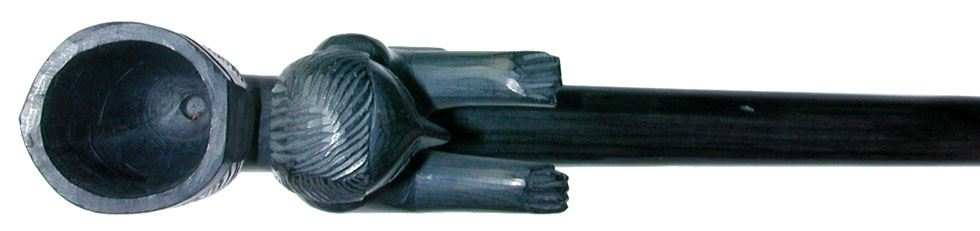
Detail: Haida Argillite Pipe ca. 1880. http://www.antiquearms.co.uk

I occasionally complain about the lousy pictures that professional organizations put on the web.  I guess I should know that when you have something to sell, you put it’s best face forward; when you don’t, you might not care as much.  Check out the high resolution pictures of this Haida argillite pipe for sale (4,800 GBP).  Multiple angles of the pipe, each one sharp and crisp: you can see each stroke of the knife and the grain of the slate.  Yes there is some glare but the images are much better than most museums make available on the web.  Amazing stuff.

Described as:

19thC. HAIDA ARGILLITE EFFIGY PIPE. #4213 #4213

a bowl carved in the form of a European sailor’s head with large rounded eyes and long straight nose, a figure seated astride the stem also with large rounded eyes and long straight nose and with arms extended wearing European costume with a stripe incised along the sides of the tunic arms and the trousers. Overall 20cm. From the tribes of the Pacific Northwest Coast of North America, principily Northern Columbia and Queen Charlotte Island. 20cm

This pipe was brought back and formed part of the collection of John Madden (1837-1902) of Hilton Park Clones Co, Monaghan Ireland, he left the Irish family estate at the age of 24 to travel by horse across the eastern states of America as far as the Great Lakes just before the start of the Civil War. During his later travels between 1870-1890 he is known to have reached British Columbia where he bought this pipe, it stayed in the family home until the collection was sold at an auction of part of the contents of Hilton Park on the 8th July 1985 where this item was aquired.

For the record, here are the seven views offered by the dealer: 1, 2, 3, 4, 5, 6, 7.

Haida Pipe: detail as if looking down the stem to the bowl.

Replica Tlingit Armour

Replicated Tlingit body armour.

The Tlingit artist Tommy Joseph has replicated a traditional set of armour:

… body armor made of alder slats and rods and woven together with hemp. Wooden panels are stitched together with leather lacing. Moosehide straps. Two alder toggles fasten the armor around the body.

It’s for sale: $3,500.

I was looking into this because of a recent post on Linen Armour (!) at Heather Pringle’s blog — I tried to leave a comment there in response to a question about NW Coast armour but wordpress ate it — probably because I had a bunch of links.  Dan form there, if you read this, most likely the armour Simon Fraser saw was made of two or more layers of stiffened elk hide.

Nettle winding around wooden slats and rods plus toggle fastening.


Capital Regional District Report

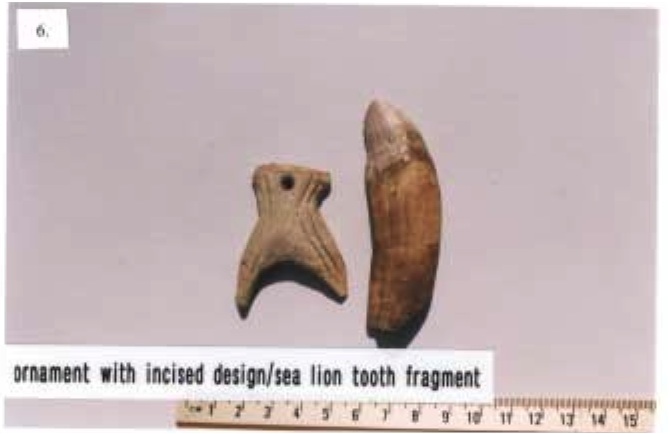
Decorated antler?, and a worked sea lion tooth from the Elchuk collection, Mill Hill.

I just came across this interesting document from 1999 by Liz Crocker (PDF) which is a cultural history of three CRD Parks: Mill Hill, Francis/King and Thetis Lake.  While I wouldn’t put a lot of stock in the archaeological component of this report, there are at least two notations of considerable interest.

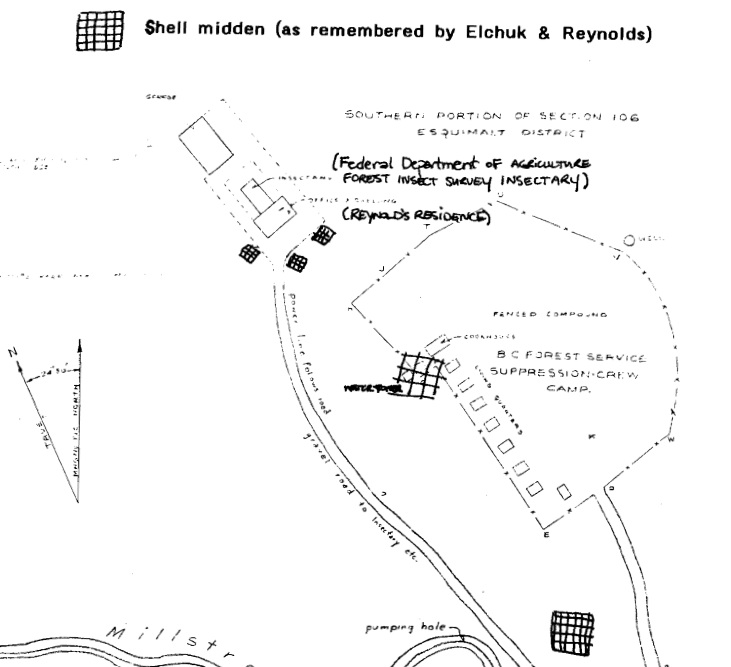
The first is the documentation of an unrecorded shell midden at Mill Hill, not DcRu-70 but another site, including a sketch map of the location which is about 2 to 3 kilometres inland.  There are also reports of unrecorded inland shell middens at Thetis Lake Park. Since such sites are rare and poorly know,  then this is something worth following up.  Indeed, I wish the CRD took their stewardship role seriously enough to commission an intensive, comprehensive, and professional inventory of the archaeological heritage of all their Parks.  This kind of baseline information is so essential that I honestly don’t understand how they think they can discharge their duties without it.

The other point of interest in Crocker’s report is the documentation of a fairly large private collection, also from Mill Hill and also well inland.  Included in this collection are Locarno-style artifacts as well as more recent ones such as a flat-topped handmaul.  Appendix 2 of the linked report includes some snapshots  of this collection.  Despite the poor quality, it is great to see private collections being documented.  The small decorative piece shown above is interesting and unusual, and the abundance of organic remains suggests again that these were collected from or near a shell midden.  Again, something to follow up. If only there were a Ph.D. student at UVIC, say, who was interested in inland shell middens…..

Sketch map of reported but unrecorded inland shell midden patches at Mill Hill.

Victoria-Songhees reburial

Mayor Fortin builds a bridge to the Songhees First Nation. Picture: Johnstonstreetbridge.org

Last summer there was a sad incident with human remains being disturbed in the Dallas Road area of Victoria. The remains, of a young SLENI (woman) were subsequently reburied and since then a burning ceremony has been held.  I’ve been privileged to attend burning and reburial ceremonies and they are powerful and sincere events.  Interesting then to see this news snippet today , focusing on the cost ($9,400) — I can hardly wait for the informed and balanced commentary to ensue.  But kudos to Dean Fortin for doing the right thing – it is no more (or less) than most developers have done over the last decade when human remains were disturbed.  I have to say, though, it is disingenous for Mayor Fortin to note the Songhees reserve is not in the City of Victoria — memo to the Mayor: Victoria is within Songhees territory; the remains are from Songhees territory, the current reserve boundaries are completely irrelevant to this issue.

Victoria News

The cost of being freindly [sic]

By Lisa Weighton – Victoria News

Published: January 11, 2010 3:00 PM

Updated: January 11, 2010 3:34 PM

Mayor Dean Fortin is making First Nations relations a priority.

Last month, the city invested $9,400 in a traditional reburial ceremony after discovering 300-year-old human bones during a sewer retrenching project on Dallas Road, Aug. 27.

“We feel like we have an obligation to work with all other levels of government including our First Nations,” said Fortin.

The cost was a drop in the bucket in the overall $2.4 million-project said Derk Wevers, the city’s sewer and storm water quality technician.

Following consultation with Esquimalt First Nation elder Mary Anne Thomas and Songhees First Nation elder Elmer George, a reburial service was held Dec. 8.

The city also financed a traditional burning ceremony and feast on the Songhees First Nation reserve late last month, which included wages for a city contractor, gifts, food and the gravestone.

Fortin said he was eager to take part despite the reserve not being within Victoria’s boundaries.

State Underwater Archaeology Overviews

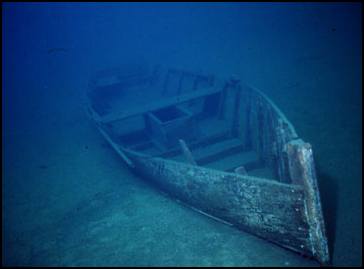
Part of a sunken fleet of recreational dories, Emerald Bay, California.

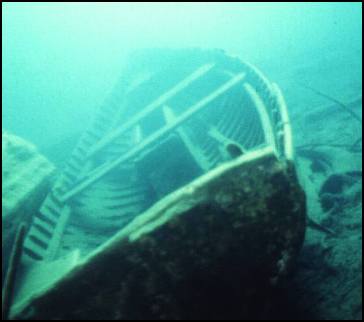
The US National Parks Service has a useful page summarizing policies and laws regarding “submerged resources” – which includes underwater archaeological sites.  The sections most of interest to the six readers of this blog are probably the pages on Washington State, Alaska, Oregon and California — though the fact that Idaho has a page is, at least, surprising until you remember the importance of paddle-wheelers in the earlier interior historical period all over the west.

Another Emerald Bay dory. Source: http://www.parks.ca.gov/default.asp?page_id=22707

Decaying resource towns of the BC coast.

Inside the school library at Ocean Falls.

Inside the school library at Ocean Falls.

Photographer Christopher Grabowski has a beautiful photo-essay at Geist magazine on the subject of decaying resource towns of the British Columbian coast, with emphasis on Alert Bay and  Ocean Falls.  You can read the essay alone, or as the multi-page photo essay, and also read an interview with Grabowski here.  A fuller set of his Ocean Falls photographs can be seen here. (2018 edit: here)

It is striking how Europeans and other settlers were so active on the coast.  Hundreds of communities have come and gone, and settlers are now concentrated in only a few major towns.  Meanwhile, the First Nations remain on their land – in the long term, perhaps, European presence on the remote coastal lands will come to resemble a blip more than an occupation.

In the meantime, these fantastic photos remind us of the wasteful ways of the culture with perhaps the shortest attention span on earth: Canada.

The inscribed fireplace in the ballroom at Ocean Falls: Archie Martin … Ocean Falls community is a monument to his memory. Indeed.

Shipwrecks of Vancouver Island

The three-masted ship Carelmapu with decks awash, dragging her anchors into Schooner Cove, near Tofino, in 1915

The ‘Virtual Museum of Canada”  has been responsible for some nice online exhibits, although a lot of these are now fairly dated.  One with what we could call a “retro web design”, but some good content, is the Shipwrecks of Vancouver Island site, apparently put together mainly on the watch of the Maritime Museum of BC with help from the Underwater Archaeological Society of BC.  There are some nice videos of underwater archaeology, and other informative materials.

Site navigation, though, is much easier if you just go to the site map here — the absurdly finicky navigation does weird things like, say, means using the back button always takes you to a splash introduction screen — is a crime against the web.  Especially since museum people are involved: why such disdain for solid future-proof web design values?  This page, for example, has a nifty slider to scroll through an interactive map: but if you don’t pay attention (e.g., if you use your back button) you will always end up on a “loading XML – introduction to the database” overlay screen page which gets tired after about the third time.  The VMC should consider a legacy fund to make sure that the sites which they poured money into for a while can all be kept up to date for both content and also compliance or at least ease of use.  It would not surprise me in the slightest if the VMC had spent over $100,000 on this site — the one site of their I know something about they spent $140,000 and it is no flashier than this thing.  Almost all that money went into design and mounting of content, very little went to the content creators themselves.  If that  applied here, I think we have a right to expect more – is this site design worth $100,000?  It seems to me that, even in 2004, a competent web designer working alone, with content given by others, could have put this together in about a month.

Canadian Navy diver goes overboard in 1959 to examine the 1853 wreck of the Lord Western, near Flores Island.

Captain Vancouver and Camas

Saranne, or lily, harvesting on the Strait of Juan de Fuca in May 1792.

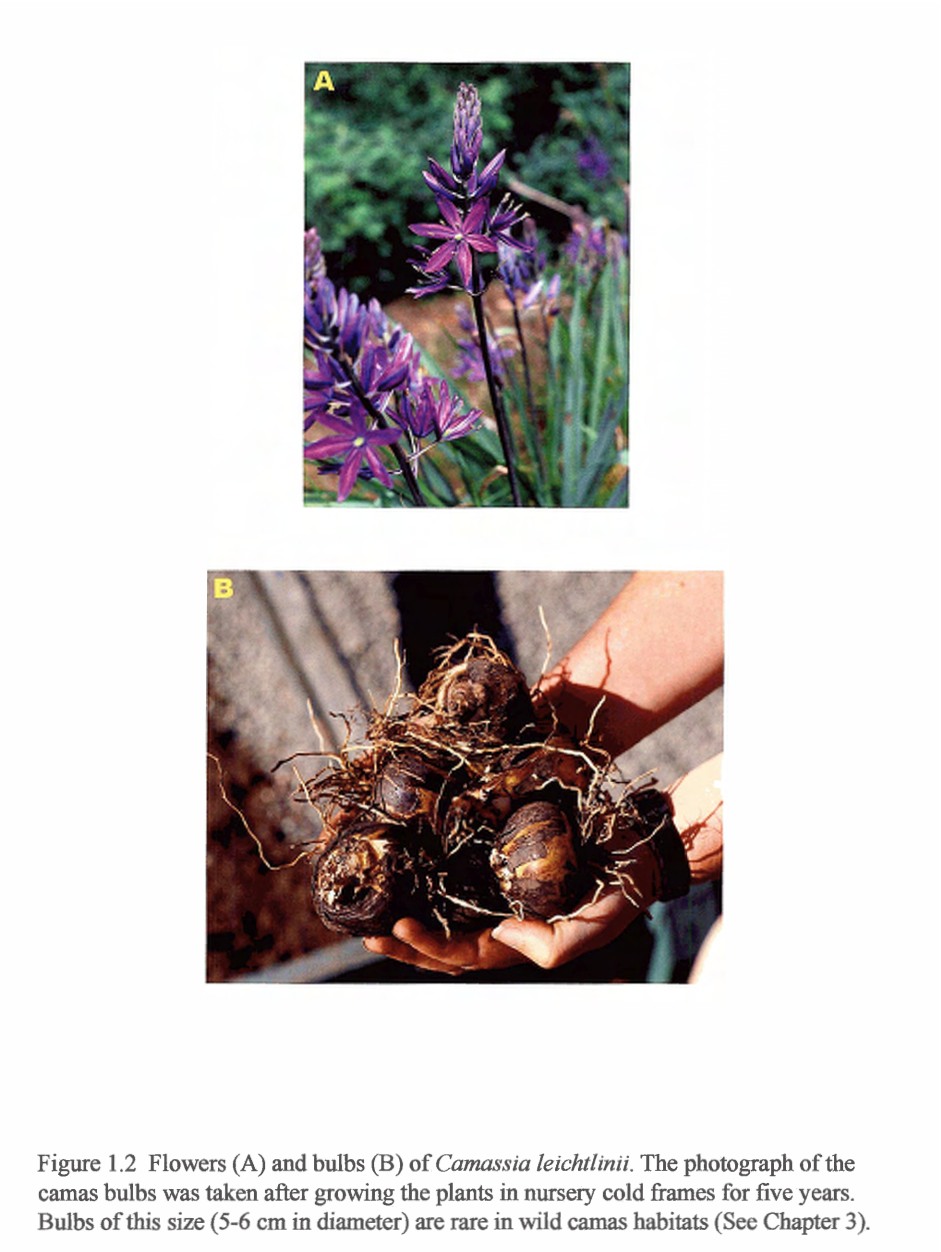
I am sure it is well known to local ethnobotanists, but I don’t recall seeing the above account of plant cultivation reference before.  It is from page 123 of Captain Vancouver’s “Voyage of Discovery …. ” (1801 edition, which you can browse online here).

I didn’t figure out the exact locale of this camp but it is probably very close to Port Discovery, near Port Townsend at the north end of Puget Sound.  The camp is carefully noted as a plant-harvesting camp and also a place where shellfish were being processed. The houses are mere lean-tos.  It is interesting to see that the considerable number of “eighty or a hundred” women, men and children were engaged in turning over the earth here, “like swine” (!).  It gives a vivid impression of a well-orchestrated, community-level harvesting event.  Vancouver comments favourably on the product, a sort of paste or flour.

Vancouver refers to one plant as a species of wild onion, while the other two plants being cultivated are termed as resembling “saranne”.  That being a new term to me, I turned to the OED only to find it not listed, which is quite surprising.  Googling turned up some interesting historical references though, in which it is clearly a term used for members of the Lily family (camas is also a member of this family).  For example, see this 1792 clip from Pennant’s Arctic Zoology Volume 3, on the use of Saranne, or Lilium kamchatschense, by the inhabitants of (yes) Kamchatka (let your eyes skim, gentle reader, over the foregoing section on the use and abuse of hallucinogenic mushrooms). Perhaps this term, Saranne, was in use around the North Pacific at that time but it strikes me as odd it did not find its way into the OED.

Anyway, a few pages down from p. 123 you can also find a nice description of the Coast Salish wool dog, which is described as being much like a Pomeranian.

Camas flowers and bulbs. Source: Brenda Beckwith Ph.D. thesis, 2004. http://hdl.handle.net/1828/632

Annotation: Richardson Island Stratigraphy

Annotated stratigraphy of lowest Richardson Island archaeological deposits.

Richardson Island is a remarkable archaeological site in southern Haida Gwaii.  When it was occupied, sea levels were about 10 metres higher than today, and rising.  Then, sea levels stopped rising and occupation continued.  We have dates ranging from 10,500 cal BP to 2900 cal BP (calendar years before present).  However, the early part of the record includes the most impressive stratigraphy.  The shoreline configuration at that time likely included a supra-tidal marine berm feature, which would have had a flattish top and have been well-drained and probably vegetation free: a perfect place to camp.  Occasional storms or even tsunamis would build this berm in the winter, and with rising sea levels the berm was “pushed uphill” so to speak.  The berm-building process would have involved sudden dumps of sorted pea-gravel onto the occupation layers at the site, sealing and preserving them.  Overall, though, the site is in a well-protected location, at least relative to the enormously dynamic winter sea conditions of Haida Gwaii. Continue reading

Duff and Kew: 1957 article on SGang Gwaay Town

Map of SGang Gwaay Town. Duff and Kew, 1957

As promised, I am linking to a copy of the 1957 report (PDF) by Wilson Duff and Michael Kew on the Kunghit Haida town of  SGang Gwaay, which has also been known erroneously as Ninstints. Little mention is made of the pole recovery aspect which was the subject of previous posts, though if you scroll all the way down in Duff and Kew’s article I append Duff’s report from that same issue of the “Report of the Provincial Museum of Natural History and Anthropology”.  In that report, the personnel involved are noted and there is also a discussion of  the activity of the  “B.C. Totem Pole Restoration Committee.”

Anyway, Duff and Kew describe in full the environment and setting of Anthony Island, the town site and associated archaeological sites, and also gives a full account of the early period conflict between Haida and trading ships.  In particular, vivid detail is given of the rise and fall of Chief Koyah and the serial raids he led on trading ships.  As Duff notes, this escalation in violence may well have been the resulted of an ill-advised power-play by Captain Kendrick who temporarily held Koyah hostage, a mortal insult in Haida society:

What Kendrick regarded as a simple” lesson” must to Koyah have been a monstrous and shattering indignity. No Coast Indian chief could endure even the slightest insult without taking steps immediately to restore his damaged prestige. To be taken captive, even by a white man, was like being made a slave, and that stigma could be removed only by the greatest feats of revenge or distributions of wealth. This humiliating violation of Koyah’s person must have been shattering to his prestige in the tribe. The Indian account of the incident told to Captain Gray a year later (but before Gray had heard Kendrick’s version) states this very clearly.

“On Coyah the chief’s being asked for, we were informed by several of the natives . . . that Captain Kendrick was here some time ago . . . that he took Coyah, tied a rope around his neck, whipped him, painted his face, cut off his hair, took away from him a great many skins, and then turned him ashore. Coyah was now no longer a chief, but an ‘AWiko,’ or one of the lower class. They have now no head chief, but many inferior chiefs. . . .” (Hoskins, in Howay, 1941, p. 200).

Kendrick had hurt Koyah more than he knew.  On Koyah’s part, if we understand the motivations of a Haida chief correctly, only bloody revenge or a great distribution of wealth would restore his lost prestige. To capture and destroy Kendrick’s ship, for example, and then distribute the loot, would fill the bill nicely. Koyah watched for his chance, and John Kendrick’s carelessness soon gave it to him.

Continue reading