Category Archives: Vancouver Island

1973 Aboriginal Perspective on UBC-MOA and SFU archaeology

Excerpt of 1973 Nesika newsletter criticizing MOA and SFU Archaeology. Click to view full page. Scroll down this page for link to plain text.

2018 edit: It looks like Nesika is now available to browse here, and to search here.

This is interesting, from the newsletter Nesika: Voice of B.C. Indians Vol. 2 No. 1 (February 1973), Page 6:

MONEY FOR BOAT: There is money to fund a boat to take archaeology students up and down our coastline to dig up the bones of our grandfathers and sift, sort, and label sacred objects from our burial grounds, but no money for us to treat our heritage with the dignity it. deserves?

This can only refer to the former pride and joy of the SFU department of Archaeology, the motor vessel Sisiutl.

That page from Nesika has two interesting articles.  One argues for the creation of a Cultural Centre at Hesquiat, while the other passionately objects to the millions spent on the UBC Museum of Anthropology and the above-mentioned Sisiutl.  Click on the image above for a legible image of the entire text, or click here for a transcript.  It is chastening to see the eloquence and power of these arguments from almost 40 years ago.  Hesquiat still has no Cultural Centre so far as I know while the Museum of Anthropology just wrapped up a 60+ million dollar renovation and SFU Archaeology has what amounts to their own, brand-new building as well, at what I hear was a cost of about 5 million dollars.

HESQUIAT BAND CULTURAL CENTRE

Lack of funds hit by Chief Rocky Amos

VANCOUVER (Staff) — After Indian Affairs had denied a request for funds for the Hesquiat Cultural Centre due to lack of funds, Band Chief Rocky Amos told the department that “we cannot accept the limitation of funds as valid.” Pointing to the $10 million available to a museum to house Indian artifacts at UBC and to other reports of funds granted for more white people to study Indians, Chief Amos wrote DIA: “It is difficult to follow the line of thinking that makes money available to exhibit our inheritance to city based people and when the rightful heirs to these very artifacts ask for assistance to house their history in an area where it will be meaningful to them, they are denied. “We of the Hesquiat Band are not unique and we have proven we can do it. Now we are made to crawl on our stomachs begging for funds to house our heritage. My pride is aching from begging but my pride also screams in agony when our people are forced into whitemen’s museums to see their inheritance.”

As the second article concludes in terms it is hard to argue with:

If there is money available for museums to store stolen work, then there is money available for museums to be built where that work belongs. With the children and grandchildren of the artists who represented a culture and society which has not, despite all efforts, conveniently died.

First custom built archaeology research vessel in North America: The Sisiutl. Recently scrapped by SFU.  Source: American Antiquity.

PS: kudos to the Union of BC Indian Chiefs for putting so much archival information online.  In related news, I previously linked to the archives of the Native Voice, which is another great resource for understanding First Nations politics and which also contains intriguing aboriginal perspectives on the practice of BC Archaeology.

Ha’ina: supernatural Nuu-chah-nulth crystal?

Crystal artifact said to be used to summon guests to feasts. Source: British Museum

Hmmm, coincidences.  Two or three days ago I was having a beer with a recently graduated student of mine, who was telling me about a number of quartz crystal artifacts he had found in an excavation in the Fraser Valley.  Now, artifacts made of quartz crystal are well known in the Gulf of Georgia — the nature of the rock makes it highly suitable for flaked stone tool production, especially microblades.  Ethnographic accounts suggest they could also be used for sawing very tough rock types such as nephrite.  However, the artifacts being described to me the other night included complete crystals with grooves around the bases — pendant-like, perhaps, or specialized abraders, or, well, or what?

Well,  in a stunning display of “coincidence”, or a happy intervention from a raven, today I ran across just such a shiny little thing at the British Museum website.  From their text, (which I cannot vouch for, having never heard of such a thing before):

The Nuu-chah-nulth believed that these crystals, or ha’ina, grew on the top of mountains and were endowed with magical qualities for bringing wealth and good fortune, for example, when hunting sea otter.

This ha’ina was collected by Captain George Dixon, who had accompanied Captain Cook on his Third Voyage (1776-80) to Vancouver Island. In 1785-88 Dixon made a trading voyage on the King George and Queen Charlotte which was promoted by the King George’s Sound Company (King George’s Sound was Captain Cook’s short-lived name for Nootka Sound on Vancouver Island, where this crystal was collected, probably from the Mowachaht people.)

The Nuu-chah-nulth used the ha’ina to invite people to potlatches, the great feasts given to celebrate life-cycle events at which hereditary rights were displayed. The invitation to a potlatch would take place at a gathering a year or two before the potlatch, when the crystal would be, metaphorically speaking, sent out to the prospective guests. They may have ‘sent’ this example to Dixon. Dixon was supported by Sir Joseph Banks in his work, and through Banks gave this ‘piece of rock crystal’ to the British Museum on 22 May 1789.

It would be sad and ironic (though not surprising) if this artifact was indeed an invitation never acknowledged, an unfulfilled RSVP, and if the gormless British had managed to interpret an invitation as a commodity and not as a request for honour, attendance and respect.  It would be wrong on a number of levels to draw conclusions about the Fraser Valley examples, but it does show the potentially fuzzy boundaries between symbolic and functional material culture.

Rock Art on Gabriola Island in 1792

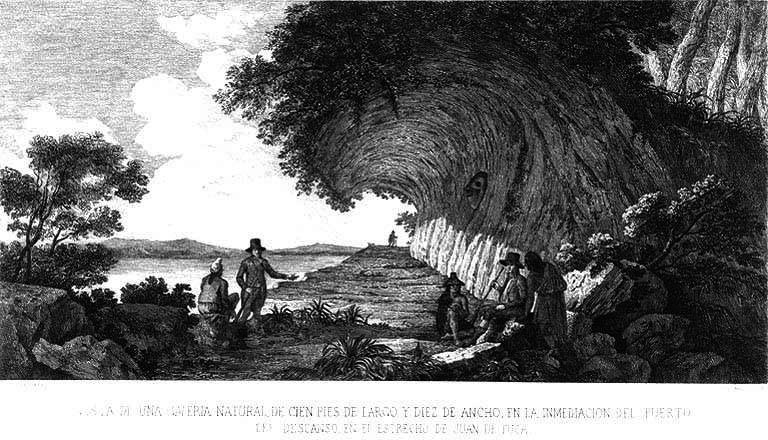
Descanso Bay Rock Art, 1792. Source: U. Washington

From the University of Washington, an unexpected image of a large Gabriola Island rockshelter containing rock art, entititled:

Northwest Coast carvings on cliff near Descanso Bay, Gabriola Island, British Columbia, in engraving made 1792.

Cardero, Jose, b. 1767 or 8

Notes: Photograph of engraving of explorers and indians viewing a carved head and other petroglyphs on the side of a cliff. The caption says it is a view of a natural gallery, one hundred feet long, and ten feet wide near Descanso Bay.

Caption on image: Vista de una galeria natural, ce cien pies de largo y diez de ancho, en la inmediacion del puerto del Descanso, en el estrecho de Juan de Fuca Image from Alessandro Malaspina’s Viaje politico-cientifico alrededor del mundo, 1885, f.p. 200

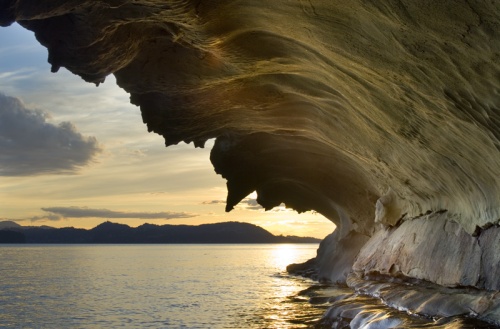
I presume this is the “Malaspina Galleries” near the ferry terminal – I didn’t know there was rock art there though and maybe there isn’t, anymore.  Perhaps this place, or this one? Or, perhaps the unusual pitted and pocked natural sandstone fooled the Spanish, though it sure looks like there is a large image in the middle of that engraving.   Quick, Gabriolans, trot down there and check it out.

Malaspina Galleries, Gabriola Island. Photo: Kevin Oke.

Canoe Steaming

Carl and Joe Martin steam a canoe near Tofino. Click to play video.

The Northwest Coast is rightly famous for the superb dugout canoes made by First Nations, a craft which continues to the present day.  It takes weeks or months to carve  a canoe from a single log of red cedar – imagine then the tension inherent in having a big part of the success or failure “boil down” to a single event the steaming process.  The video above shows master carvers Joe and Carl Martin of the Nuu-chah-nulth nation steaming a canoe at a beach near Tofino, on western Vancouver Island.

Steaming softens the cedar and makes it more flexible, allowing the insertion of carefully-measured, carefully-planned wooden spacers which spread the middle of the canoe into a graceful curve, increasing its buoyancy, resistance to capsizing, and introducing subtle yet beautiful lines, as seen in this enormous example mis-labelled (I think) as Salish.  After the canoe cools and dries, the wood returns to its natural properties. The process means the canoe can in principle be wider than the single piece of cedar from which it is carved.

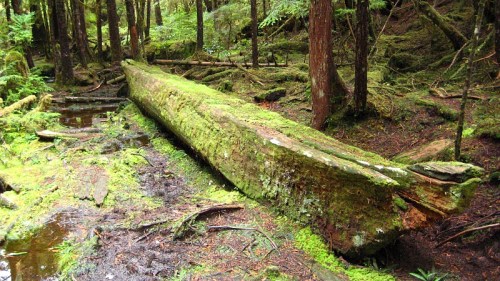
You can click here to see a slide show of the steaming of a Haida canoe carved by the team of Jaalen Edenshaw and his father Guujaw. In the old times, a canoe might be roughed out in the bush then hauled to the beach for finishing.  Sometimes flaws in the wood or other interruptions mean a canoe was never finished.  Such half-finished vessels are a known, but uncommon archaeological site in the woods of coastal British Columbia.

The carving of such canoes is increasingly common.  Nowadays, the canoe log is likely to be hauled to a carving shed.  Sadly, a major constraint  on canoe construction is the difficulty in obtaining prime, straight, clear, old-growth cedar logs.

Partially finished Haida canoe in forest. Photo by Martin Lalune.

Tree Burials at Tsaxis

"Arriving for a tree burial by canoe, in British Columbia, a traditional Indian ceremony", c. 1920. Watercolour by Joanna Simpson Wilson.

One of the most distinctive burial methods on the Northwest Coast was the creation of platforms in trees, on which coffins would be placed.  While the practice is commonly recorded and discussed in the Anthropological literature, photographs of tree “burials” are rare — and even if they were not, then reproduction of these images might well be problematic.

I recently ran across the image above by the little-known Canadian author Joanna Simpson Wilson (1896-1987), which shows numerous bentwood boxes attached to trees as a throng of mourners gathers below.  The platforms are rather insubstantial and the coffins are stacked several-high in places, with red cloth attached — perhaps the remains of blankets.  After a number of years, the boxes would deteriorate and the remains of the body would fall from the tree.  At this time, a secondary burial at a village site cemetery or other place might be performed.  I have seen the remains of several tree burials in the field, with human remains scattered beneath the branches of a large spruce — looking up, there are large branches with ring-like pathologies where the bark grew around rope, and other evidence of cultural modification. Archaeologically, there is a trend over the long term along the coast for inhumation of human remains to give way to sky burials or mortuary houses.

According to this site, the setting of the painting is the Kwakwaka’wakw village of Tsaxis (near Fort Rupert / Port Hardy on Vancouver Island), specifically a place called Storey Beach (more pics).

Boas 1934: Geographical Names of the Kwakiutl Indians. Click to enlarge. Strangely, Tsaxis (#13) is not plotted on the map.

Wapato, Camas, Tyee

4,000 year old Wapato tubers from archaeological site in Katzie territory.

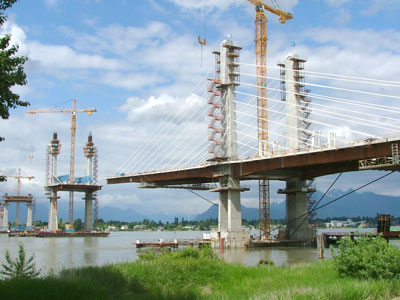
The Tyee has a nice feature on invigoration of traditional use of Wapato (“Indian Potato”) and Camas.  I visited an open house at an archaeological site in Katzie territory a year or two ago and so here’s a couple of pictures of 4,000 year old Wapato tubers and a digging stick of presumably the same age which would have been used to help cultivate the wet beds.  At that site (almost completely destroyed by the new Golden Ears suburban commuter bridge), there were signs of the creation of enhanced “water gardens” for Wapato, and not just the harvesting of what occurs naturally.  Similarly, camas productivity was greatly enhanced by selective weeding and by the practice of tilling and selective bulb harvesting as well as deliberate burning to manage the camas fields.  All in all, exploitation of many plant foods (and shellfish) formed a practice intermediate between farming and gathering, and thereby are a powerful line of evidence for traditional use of large areas of SW British Columbia.  The Tyee article seems to me to be clear, accurate and informative.  I recommend it.

Tip of a wooden digging stick, ca. 4000 years old, Katzie territory. Two others of the dozens found can be seen in the background.

The Gabriolan

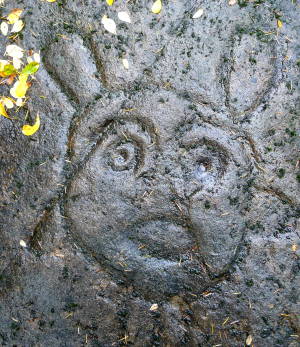
Gabriola Petroglyph. Source: The Gabriolan.ca

Another blog linked to me the other day: The Gabriolan. This is a lovely blog, whose mysterious author has a great eye for the quirky and beautiful things about that Island. I especially like the various pictures of unusual things found in the woods, like antlers on trees. On my quick browse through the site I noted the excellent photograph of a Gabriola Island petroglyph which I am posting above. This is not a petroglyph I am familiar with though I don’t have my books in front of me.  I’ll look it up.  With its double-rendered eyes and protruding ears, it may be Mouse-Woman.  But anyway, anonymous Gabriolan, thanks for the link, and look after those petroglyphs.

Capital Regional District Report

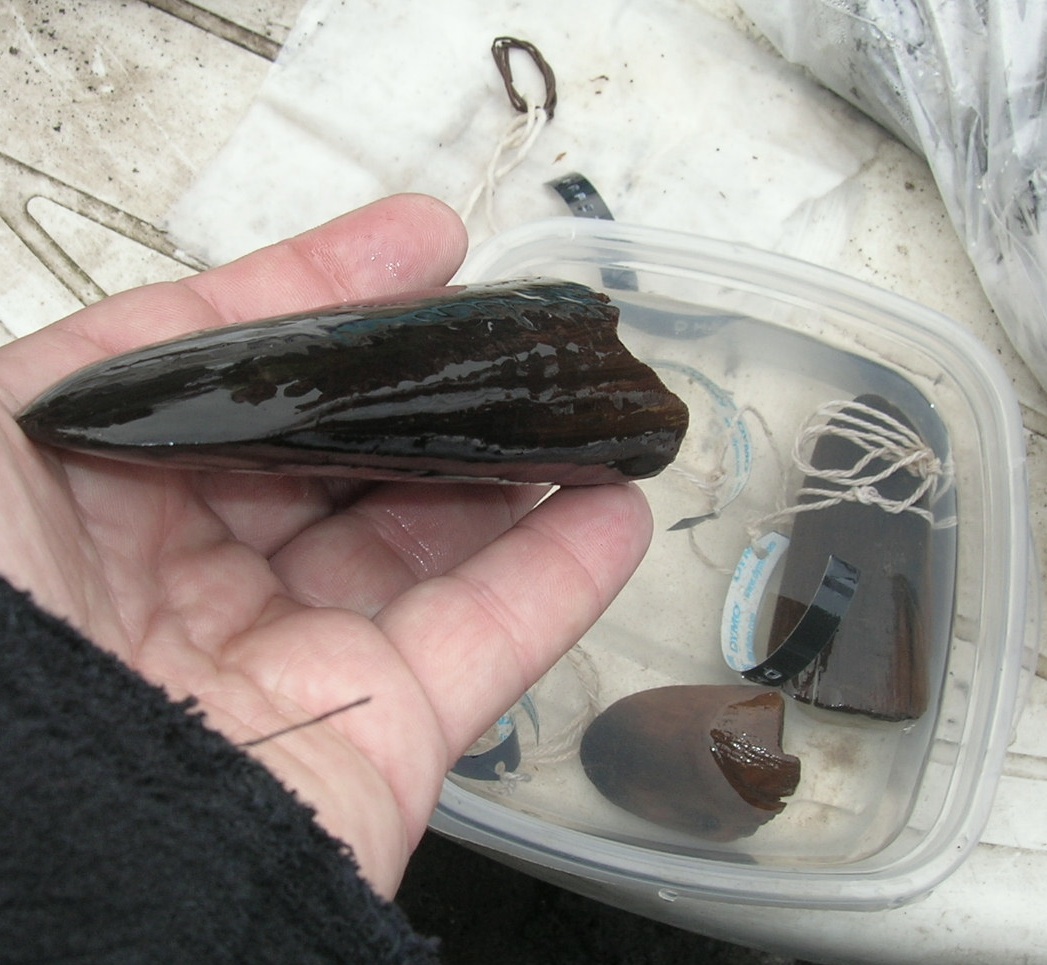
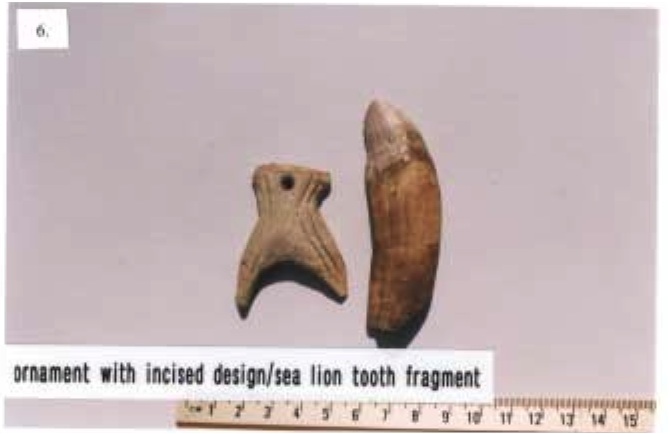
Decorated antler?, and a worked sea lion tooth from the Elchuk collection, Mill Hill.

I just came across this interesting document from 1999 by Liz Crocker (PDF) which is a cultural history of three CRD Parks: Mill Hill, Francis/King and Thetis Lake.  While I wouldn’t put a lot of stock in the archaeological component of this report, there are at least two notations of considerable interest.

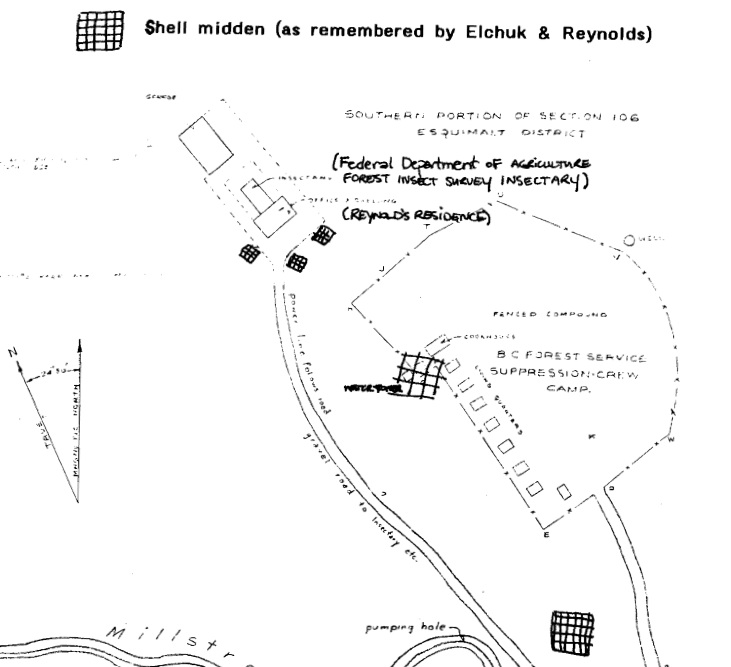
The first is the documentation of an unrecorded shell midden at Mill Hill, not DcRu-70 but another site, including a sketch map of the location which is about 2 to 3 kilometres inland.  There are also reports of unrecorded inland shell middens at Thetis Lake Park. Since such sites are rare and poorly know,  then this is something worth following up.  Indeed, I wish the CRD took their stewardship role seriously enough to commission an intensive, comprehensive, and professional inventory of the archaeological heritage of all their Parks.  This kind of baseline information is so essential that I honestly don’t understand how they think they can discharge their duties without it.

The other point of interest in Crocker’s report is the documentation of a fairly large private collection, also from Mill Hill and also well inland.  Included in this collection are Locarno-style artifacts as well as more recent ones such as a flat-topped handmaul.  Appendix 2 of the linked report includes some snapshots  of this collection.  Despite the poor quality, it is great to see private collections being documented.  The small decorative piece shown above is interesting and unusual, and the abundance of organic remains suggests again that these were collected from or near a shell midden.  Again, something to follow up. If only there were a Ph.D. student at UVIC, say, who was interested in inland shell middens…..

Sketch map of reported but unrecorded inland shell midden patches at Mill Hill.

Victoria-Songhees reburial

Mayor Fortin builds a bridge to the Songhees First Nation. Picture: Johnstonstreetbridge.org

Last summer there was a sad incident with human remains being disturbed in the Dallas Road area of Victoria. The remains, of a young SLENI (woman) were subsequently reburied and since then a burning ceremony has been held.  I’ve been privileged to attend burning and reburial ceremonies and they are powerful and sincere events.  Interesting then to see this news snippet today , focusing on the cost ($9,400) — I can hardly wait for the informed and balanced commentary to ensue.  But kudos to Dean Fortin for doing the right thing – it is no more (or less) than most developers have done over the last decade when human remains were disturbed.  I have to say, though, it is disingenous for Mayor Fortin to note the Songhees reserve is not in the City of Victoria — memo to the Mayor: Victoria is within Songhees territory; the remains are from Songhees territory, the current reserve boundaries are completely irrelevant to this issue.

Victoria News

The cost of being freindly [sic]

By Lisa Weighton – Victoria News

Published: January 11, 2010 3:00 PM

Updated: January 11, 2010 3:34 PM

Mayor Dean Fortin is making First Nations relations a priority.

Last month, the city invested $9,400 in a traditional reburial ceremony after discovering 300-year-old human bones during a sewer retrenching project on Dallas Road, Aug. 27.

“We feel like we have an obligation to work with all other levels of government including our First Nations,” said Fortin.

The cost was a drop in the bucket in the overall $2.4 million-project said Derk Wevers, the city’s sewer and storm water quality technician.

Following consultation with Esquimalt First Nation elder Mary Anne Thomas and Songhees First Nation elder Elmer George, a reburial service was held Dec. 8.

The city also financed a traditional burning ceremony and feast on the Songhees First Nation reserve late last month, which included wages for a city contractor, gifts, food and the gravestone.

Fortin said he was eager to take part despite the reserve not being within Victoria’s boundaries.

Gabriola Petroglyphs at Elaine Seavey’s blog

Anthropomorphic petroglyph on Gabriola Island. Note how the patina of the rock has been disturbed by tracing.

Gabriola Island has some of the most spectacular and important petroglyphs in the world — and unfortunately, they are just as threatened by developers and development pressures, as I have noted before.  Since these sites seem to not always matter as much as I think they should, it is nice to see an awestruck first person account by a person with no vested interest.  Why on earth would those who purport to love and respect Gabriola Island and  Snuneymuxw culture be so intent on diminishing this kind of experience?

Even so, I must comment on the destructive practice of rubbing, not so much through cloth but the scraping of the lines to remove weathering patina and lichen in order to take clearer photographs.  This is a very unfortunate practice which hastens the disintegration of the rock art.