Category Archives: Northwest Coast

Basket Conservation at the Langley Centennial Museum

N'laka'pamux Basket undergoing conservation treatment. Source: LangleyMueum.org

I know I occasionally grumble about how regional, publicly funded museums in B.C. are almost devoid of archaeological and aboriginal substance, especially on the web.  A happy exception to this is the Langley Centennial Museum near Vancouver, which has an unusual and interesting virtual exhibit of N’laka’pamux basketry.  The museum is in the possession of a large collection of these baskets, made by an interesting historical figure from the Yale-Lytton area of the Fraser River: one Kathleen Pearson. The exhibit consists of a number of pages, including a short essay (5 pages) which is strangely not clearly linked, based around Boas et al.’s 1928 Bureau of American Ethnology Publication.  The museum goes beyond the historical frame by discussing recent named weavers such as Mary Ann James, and the continuing tradition of N’laka’pamux basket making.

It is really great to see a relatively small museum explicitly recognizing that the world didn’t begin in 1846 and going beyond the story of white settlers as if they were a self contained pod of culture beamed down from Queen Victoria’s forehead.  The other thing  I particularly like about this small web exhibit is that the museum highlights the activities of another group of unsung heroes in the world of heritage conservation: the conservators who restore, stabilize and protect the artifacts entrusted to museums.

Continue reading

Fish Bones at Portland State University

Maxillae of the Great Sculpin. Source: PSU

OK, I have written more exciting headlines in my life.  But as I noted before, zooarchaeologists – the specialists in identifying and interpreting animal remains – are some of the unsung heroes of archaeology.  The discipline requires encyclopedic knowledge of hundreds of animal skeletons,  the ability to relate even small fragments from archaeological contexts back to whole specimens of known species, and a thorough understanding of both culture and ecology – all this in addition to the normal skill set of a typical archaeologist.  Master all this, and your reward is to be called “Bone Guy” (or worse) for the rest of your professional life.

Anyway, it is welcome to find another online guide to some common archaeological animal remains from the Northwest.  While I know it is a bit too much information for many readers of this web site, it is important to share the link and information, since considerable time and effort was put into this admittedly niche set of illustrated fish bones, and archaeologists need to be aware of it.

Continue reading

The Wreck of the Kad’yak

Cannon from the Kadyak on the seafloor near Kodiak Island. Source: Archaeology Magazine.

Off Alaska’s Kodiak Island lie the remains of the Russian-American Company ship Kad’yak, which sank in 1860.  The wreck of this Barque was rediscovered in 2003, as this first-hand account documents.  (It is full of the usual intrigue between divers and dirters and is rich with interesting links about the discovery).  Almost immediately, an underwater archaeological research project was formed, participants included people from the Kodiak Maritime Museum, the Baranov Museum, the Alutiiq Museum, the State of Alaska Department of Natural Resources, NOAA National Marine Fisheries Service in Kodiak, and East Carolina University.  This was the first underwater archaeology project in Alaska, and it is ably documented by the Alaska Office of History and Archaeology.

Continue reading

Katzie Artifact Gallery

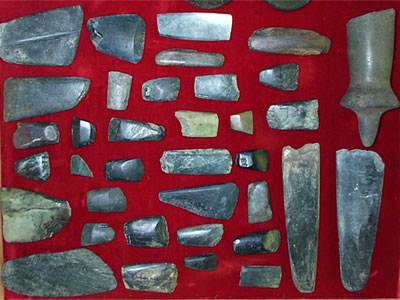
Ground stone celts (adze and chisel blades). Source: Katzie.ca

Hmmm: the pictures are low resolution, there isn’t much annotation, many are of replicas, and the page design HTML is wonky, causing a lot of sideways scrolling.  Yet I really like the Katzie First Nation’s artifact gallery.  And no, its not only because they give ground stone its rightful pride of place.  Though, in the image above, feast your eyes on the uppermost left specimen – an unusual yet definitive example of a broad celt being bisected to form two narrow ones.  In essence, an adze is being turned into two chisels.  Chew on that, Spaulding and Ford. Also check out the specimens in the centre-right, where the sharpened bits differ in colour from the bodies.  These are either patinated specimens subsequently reground and recycled, or speak to a process of heat treating or oiling or similar to enhance the raw material.  You could read all about this in my M.A. thesis if it were online, which it isn’t.  Or wasn’t until five minutes ago.  But I digress.

What I like is the text associated with these images.

Continue reading

Raven and the First …. Immigrant

Raven and the First People (Bill Reid), and Raven and the First Immigrant (Nicholas Galanin). Source: Nicholas Galanin, http://silverjackson.tumblr.com/

I’m a big fan of classic Northwest Coast art – it’s hard not to be.  But there is also a large and highly talented array of indigenous Northwest Coast artists who work in a variety of media and contemporary idioms.  One who recently caught my eye is Sitka Tlingit artist Nicholas Galanin.  You probably recognize the figure in the foreground above: Bill Reid’s iconic “Raven and the First People” (if not from class, then from your 20$ bill), which tells the story of Raven-Travelling in ancient times, finding a clamshell, hearing noises inside, and releasing people and animals  into a transforming world.

But wait, what’s that figure in the background, on the other side of the glass window, in the courtyard of the MOA?

Continue reading

Making Yuxwch’ee Yakw, a Tlingit Spruce Canoe

Working on Yuxwch’ee Yakw, the Spruce Canoe. Source: Sealaska Picasa page.

Most people are familiar with the use of red cedar to make dugout canoes on the Northwest Coast.  It is not as commonly known that Sitka spruce was also used for this purpose, especially on the northernmost coast where red cedar did not thrive or was absent completely.

Via the Sealaska Heritage Institute Special Collections blog, I just found a nice, extensive photo set from 1987 of the carving of a spruce canoe near Hoonah, a Tlingit village in Southeast Alaska.  The introduction to the photo set reads:

As part of the bicentennial of the Constitution celebration of 1987, the National Park Service and the Sealaska Heritage Foundation (now Sealaska Heritage Institute) sponsored the carving of a Tlingit canoe using traditional tools and methods at Bartlett Cove, which is near Hoonah, Alaska. The canoe, called Yuxwch’ee Yakw in Tlingit, means Sea Otter Canoe, which was the indigenous canoe of Hoonah and was photographed by the Harriman Expedition in Glacier Bay in 1899. The canoe was constructed at Bartlett Cover in August 1987. George Dalton, Sr, born in Hoonah in 1879, and other elders with personal knowledge of canoe making traditions served as cultural advisors to the project. Lead carvers Nathan Jackson, Steve Brown, Richard Dalton, and Mick Beasley carved the canoe using a Sitka Spruce log using traditional tools, such as the xot’ah or Tlingit adze.

Continue reading

The Bison at Ayer Pond on Orcas Island is archaeological.

Cranium of 14,000 year old Bison antiquus from Ayer Pond, Orcas Island, Salish Sea. Source: Kenady et al. 2010 (in press)

One of the challenges in archaeology is to take a familiar landscape and, by considering the known data from the paleo sciences, make it strange and unfamiliar and ripe with possibilities for strange and unfamiliar archaeology.  Right here in the southern Salish Sea there is an excellent example of this coming to light.  As the ice retreated at the end of the last glacial period, the Salish Sea saw dramatic changes in sea level (both higher, and lower), in vegetation (tundra, grassland, and forest) and in the animals present on that dynamic landscape.

Location of known Bison antiquus remains in Salish Sea. Source: Wilson et al. 2009.

For years now, we have known that one of the large land mammal species of the Salish Sea around 14,000 years ago was bison — and not just any bison, but Bison antiquus, the extinct giant bison.  A number of remains of this creature have been found, mostly on the Saanich Peninsula and on Orcas Island,  which is one of the largest islands in the Salish Sea, sitting just south of Saturna Island, close to the Canadian Border.  Since these remains mostly clocked in at around 13,000 to 14,000 years ago, most archaeologists were interested in them primarily for their coolness factor and not because they seriously thought there might be relevance to early human presence here – these bison pre-date the Clovis Culture which was the consensual evidence for the first peopling of the Americas.  I have previously posted on this with reference to Clovis in Puget Sound, to the controversial Manis Mastodon site, as well as to the nearby Wenas Mammoth and even the Paisley Cave finds in Oregon – evidence is coming together for both a Clovis and a pre-Clovis occupation of the Salish Sea and environs.

Now with a new paper by Kenady et al. in press, these numerous bison finds take on a new importance: one of them is most likely archaeological.

Continue reading

CRM problem at Englishman River

Excavation of house foundations at Englishman River. Source: CBC

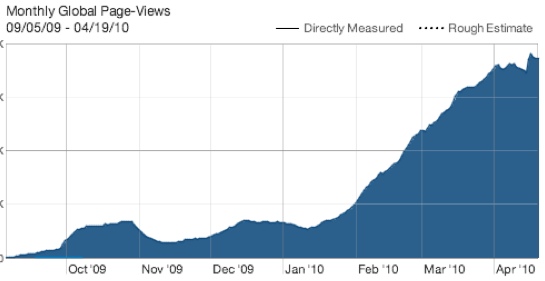
Hmm, I just noticed today is the first anniversary of this blog.  Mind you, it was a slow and intermittent affair at first but with more regular posting has come steady increase in readership.

But you know who else had a birthday on April 20th?

With that in mind, what better way to celebrate than by checking out the firestorm brewing on the Englishman River, where some landowners, perhaps wilfully ignorant, have had an unfortunate series of events transpire regarding an archaeological site on their property. The Archaeology Branch has responded to the story with a terse memo.

A little background to start:

All archaeological sites in B.C. dating to before 1846 A.D. are protected under the Heritage Conservation Act.  This is true whether or not they are known to the Archaeology Branch or unknown and unrecorded.  In some ways, then, it is not relevant that the site under these people’s house was first recorded, I am told, in 1975.  Even if it was first discovered by the application of a backhoe in April 2010, it would be accorded the same protection under the law. The fact that the landowners claim to have not known about the site until recently is an interesting issue that does not really materially affect the facts of this case. And, under the standard procedures in place, they are indeed responsible for paying the costs of the archaeological investigations, in this case reported to be $35,000.  Whether or not they have the money also doesn’t affect the facts of the case – incidentally, these people who self-portray as poor and unemployed are finding archaeology because they are building a new house on their property, which must be costing them several hundred thousand dollars.

So, these facts may not actually alter the legal responsibilities, but they do however very strongly affect the way this issue is seen to be unfolding.

Continue reading

Sealaska Heritage Institute Blog

Stone artifact recently donated to the Sealaska Heritage Institute Special Collections. Source: SHI.

Sealaska Heritage Institute (SHI) is a regional Native nonprofit organization founded for the Tlingit, Haida and Tsimshian people of Southeast Alaska. SHI was established in 1981 by Sealaska Corp., a for-profit company formed under the Alaska Native Claims Settlement Act (ANCSA). SHI, formerly Sealaska Heritage Foundation, administers Sealaska Corp.’s cultural and educational programs.

I know this because I got linked the other day by SHI’s Special Collections Research Center Blog, which I hadn’t seen before.  While not updated as frequently as this corner of the internavel is, it contains a lot of great posts going back to 2007 – you can see links to their archives down on the lower right hand side of their front page.

The most recent post concerns the artifact shown above.  It looks to my eye like a, possibly unfinished, hand maul. They seem a little uncertain about the function though, so someone should go over to their site and give some opinions – they take comments.  People with dirty minds are excluded from this request.

Continue reading

Listening to Our Ancestors: An exhibit at the National Museum of the American Indian

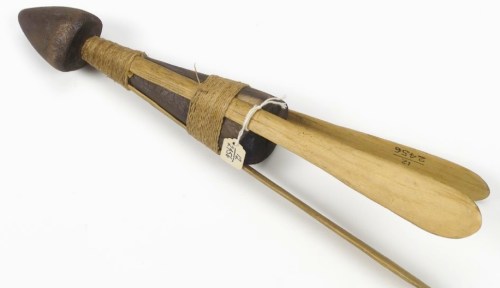
Coast Salish Cod Lure. Source: NMAI

Listening to Our Ancestors” is a nice online exhibit which resulted from a process by which 11 west coast First Nations and Tribes came to the National Museum of the American Indian (a fairly recent, major addition to the Smithsonian Institution in Washington D.C.) and created mini-exhibits reflecting their own worldviews and the categories they deemed important.  As such, each community’s sub-page is a glimpse into their specific cultural heritage and priorities – indigenous curation, you could say.

While much of the focus is on ceremonial items, some communities also choose to focus some attention on their more everyday technology, which is more in line with my own interests.

Continue reading