Category Archives: First Nations

Raven and the First …. Immigrant

Raven and the First People (Bill Reid), and Raven and the First Immigrant (Nicholas Galanin). Source: Nicholas Galanin, http://silverjackson.tumblr.com/

I’m a big fan of classic Northwest Coast art – it’s hard not to be.  But there is also a large and highly talented array of indigenous Northwest Coast artists who work in a variety of media and contemporary idioms.  One who recently caught my eye is Sitka Tlingit artist Nicholas Galanin.  You probably recognize the figure in the foreground above: Bill Reid’s iconic “Raven and the First People” (if not from class, then from your 20$ bill), which tells the story of Raven-Travelling in ancient times, finding a clamshell, hearing noises inside, and releasing people and animals  into a transforming world.

But wait, what’s that figure in the background, on the other side of the glass window, in the courtyard of the MOA?

Continue reading

Making Yuxwch’ee Yakw, a Tlingit Spruce Canoe

Working on Yuxwch’ee Yakw, the Spruce Canoe. Source: Sealaska Picasa page.

Most people are familiar with the use of red cedar to make dugout canoes on the Northwest Coast.  It is not as commonly known that Sitka spruce was also used for this purpose, especially on the northernmost coast where red cedar did not thrive or was absent completely.

Via the Sealaska Heritage Institute Special Collections blog, I just found a nice, extensive photo set from 1987 of the carving of a spruce canoe near Hoonah, a Tlingit village in Southeast Alaska.  The introduction to the photo set reads:

As part of the bicentennial of the Constitution celebration of 1987, the National Park Service and the Sealaska Heritage Foundation (now Sealaska Heritage Institute) sponsored the carving of a Tlingit canoe using traditional tools and methods at Bartlett Cove, which is near Hoonah, Alaska. The canoe, called Yuxwch’ee Yakw in Tlingit, means Sea Otter Canoe, which was the indigenous canoe of Hoonah and was photographed by the Harriman Expedition in Glacier Bay in 1899. The canoe was constructed at Bartlett Cover in August 1987. George Dalton, Sr, born in Hoonah in 1879, and other elders with personal knowledge of canoe making traditions served as cultural advisors to the project. Lead carvers Nathan Jackson, Steve Brown, Richard Dalton, and Mick Beasley carved the canoe using a Sitka Spruce log using traditional tools, such as the xot’ah or Tlingit adze.

Continue reading

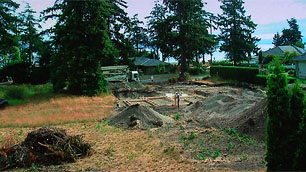
CRM problem at Englishman River

Excavation of house foundations at Englishman River. Source: CBC

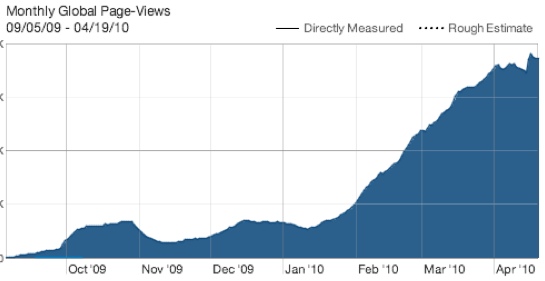
Hmm, I just noticed today is the first anniversary of this blog.  Mind you, it was a slow and intermittent affair at first but with more regular posting has come steady increase in readership.

But you know who else had a birthday on April 20th?

With that in mind, what better way to celebrate than by checking out the firestorm brewing on the Englishman River, where some landowners, perhaps wilfully ignorant, have had an unfortunate series of events transpire regarding an archaeological site on their property. The Archaeology Branch has responded to the story with a terse memo.

A little background to start:

All archaeological sites in B.C. dating to before 1846 A.D. are protected under the Heritage Conservation Act.  This is true whether or not they are known to the Archaeology Branch or unknown and unrecorded.  In some ways, then, it is not relevant that the site under these people’s house was first recorded, I am told, in 1975.  Even if it was first discovered by the application of a backhoe in April 2010, it would be accorded the same protection under the law. The fact that the landowners claim to have not known about the site until recently is an interesting issue that does not really materially affect the facts of this case. And, under the standard procedures in place, they are indeed responsible for paying the costs of the archaeological investigations, in this case reported to be $35,000.  Whether or not they have the money also doesn’t affect the facts of the case – incidentally, these people who self-portray as poor and unemployed are finding archaeology because they are building a new house on their property, which must be costing them several hundred thousand dollars.

So, these facts may not actually alter the legal responsibilities, but they do however very strongly affect the way this issue is seen to be unfolding.

Continue reading

Sealaska Heritage Institute Blog

Stone artifact recently donated to the Sealaska Heritage Institute Special Collections. Source: SHI.

Sealaska Heritage Institute (SHI) is a regional Native nonprofit organization founded for the Tlingit, Haida and Tsimshian people of Southeast Alaska. SHI was established in 1981 by Sealaska Corp., a for-profit company formed under the Alaska Native Claims Settlement Act (ANCSA). SHI, formerly Sealaska Heritage Foundation, administers Sealaska Corp.’s cultural and educational programs.

I know this because I got linked the other day by SHI’s Special Collections Research Center Blog, which I hadn’t seen before.  While not updated as frequently as this corner of the internavel is, it contains a lot of great posts going back to 2007 – you can see links to their archives down on the lower right hand side of their front page.

The most recent post concerns the artifact shown above.  It looks to my eye like a, possibly unfinished, hand maul. They seem a little uncertain about the function though, so someone should go over to their site and give some opinions – they take comments.  People with dirty minds are excluded from this request.

Continue reading

Listening to Our Ancestors: An exhibit at the National Museum of the American Indian

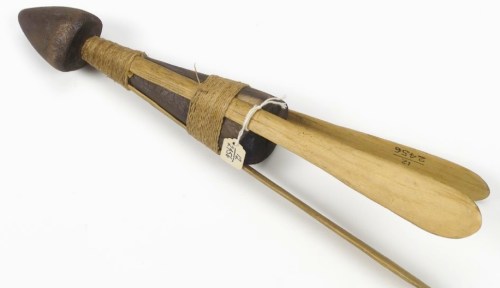
Coast Salish Cod Lure. Source: NMAI

Listening to Our Ancestors” is a nice online exhibit which resulted from a process by which 11 west coast First Nations and Tribes came to the National Museum of the American Indian (a fairly recent, major addition to the Smithsonian Institution in Washington D.C.) and created mini-exhibits reflecting their own worldviews and the categories they deemed important.  As such, each community’s sub-page is a glimpse into their specific cultural heritage and priorities – indigenous curation, you could say.

While much of the focus is on ceremonial items, some communities also choose to focus some attention on their more everyday technology, which is more in line with my own interests.

Continue reading

A Stillaguamish River Canoe

Roughly dressed block of cedar in preparation for carving. Source: flickr.com

The Stillaguamish Tribe live along the Stillaguamish River basin (map) of Northwestern Washington State.  They are a tribe which missed out on any reservation land in the 1850s and have struggled somewhat at times to maintain cultural identity as a diaspora.  Regaining Federal Status in 1976 was important to the tribe of about 200 members, as was 2009’s first “First Salmon” ceremonies in a generation.

An interesting and encouraging development seems to be the recent carving of the first Stillaguamish river canoe in a century.  While the larger dugout canoes (still being carved) of the outer coast nations, such as the Haida and Nuu-chah-nulth, are better known emblems of the Northwest Coast as a whole, these river canoes were equally important to the inland waterway and riverine nations of the Fraser Valley and Puget Sound.

According to an informative and well-written article in the Everett HeraldNet, the story starts with an interesting origin of the cedar log itself.

Continue reading

Aboriginal Bridges of Northwestern B.C.

Bridge at Hagwilget, 1881. Source: B.C. Archives.

I don’t know that much about the “Living Landscapes” program, which includes a series of small web exhibits.  While related to the Royal B.C. Museum in Victoria, and covered by their insane legal language (see below), they seem to have outsourced the actual expertise to non-RBCM people.  Not that surprising, really, since they have hardly any in-house expertise left after decades of cuts!  But all credit to them for their role in the informative series, even if the program is now (2006) finished with nothing for Vancouver Island.

I’ll probably review a few of these pages, but for now the exhibit which caught my eye, mainly because of its cool illustrations, is the one of Aboriginal Bridges of Northwestern B.C. The author, Brenda Guernsey, has put together a great set of images from various public archives to illustrate these amazing features.

Continue reading

Historic Maps and Dioramas of Victoria and Environs

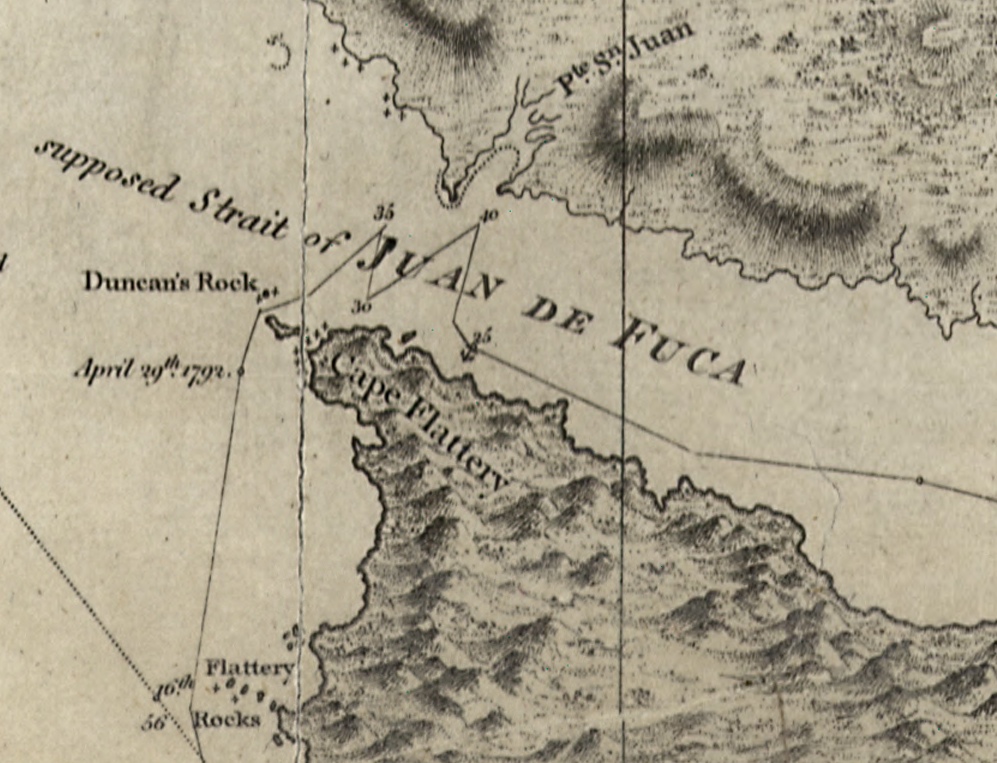
Detail of Capt. Vancouver's 1792 chart showing the "supposed strait of Juan de Fuca". Source: viHistory

vihistory is a web site designed to aid in historical research of Vancouver Island, at which it succeeds admirably.  You should poke around and have fun with their census data and the other worthy, if dreary, pursuits it affords the serious scholar.

One feature which is not immediately clear on first glance, perhaps deliberately as has entertainment potential, is a large selection of very high-resolution maps and images which you can download from this page. The file sizes are large, of course, but increasingly that is less of an obstacle in the past.  The maps are mostly of historic Victoria, but there are some regional maps such as telegraph and lighthouse maps of British Columbia, and a couple of maps of Nanaimo.  As usual, I have surfed through the maps so you don’t have to – and some of them are remarkably fun, and informative.

Continue reading

Peabody Museum Ethnographic Collection

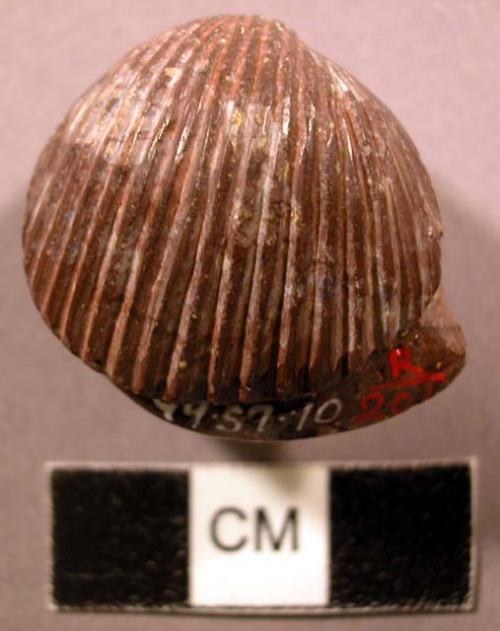
Haida carved cockle. Source: Peabody.

The Peabody Museum at Harvard has a predictably great collection from the Northwest Coast.  I’m more drawn to the archaeological-type artifacts vs. the masks and baskets and argillite, but fill your eyes with the charming Haida carving of a cockle, above, collected in “Massett Bay”.

One nice thing about this collection is the accession ledger is also scanned in and made available.  For example, if you go the the page for the cockle above here, you can click on the cockle picture for a higher resolution, on the first ledger page for the left hand side of the ledger book, and on the second for the right hand side.  It is possible in this way to do some ad hoc fact checking of their descriptions to finding additional information. For example, the cockle’s second page contains the notation “taken from the interior of R/200”.  Accession number R/200 turns out to be this unusual ?argillite carved box with inlaid shell.

Some of the other objects are equally unusual – I’d say there are more “wow – never seen one of those before” moments in this collection than any other I have seen.

Continue reading

Yuungnaqpiallerput: Yup’ik Science and Survival

Inflating the stomach of a beluga whale. Source: Yupikscience.org

Yuungnaqpiallerput (The Way We Genuinely Live): Masterworks of Yup’ik Science and Survival” is a fascinating and informative (and large!) website companion to a 2008 exhibition by the same name at the Anchorage MuseumBooks and catalogues are also available and look to be excellent.

I know that Yup’ik territory, on the southern flanks of the Bering Straits, is a long way from the Northwest Coast.  But there are many similarities in the ingenious tricks and tools of the trade needed for a maritime lifestyle, and this exhibition deftly combines historical, archaeological and ethnographic accounts into a compelling vision of people at ease on land and sea.

.

Continue reading