Victoria-Songhees reburial

Mayor Fortin builds a bridge to the Songhees First Nation. Picture: Johnstonstreetbridge.org

Last summer there was a sad incident with human remains being disturbed in the Dallas Road area of Victoria. The remains, of a young SLENI (woman) were subsequently reburied and since then a burning ceremony has been held.  I’ve been privileged to attend burning and reburial ceremonies and they are powerful and sincere events.  Interesting then to see this news snippet today , focusing on the cost ($9,400) — I can hardly wait for the informed and balanced commentary to ensue.  But kudos to Dean Fortin for doing the right thing – it is no more (or less) than most developers have done over the last decade when human remains were disturbed.  I have to say, though, it is disingenous for Mayor Fortin to note the Songhees reserve is not in the City of Victoria — memo to the Mayor: Victoria is within Songhees territory; the remains are from Songhees territory, the current reserve boundaries are completely irrelevant to this issue.

Victoria News

The cost of being freindly [sic]

By Lisa Weighton – Victoria News

Published: January 11, 2010 3:00 PM

Updated: January 11, 2010 3:34 PM

Mayor Dean Fortin is making First Nations relations a priority.

Last month, the city invested $9,400 in a traditional reburial ceremony after discovering 300-year-old human bones during a sewer retrenching project on Dallas Road, Aug. 27.

“We feel like we have an obligation to work with all other levels of government including our First Nations,” said Fortin.

The cost was a drop in the bucket in the overall $2.4 million-project said Derk Wevers, the city’s sewer and storm water quality technician.

Following consultation with Esquimalt First Nation elder Mary Anne Thomas and Songhees First Nation elder Elmer George, a reburial service was held Dec. 8.

The city also financed a traditional burning ceremony and feast on the Songhees First Nation reserve late last month, which included wages for a city contractor, gifts, food and the gravestone.

Fortin said he was eager to take part despite the reserve not being within Victoria’s boundaries.

Gabriola Petroglyphs at Elaine Seavey’s blog

Anthropomorphic petroglyph on Gabriola Island. Note how the patina of the rock has been disturbed by tracing.

Gabriola Island has some of the most spectacular and important petroglyphs in the world — and unfortunately, they are just as threatened by developers and development pressures, as I have noted before.  Since these sites seem to not always matter as much as I think they should, it is nice to see an awestruck first person account by a person with no vested interest.  Why on earth would those who purport to love and respect Gabriola Island and  Snuneymuxw culture be so intent on diminishing this kind of experience?

Even so, I must comment on the destructive practice of rubbing, not so much through cloth but the scraping of the lines to remove weathering patina and lichen in order to take clearer photographs.  This is a very unfortunate practice which hastens the disintegration of the rock art.

State Underwater Archaeology Overviews

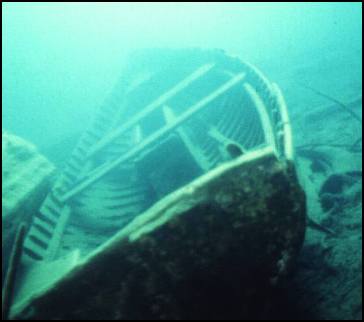
Part of a sunken fleet of recreational dories, Emerald Bay, California.

The US National Parks Service has a useful page summarizing policies and laws regarding “submerged resources” – which includes underwater archaeological sites.  The sections most of interest to the six readers of this blog are probably the pages on Washington State, Alaska, Oregon and California — though the fact that Idaho has a page is, at least, surprising until you remember the importance of paddle-wheelers in the earlier interior historical period all over the west.

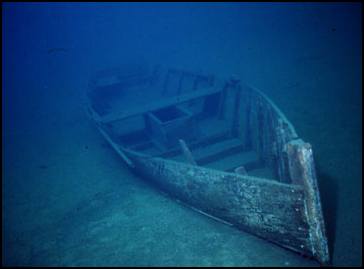
Another Emerald Bay dory. Source: http://www.parks.ca.gov/default.asp?page_id=22707

Punchaw Lake Geochemistry

Elongate side-notched points from Punchaw Lake. Source: Montgomery 1978.

Archaeologists are often pretty lousy geologists.  Nowhere is this more apparent in the use of visual cues to classify rock types.  Accurate classification of rock types is an enormous clue to the mobility of past people, to ancient territories, as well as trade and exchange networks.  Even so, very few archaeological studies on the Northwest Coast have looked at geochemical characterization of raw materials, other than for obsidian at least.  The best work done to date is probably Nicole Smith’s M.A. thesis on the Richardson Island site.

It is therefore nice to see some other comparable work being done.  I don’t know much about the Punchaw Lake (near Prince George) project beyond this poster which has been put online  in  the form of a PDF conference poster by Lorenz Bruechert (abstract).  I understand Bruechert did his MA at UNBC on this geochemical study and also there is a much earlier 1978 MA thesis by Patricia Montgomery available online.  It seems Bruechert used the 1970s excavations as a study sample, and the ICP-MS and other work was contracted out to ACME (not that one), a geochemistry consulting company (note: Nicole did the geochem work herself at UVIC so bonus points there).

In any case, Bruechert finds that a sample of the debitage is geochemically sortable into six groups, all of which are closely-related trachydacite or dacite.  There is as much internal differentiation at Punchaw Lake in the geochemistry of this rock type as there is between any two typical sites on the Plateau.  Hence, he suggests three distinct sources with “tens” of kilometres between them.  As the Punchaw Lake site finds itself on the Alexander Mackenzie trail, this is not that surprising to see diversity of raw material (though one could argue there should be even more diversity).  Nonetheless, the point remains that, as the picture below shows, all the material tested by Bruechert would have been classified visually as basalt (lower left on the graph); whereas in fact, none of it is basalt.  It was such findings at Richardson Island which helped allowed Nicole to postulate an “experimental” phase of technological innovation – in her case, a variety of materials including rhyolites, argillites and varvites had all been variously mixed and matched in ways that did not reflect their geochemical origins.

Bruechert Figure 2: rocks called "basalt" (lower left) are actually dacity/trachydacite.

Decaying resource towns of the BC coast.

Inside the school library at Ocean Falls.

Inside the school library at Ocean Falls.

Photographer Christopher Grabowski has a beautiful photo-essay at Geist magazine on the subject of decaying resource towns of the British Columbian coast, with emphasis on Alert Bay and  Ocean Falls.  You can read the essay alone, or as the multi-page photo essay, and also read an interview with Grabowski here.  A fuller set of his Ocean Falls photographs can be seen here. (2018 edit: here)

It is striking how Europeans and other settlers were so active on the coast.  Hundreds of communities have come and gone, and settlers are now concentrated in only a few major towns.  Meanwhile, the First Nations remain on their land – in the long term, perhaps, European presence on the remote coastal lands will come to resemble a blip more than an occupation.

In the meantime, these fantastic photos remind us of the wasteful ways of the culture with perhaps the shortest attention span on earth: Canada.

The inscribed fireplace in the ballroom at Ocean Falls: Archie Martin … Ocean Falls community is a monument to his memory. Indeed.

Shipwrecks of Vancouver Island

The three-masted ship Carelmapu with decks awash, dragging her anchors into Schooner Cove, near Tofino, in 1915

The ‘Virtual Museum of Canada”  has been responsible for some nice online exhibits, although a lot of these are now fairly dated.  One with what we could call a “retro web design”, but some good content, is the Shipwrecks of Vancouver Island site, apparently put together mainly on the watch of the Maritime Museum of BC with help from the Underwater Archaeological Society of BC.  There are some nice videos of underwater archaeology, and other informative materials.

Site navigation, though, is much easier if you just go to the site map here — the absurdly finicky navigation does weird things like, say, means using the back button always takes you to a splash introduction screen — is a crime against the web.  Especially since museum people are involved: why such disdain for solid future-proof web design values?  This page, for example, has a nifty slider to scroll through an interactive map: but if you don’t pay attention (e.g., if you use your back button) you will always end up on a “loading XML – introduction to the database” overlay screen page which gets tired after about the third time.  The VMC should consider a legacy fund to make sure that the sites which they poured money into for a while can all be kept up to date for both content and also compliance or at least ease of use.  It would not surprise me in the slightest if the VMC had spent over $100,000 on this site — the one site of their I know something about they spent $140,000 and it is no flashier than this thing.  Almost all that money went into design and mounting of content, very little went to the content creators themselves.  If that  applied here, I think we have a right to expect more – is this site design worth $100,000?  It seems to me that, even in 2004, a competent web designer working alone, with content given by others, could have put this together in about a month.

Canadian Navy diver goes overboard in 1959 to examine the 1853 wreck of the Lord Western, near Flores Island.

Captain Vancouver and Camas

Saranne, or lily, harvesting on the Strait of Juan de Fuca in May 1792.

I am sure it is well known to local ethnobotanists, but I don’t recall seeing the above account of plant cultivation reference before.  It is from page 123 of Captain Vancouver’s “Voyage of Discovery …. ” (1801 edition, which you can browse online here).

I didn’t figure out the exact locale of this camp but it is probably very close to Port Discovery, near Port Townsend at the north end of Puget Sound.  The camp is carefully noted as a plant-harvesting camp and also a place where shellfish were being processed. The houses are mere lean-tos.  It is interesting to see that the considerable number of “eighty or a hundred” women, men and children were engaged in turning over the earth here, “like swine” (!).  It gives a vivid impression of a well-orchestrated, community-level harvesting event.  Vancouver comments favourably on the product, a sort of paste or flour.

Vancouver refers to one plant as a species of wild onion, while the other two plants being cultivated are termed as resembling “saranne”.  That being a new term to me, I turned to the OED only to find it not listed, which is quite surprising.  Googling turned up some interesting historical references though, in which it is clearly a term used for members of the Lily family (camas is also a member of this family).  For example, see this 1792 clip from Pennant’s Arctic Zoology Volume 3, on the use of Saranne, or Lilium kamchatschense, by the inhabitants of (yes) Kamchatka (let your eyes skim, gentle reader, over the foregoing section on the use and abuse of hallucinogenic mushrooms). Perhaps this term, Saranne, was in use around the North Pacific at that time but it strikes me as odd it did not find its way into the OED.

Anyway, a few pages down from p. 123 you can also find a nice description of the Coast Salish wool dog, which is described as being much like a Pomeranian.

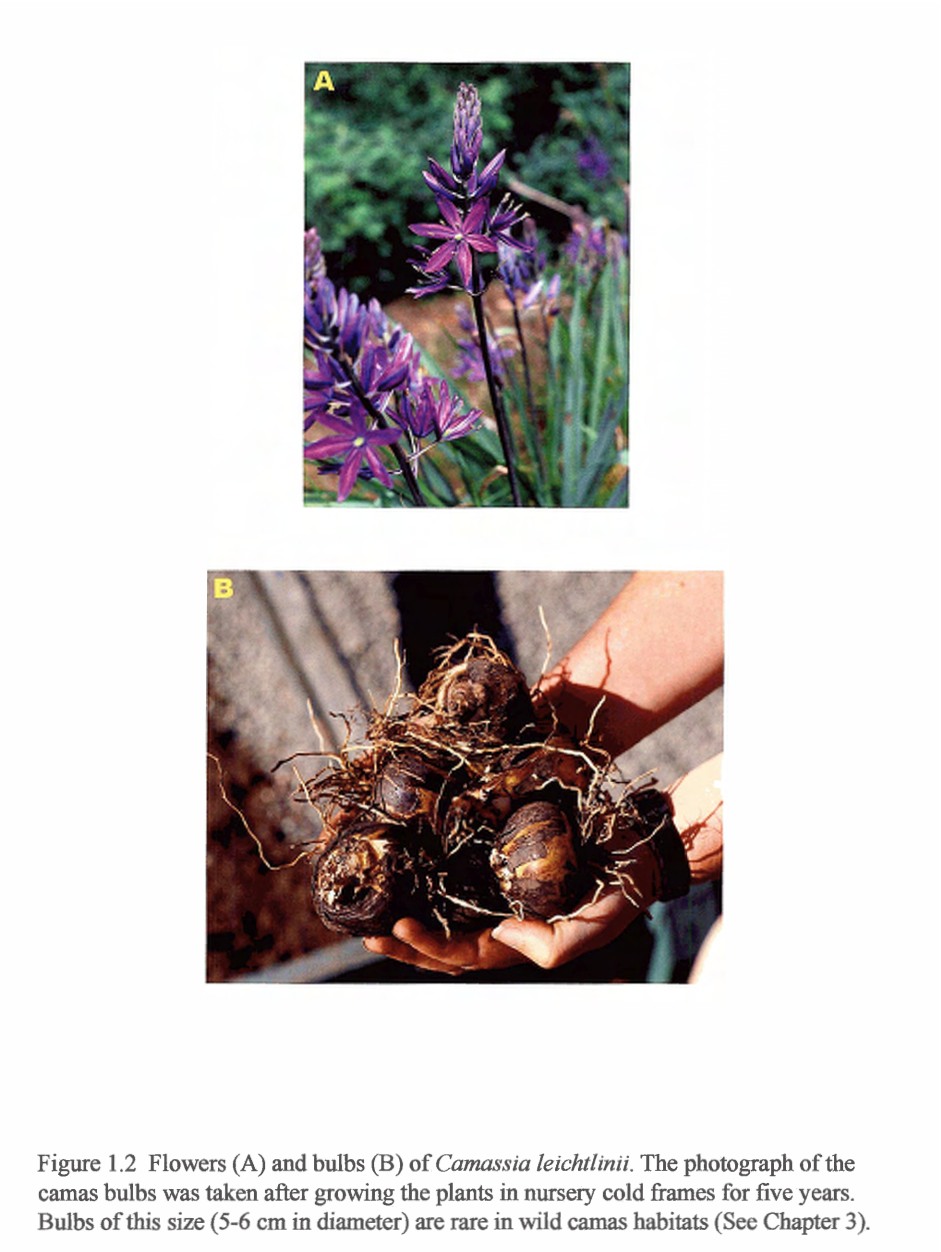
Camas flowers and bulbs. Source: Brenda Beckwith Ph.D. thesis, 2004. http://hdl.handle.net/1828/632

Annotation: Richardson Island Stratigraphy

Annotated stratigraphy of lowest Richardson Island archaeological deposits.

Richardson Island is a remarkable archaeological site in southern Haida Gwaii.  When it was occupied, sea levels were about 10 metres higher than today, and rising.  Then, sea levels stopped rising and occupation continued.  We have dates ranging from 10,500 cal BP to 2900 cal BP (calendar years before present).  However, the early part of the record includes the most impressive stratigraphy.  The shoreline configuration at that time likely included a supra-tidal marine berm feature, which would have had a flattish top and have been well-drained and probably vegetation free: a perfect place to camp.  Occasional storms or even tsunamis would build this berm in the winter, and with rising sea levels the berm was “pushed uphill” so to speak.  The berm-building process would have involved sudden dumps of sorted pea-gravel onto the occupation layers at the site, sealing and preserving them.  Overall, though, the site is in a well-protected location, at least relative to the enormously dynamic winter sea conditions of Haida Gwaii. Continue reading

Haida, Argillite, and the Pig War

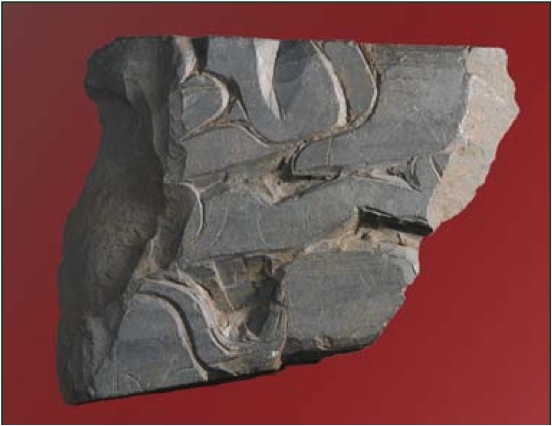
Carved argillite from Belle Vue Sheep Farm, San Juan Island. Source: NPS.

I don’t know as much about the 1859 Pig War as you might think, having spent an awful lot of time on San Juan Island. This “war”, which was more of an armed standoff between British and American troops, was a key event in the various mid-19th century boundary disputes.  One key location was Belle Vue Sheep Farm, near the southern tip of San Juan Island, where there has recently been some interesting historical archaeological work by the U.S. National Parks Service.

One interesting find at this dig is a piece of carved argillite, shown above, which most likely stems from Haida Gwaii (see page 7 of this PDF report, browse other NW NPS reports here).  Around this time there were plenty of Haida and other North Coast Nations around the Victoria area, and so it is not surprising, really, to see this piece.  And yet, it is also a stroke of massive good fortune to have such a distinctive piece of the turbulent 19th century history of First Nations.

Intriguingly, a key figure on the American side of the Pig War was George Pickett, who later achieved substantial fame for leading Pickett’s Charge at the Battle of Gettysburg in the American Civil War,

Ironically for someone who later fought for the racist Confederacy, Pickett was once married to a Haida woman by the name of Sâkis Tiigang.   (More often known as “Morning Mist”, this site gives her Haida name as beSakkis Tiigang while the Pickett Society in a detailed article gives her the slightly more authoritative-seeming name Sâkis Tiigang, meaning “Mist Lying Down”).  They had a son together, the artist James Tilton Pickett who, without wanting to generalize overly, certainly looks like a Haida man.  Shortly after the birth of young James in 1857, Sâkis Tiigang passed away.

Probably there is no tangible connection between Morning Mist/Sâkis Tiigang and this carved piece of her homeland, but surely there is a poetic one.

James Tilton Pickett, son of Sâkis Tiigang and George Pickett/ 1857-1889. Source: Pickett Society.

Toys for Christmas

Miniature ulu, or woman's knife, from west Greenland. Source: field notes blog/ Genevieve LeMoine

OK, so it is not from the NW Coast, but this thousand year old miniature (toy?) ulu from Cape Grinnell, Western Greenland is close enough.  Close to the North Pole, Reindeer, and all that, that is.  It even has a miniature blade made from meteoric iron.  Via field notes.