Category Archives: Washington State

The Bison at Ayer Pond on Orcas Island is archaeological.

Cranium of 14,000 year old Bison antiquus from Ayer Pond, Orcas Island, Salish Sea. Source: Kenady et al. 2010 (in press)

One of the challenges in archaeology is to take a familiar landscape and, by considering the known data from the paleo sciences, make it strange and unfamiliar and ripe with possibilities for strange and unfamiliar archaeology.  Right here in the southern Salish Sea there is an excellent example of this coming to light.  As the ice retreated at the end of the last glacial period, the Salish Sea saw dramatic changes in sea level (both higher, and lower), in vegetation (tundra, grassland, and forest) and in the animals present on that dynamic landscape.

Location of known Bison antiquus remains in Salish Sea. Source: Wilson et al. 2009.

For years now, we have known that one of the large land mammal species of the Salish Sea around 14,000 years ago was bison — and not just any bison, but Bison antiquus, the extinct giant bison.  A number of remains of this creature have been found, mostly on the Saanich Peninsula and on Orcas Island,  which is one of the largest islands in the Salish Sea, sitting just south of Saturna Island, close to the Canadian Border.  Since these remains mostly clocked in at around 13,000 to 14,000 years ago, most archaeologists were interested in them primarily for their coolness factor and not because they seriously thought there might be relevance to early human presence here – these bison pre-date the Clovis Culture which was the consensual evidence for the first peopling of the Americas.  I have previously posted on this with reference to Clovis in Puget Sound, to the controversial Manis Mastodon site, as well as to the nearby Wenas Mammoth and even the Paisley Cave finds in Oregon – evidence is coming together for both a Clovis and a pre-Clovis occupation of the Salish Sea and environs.

Now with a new paper by Kenady et al. in press, these numerous bison finds take on a new importance: one of them is most likely archaeological.
Continue reading

Listening to Our Ancestors: An exhibit at the National Museum of the American Indian

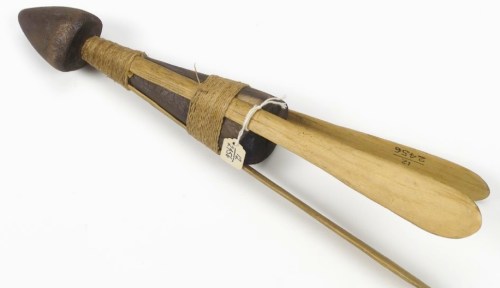
Coast Salish Cod Lure. Source: NMAI

Listening to Our Ancestors” is a nice online exhibit which resulted from a process by which 11 west coast First Nations and Tribes came to the National Museum of the American Indian (a fairly recent, major addition to the Smithsonian Institution in Washington D.C.) and created mini-exhibits reflecting their own worldviews and the categories they deemed important.  As such, each community’s sub-page is a glimpse into their specific cultural heritage and priorities – indigenous curation, you could say.

While much of the focus is on ceremonial items, some communities also choose to focus some attention on their more everyday technology, which is more in line with my own interests.

Continue reading

A Stillaguamish River Canoe

Roughly dressed block of cedar in preparation for carving. Source: flickr.com

The Stillaguamish Tribe live along the Stillaguamish River basin (map) of Northwestern Washington State.  They are a tribe which missed out on any reservation land in the 1850s and have struggled somewhat at times to maintain cultural identity as a diaspora.  Regaining Federal Status in 1976 was important to the tribe of about 200 members, as was 2009’s first “First Salmon” ceremonies in a generation.

An interesting and encouraging development seems to be the recent carving of the first Stillaguamish river canoe in a century.  While the larger dugout canoes (still being carved) of the outer coast nations, such as the Haida and Nuu-chah-nulth, are better known emblems of the Northwest Coast as a whole, these river canoes were equally important to the inland waterway and riverine nations of the Fraser Valley and Puget Sound.

According to an informative and well-written article in the Everett HeraldNet, the story starts with an interesting origin of the cedar log itself.

Continue reading

Waatch River: a raised beach site on the Olympic Peninsula

View from West up Waatch River Valley to Neah Bay; Vancouver Island in the distance. Source: Panoramio user Sam Beebe.

The Waatch River flows in a low valley that connects Neah Bay across the Olympic Peninsula to Makah Bay.  When sea levels were higher, it would flood with sea water and turn Cape Flattery into an island.  Interesting, then, to see that an old raised beach site has been found on the Waatch River at an elevation of about 13 metres above, and 2 km away from, the modern shoreline.

Continue reading

Bears, Humans and Deer: disambiguation at last.

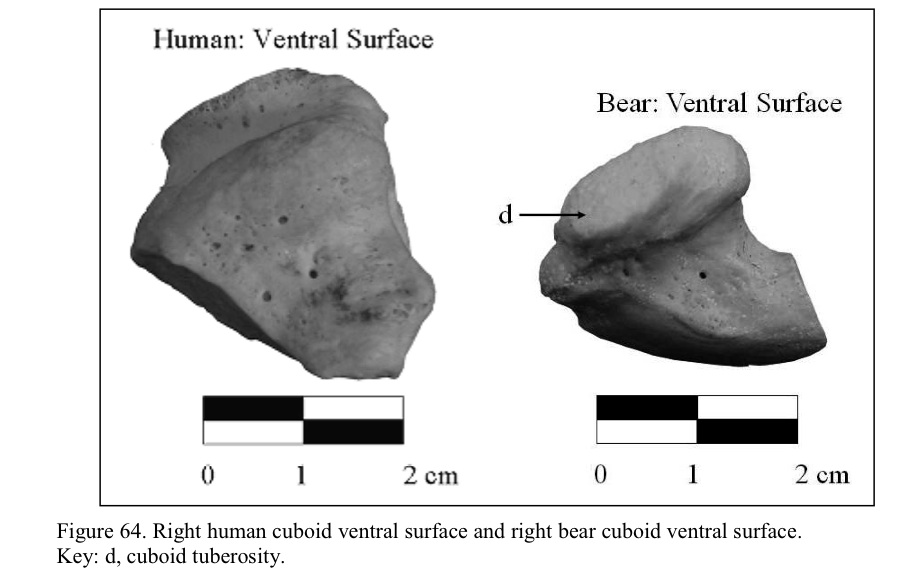
Human and Bear cuboid bones compared. Source: Smart 2009.

Some graduate theses are clearly meant to be both a research excercise and produce a demonstrably useful document.  I’m not saying these are any better than any other kind of thesis, but they do have an aura of public service and virtue about them.  The best example of these which I have seen recently is Tamela Smart’s 2009  Carpals and tarsals of mule deer, black bear and human: an osteology guide for the archaeologist.  If you click here it will start an automatic download of the 3.7 meg PDF from Western Washington University (unfortunately, no way to link to a download page).  (edit: try this link instead)

The premise of this research is that despite obvious differences on the outside, there are surprising similarities between the hand/wrist and ankle/foot bones (carpals and tarsals) of bears, deer, and humans.

Continue reading

Mammoth Wenas

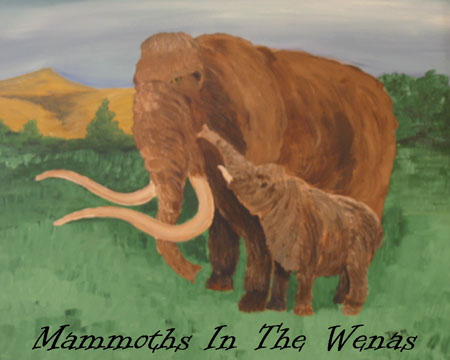
Mammoth Wenas. Source: CWU.edu; painting by Bronwyn Mayo.

For the past few years, students and faculty from Central Washington University have been excavating terminal Pleistocene fauna, including a partial mammoth skeleton, from the Wenas Creek area just north of Yakima (map), and they have a nice website documenting their work.  Radiocarbon dates on the mammoth came back at 13,400 and 14,000  radiocarbon years ago, or about 16,000 calendar years ago.  Too old for archaeological interest!  Right?

Continue reading

D’Suq’Wub: Old Man House – a Poster

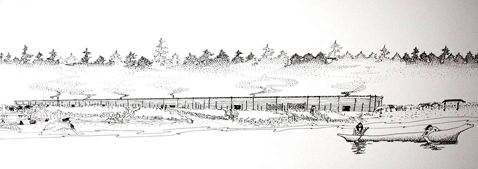
Old Man House: computer reconstruction of one end. Source: Suquamish Tribe.

“Old Man House” is on the Kitsap Peninsula just north of Bainbridge island, across Puget Sound from modern downtown Seattle.  The “house” was the subject of one of the earlier excavations on the NW Coast by Warren Snyder and team from the University of Washington.  The house formed the locus of a major village of the Suquamish Tribe, and its most famous historic resident was Chief Sealth, also known as Chief Seattle.  The Suquamish Tribe has a very nice poster on the history and archaeology of Old Man House which can be downloaded from their website – clicking here will start a moderately sized JPG file. (Edit 2018: archived copy here)

Interpretive sketch of Old Man House. Source: Suquamish Tribe.

It is a bit of misnomer to call this structure a “house” though.

Continue reading

Northwest Research Obsidian Studies Lab

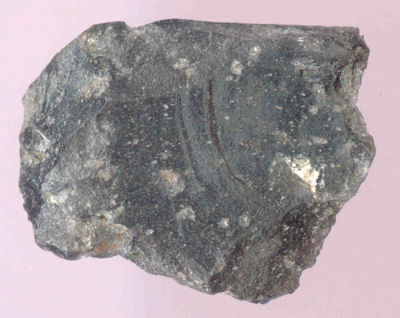
A flake of obsidian from DhRr-18, southern British Columbia. This visually-distinctive glass is from the Mount Garibaldi obsidian source.

Obsidian is a kind of volcanic glass and was highly prized for making certain kinds of stone tools.  Obsidian forms at places of relatively small outflows of magma, or liquid rock.  Small flows can cool quickly, which allows the formation of a glassy crystalline structure ideal for stone tool manufacture.  Small flows also represent a small sample of well-mixed magma, and thus each little patch of obsidian may share a very distinctive chemical signature.  This signature, usually identified by trace elements such as Strontium, Zirconium, Yttrium and Rubidium, then allows for the chemical fingerprinting of each source.  Any obsidian artifact found, whether at a source or not, can also be “fingerprinted” and then compared to a catalogue of known obsidian ources.  Since the artifacts don’t move around on their own but only through the agency of humans, the distribution of obsidian artifacts is a proxy measure for the movement and interaction of people.  When you have hundreds or thousands of such artifacts and a large database of known sources, then you can start to see large scale, long-term social interaction emerge from the silent archaeological record.  Most obsidian isn’t visually distinctive enough to sort out by eye alone, so these geochemical methods are essential.

So far, so Archaeology 101.  I was really happy to find that Oregon’s Northwest Research Obsidian Studies Laboratory has a web site not which not only solicits business, but is a highly educational and informative site about many aspects of obsidian analysis, with a focus on the Northwest. Continue reading

Salish Villages of Puget Sound

Overview map of Coast Salish Villages of Puget Sound. Click to go to the page of interactive maps at coastsalishmap.org

Tom Dailey has put together a large and very interesting site which documents the Coast Salish villages of Puget Sound.  The core of the site is a series of clickable maps (see the left hand side black/white map grid), each of which is marked with little village icons.  Clicking on these icons takes you to a master document with a synopsis of the settlement name and, usually, a couple of sentences about the village.  These are referenced to scholarly literature and other sources.  It is striking to see all these villages on one map, and notable how many are shown on rivers and lakes.

Continue reading

Puget Sound Clovis

In Red: Surface Finds of Clovis Projectile Points. After Croes et al. 2008.

I posted yesterday about the Manis Mastodon site and its possible status as a pre-Clovis site on the Olympic Peninsula.  Clovis projectile points are so distinctive that most archaeologists have no problem assigning even an isolated find of such a point, lacking in any kind of stratigraphic context or any associated dates, to the Clovis archaeological culture.  We know from sites elsewhere in North America that Clovis dates to a pretty narrow window, perhaps only 13,200 to 12,800 calendar years ago.  It has always been very closely associated with the ice-free corridor route for the First Peopling of the Americas and is predominantly known from classic sites in places like Colorado, New Mexico and Texas. So it may come as a surprise to some that Clovis is pretty well represented in Puget Sound and north to Bellingham Bay, although only from surface or other finds without provenience.

Continue reading