
Tag Archives: Archaeology

Still no Clovis Comet

Oh noes, my tusks are on fire. Source: wincustomize.com

I talked once before about the “Clovis Comet” theory, which suggested the widespread extinctions of megafauna in North America at the end of the last ice age was caused by a large comet impact.  At the same moment, the highly distinctive “Clovis” archaeological culture was terminated.  It was suggested this comet might have either airburst or struck the ice sheets, in either case not causing a visible crater.  However, abundant “nanodiamonds”, said to be highly diagnostic of an extraterrestrial impact, were found at a widespread boundary layer roughly associated with the end of Clovis – the start of the Younger Dryas cold period when the earth was suddenly thrust back into near-glacial conditions.

So, I said then and I’ll say again now: this theory didn’t pass the sniff test from the beginning because it is another example of “Clovis exceptionalism” – the skeptical leeway that the Clovis-First model of first peopling of the Americas has been afforded by segments of the archaeological community.  No Clovis model was so implausible that it wasn’t given much respectful beard-stroking by the usual silverbacks.

Anyway, subsequent studies of the nanodiamonds and associated evidence have failed utterly to reproduce the findings.  Now comes even more news that the comet theory is unsupported and that the original investigators may have mistaken nanodiamonds for, among other things . . .  [drumroll] . . .  “hardened faecal material from arthropods.”
Continue reading

Bella Coola Lichen

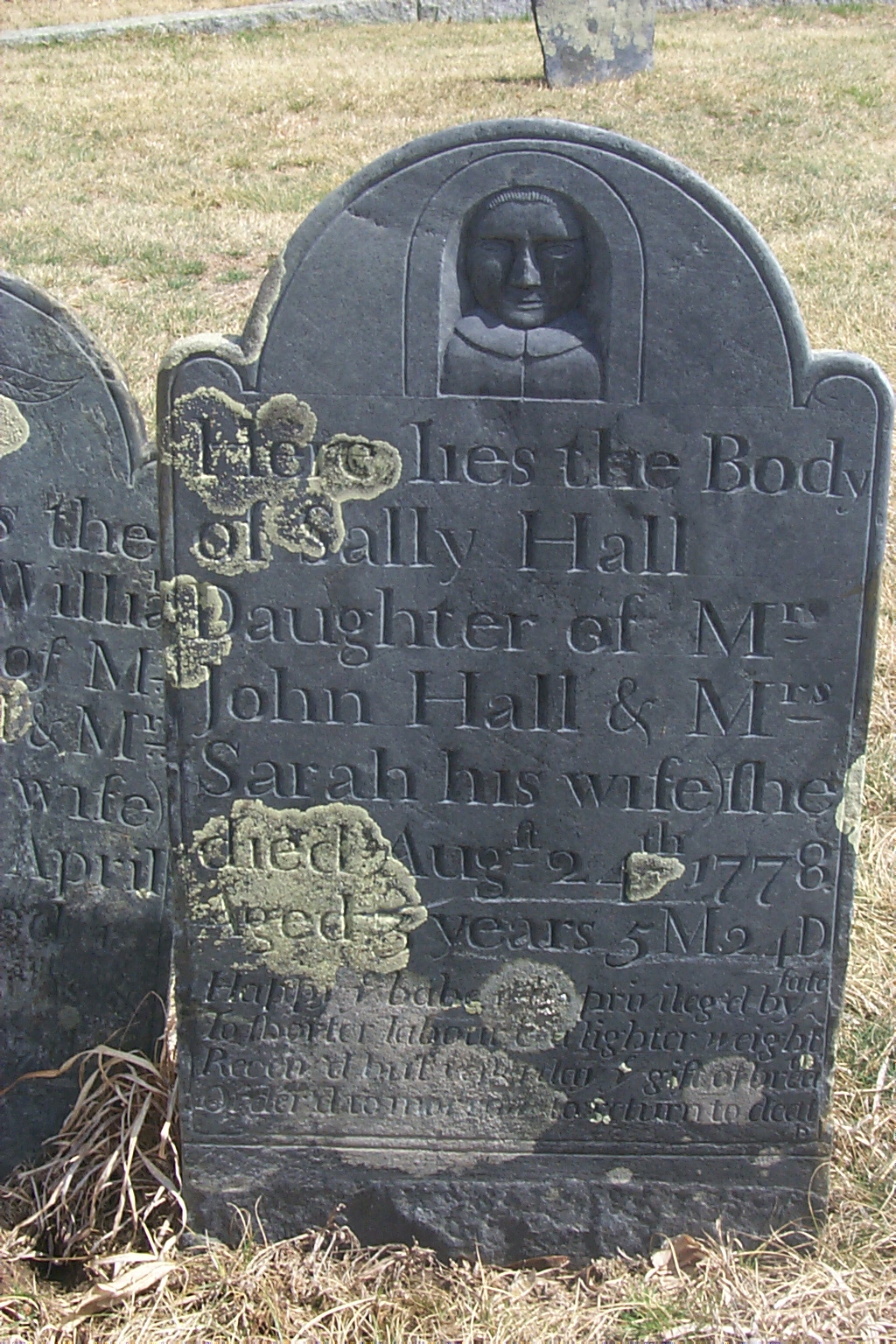
A gravestone with lichen growth. Source: designscience.com

I was reading the charming Bella Coola Blog the other day and came across an interesting post discussing how lichen had been used to date glacial features in the area.  So-called lichenometry is a well-established dating technique which relies on the principle that lichen grows in roughly circular patterns, and that there is a linear relationship between the diameter of the circle and the age of the lichen patch.  Now, such patches can be many hundreds of years old.  So for an event where rock is newly exposed and then lichen grows on it, the lichen will give a minimum date on when the bare rock was first available as a lichen environment.  Anytime you have a bare rock and a dating technique for when the rock became bare, the archaeology antennae rise.

Continue reading

In-SHUCK-ch Cedar Bark Stripping Gallery

Pulling a cedar bark strip. The scarred face will heal in a highly characteristic way. Source: In-SHUCK-ch live.com (click)

I came across a nice set of 18 pictures of members of the In-SHUCK-ch First Nation stripping cedar bark for use in traditional manufactures, especially basketry, cordage, matting, and clothing.  This nation is on the lower Fraser in the general Lillooet-Harrison Lake area.  It’s true you have to turn your head sideways on a lot of the pictures, but at the same time you would have to crane your head way back if you were stripping bark, so that’s ok.  Continue reading

VicNews: Rebirth through Reburial

Burial cairn on Race Rocks. Source: RaceRocks.com

While I was away over the summer the local free paper, the Victoria News, did a (to my mind)   high quality series on reburial and respect in Songhees and Esquimalt communities (cache). The three articles by Lisa Weighton include comments from numerous aboriginal spiritual and political leaders, and sensitively describes how Straits Salish faith asserts that the dead are always with the living.  The dead do not conveniently depart to some other place, but continue in a world alongside and intersecting the world of the living.

Hence ancestral remains are not something belonging to a past which can be “gotten over” but are very much part of the present world.  Laying a person to rest, or back to rest after disturbance, requires food, clothing and prayer.  I don’t pretend to understand the concept well, but I have been to some such ceremonies and the power of the moment is impossible to deny.  In my limited experience the article fairly represents the spiritual and emotional needs that must be met under the sad circumstance of disturbing the dead.  It is incumbent on archaeologists and all citizens to not only work to minimize disturbance of the dead but to respect traditional practices.  It has been impressed on me that such practices are meant to protect us, the living, First Nations or not, as well as to give comfort and respect to the dead.  This should now be considered absolutely part of mainstream archaeology.

Continue reading

More ice patch archaeology bork bork bork

3400 year old shoe from a Norwegian ice patch. Source: Reuters.

It’s interesting to see some ice patch archaeology emerging in Norway now.   Reuters has a good story and short video about some cool finds from 1800 metres above sea level in the Jotunheimen Mountains, which lie northeast of Bergen.  The most spectacular find is the 3,400 year old leather shoe, shown above.

Continue reading

Going to ground, again

UVIC's own Roughage going to ground at the newly discovered, exciting "Kilgii Channel" site, while Swiffer models trendy "Howler'sReady(tm) duct-taped boot

Well, my ten days in town between projects turned out to be more like a few days in town, after I complacently relaxed for a couple of days then caught a horrible summertime flu, getting back healthy just in time to spend a few days running around madly to help prepare for the UVIC fieldschool.  *phew*

So the blog will stay on hiatus for a another four weeks after which time I hope to have no excuses! Sara Perry will once again kindly stomp out spam, when not stamping out misconceptions via her summer field work at Çatalhöyük

By the way, if you live on Pender Island or Saturna Island, I will be giving public lectures there on the evenings of July 30th and 31st respectively.  Look out for posters and I will try to make an announcement even though I’ll be on an island with limited presence on the grid.

A massive sneeze, or summertime boating off Cape St. James?

Seattle waterfront archaeology

"Native American encampment on landfill, circa 1900, south of South Royal Brougham Way and east of First Avenue South." Source: crosscut.com

At the ASBC talk last night it was clear that major industrial development can still leave substantial and highly significant archaeological materials interspersed even within the boundaries of heavy impact – in this case within a few dozen metres of a major hydroelectric dam.  This reminded me of a recent story I read about downtown Seattle archaeology.  Due mainly to concerns about what would happen in even a moderate earthquake comparable to the Nisqually event of 2001, Seattle is planning to replace the Alaska Way viaduct – that multi-level highway which blocks the city from its own waterfront.  You can watch a video of a simulation of the collapse of the viaduct here – I am sure most Seattlers would like to be done with that uncivic monstrosity, but not, perhaps, so suddenly.  Ironically, the ASBC talk on Ruskin Dam was also a seismic upgrade project.

Anyway, the current plan in Seattle is to put a cut-and-cover tunnel in its place – similar to some of the tunnels recently built in Vancouver’s new Canada Line LRT.  Crosscut.com’s Archaeology-savvy reporter “Mossback” (Knute Berger) has two excellent articles on the problems likely to arise when you dig such a large ditch through dense pre-contact and historic archaeology.  The first article ran on May 11th, with the followup article on May 12th.  If you are truly dedicated, there is a 200 page overview (6 meg PDF) of cultural resource management for the project, though it largely focuses on historic buildings and it relatively vague.

Continue reading

NE BC Archaeology Videos

Click to play video.

Click on the picture above to see a short video of an archaeologist working with Nenan Dane-zaa elders and youth, near Fort St. John.  It’s a nice example of some community archaeology by an unidentified archaeologist who appears to go by the name “Frank”.

Of course the weather in Northeastern B.C. is not always so sunny and warm, and yet (as we discussed a few weeks ago) archaeology continues or even accelerates in the winter months.

Continue reading

How to Make a Petroglyph

Replica sandstone petroglyph made by Christine Stathers. Photo credit: Stathers.

I’ve often said the graduate student work is the backbone of the archaeological discipline in British Columbia.  Today I get to report on more student work – but this time its a fascinating study done by an undergraduate student at Camosun College here in Victoria.  The student, Christine Stathers, did an experimental archaeology project for her Anthropology 240 course, and she kindly agreed that I could post some of the results here.  The results are highly informative for our interpretation of petroglyphs, I think.

Continue reading

No Guts No Glory

Chuckchu women inflating walrus intestines, 1917. Source: ADA

I’ve linked before to Tim Rast’s excellent blog ‘Elfshot’, which chronicles his work in Newfoundland, making replications and experimental archaeology for love, and money. Or, as he puts it, “Making a living as a 21st Century Flintknapper.” You can buy some of his superb work here and also browse part of his impressive back-catalogue of reproductions here.

Recently Tim has been going beyond the call of duty with a fantastic series of detailed, superbly illustrated (for the strong of stomach – photos and videos) on preparing the hide of a hooded seal, and the associated fun of processing its intestines for technological projects.  I urge you to go read them in their entirety over at his blog.

Seal intestines were, of course useful for any number of tasks.

Continue reading