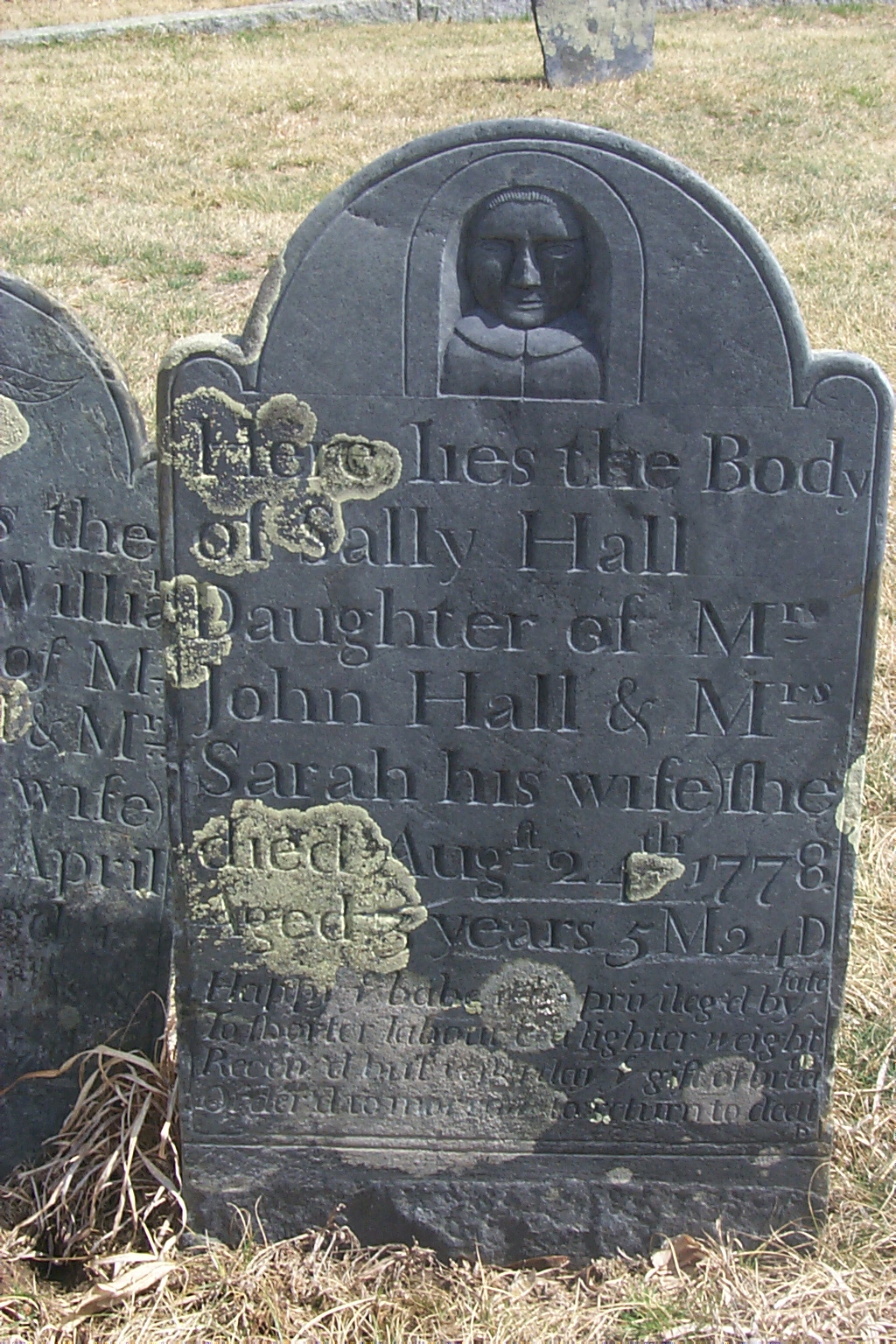
Bella Coola Lichen

A gravestone with lichen growth. Source: designscience.com

I was reading the charming Bella Coola Blog the other day and came across an interesting post discussing how lichen had been used to date glacial features in the area.  So-called lichenometry is a well-established dating technique which relies on the principle that lichen grows in roughly circular patterns, and that there is a linear relationship between the diameter of the circle and the age of the lichen patch.  Now, such patches can be many hundreds of years old.  So for an event where rock is newly exposed and then lichen grows on it, the lichen will give a minimum date on when the bare rock was first available as a lichen environment.  Anytime you have a bare rock and a dating technique for when the rock became bare, the archaeology antennae rise.

Continue reading

Two upcoming events in Vancouver and Victoria


1936 Field Trip by the Vancouver Natural History Society to Musqueam. Source: Vancouver Public Library. VPL Accession Number: 19483

In Vancouver this Sunday, September 19 at 1.00 there is a guided walk of the Ancient Salmon Stream and Musqueam Village, starting at Jericho Beach (details here) with Victor Guerin, “a cultural/linguistic consultant and historian, a member of the Musqueam First Nation and a speaker of the Musqueam dialect of the Central Coast Salish language Halkomelem. He has been learning about his people’s culture and history his entire life, including some 16 years of consultation and documentation with family elders and 4 years formal training in the Musqueam language with linguistic analysts at UBC.”

This talk/walk is one in a series from the False Creek Watershed Society, most of which look like they hold promise for an interesting conversation between historical ecology, traditional knowledge, and landscape development.  It would be good to see connections built or strengthened between restoration groups and archaeologists, who share many of the same values.  You can see the other talks and walks they sponsor here – two of them are actually today, Saturday September 18th.  OK, go to those as well!

The other upcoming event is the  Archaeology Society of B.C. monthly public lecture in Victoria, which is on Tuesday 21 September.  This month’s speaker is Grant Keddie from the Royal B.C. Museum.

Continue reading

In-SHUCK-ch Cedar Bark Stripping Gallery

Pulling a cedar bark strip. The scarred face will heal in a highly characteristic way. Source: In-SHUCK-ch live.com (click)

I came across a nice set of 18 pictures of members of the In-SHUCK-ch First Nation stripping cedar bark for use in traditional manufactures, especially basketry, cordage, matting, and clothing.  This nation is on the lower Fraser in the general Lillooet-Harrison Lake area.  It’s true you have to turn your head sideways on a lot of the pictures, but at the same time you would have to crane your head way back if you were stripping bark, so that’s ok.  Continue reading

VicNews: Rebirth through Reburial

Burial cairn on Race Rocks. Source: RaceRocks.com

While I was away over the summer the local free paper, the Victoria News, did a (to my mind)   high quality series on reburial and respect in Songhees and Esquimalt communities (cache). The three articles by Lisa Weighton include comments from numerous aboriginal spiritual and political leaders, and sensitively describes how Straits Salish faith asserts that the dead are always with the living.  The dead do not conveniently depart to some other place, but continue in a world alongside and intersecting the world of the living.

Hence ancestral remains are not something belonging to a past which can be “gotten over” but are very much part of the present world.  Laying a person to rest, or back to rest after disturbance, requires food, clothing and prayer.  I don’t pretend to understand the concept well, but I have been to some such ceremonies and the power of the moment is impossible to deny.  In my limited experience the article fairly represents the spiritual and emotional needs that must be met under the sad circumstance of disturbing the dead.  It is incumbent on archaeologists and all citizens to not only work to minimize disturbance of the dead but to respect traditional practices.  It has been impressed on me that such practices are meant to protect us, the living, First Nations or not, as well as to give comfort and respect to the dead.  This should now be considered absolutely part of mainstream archaeology.

Continue reading

More ice patch archaeology bork bork bork

3400 year old shoe from a Norwegian ice patch. Source: Reuters.

It’s interesting to see some ice patch archaeology emerging in Norway now.   Reuters has a good story and short video about some cool finds from 1800 metres above sea level in the Jotunheimen Mountains, which lie northeast of Bergen.  The most spectacular find is the 3,400 year old leather shoe, shown above.

Continue reading

“From the Islander” blog

Screenshot of "From the Islander" blog

The Hallmark Society sponsored a nice blog called “From the Islander” through the summer of 2010.  This is a retrospective set of commentaries about excerpts from the weekend newspaper insert “The Islander”, which used to be published in the Victoria Daily Colonist and the Victoria Times-Colonist.  There’s not any archaeology that I have seen, and surprisingly (or not) there is no coverage of First Nations, but all the same it is an interesting read if you have a shine for Vancouver Island history, and a well-done, informative blog.  Apparently the Hallmark Society (or the blogger, who goes by wpbradley and was their summer student intern) has digitized a fair bit of The Islander and indexed it here – though full text is not available for the most part.

Back! Almost…

Landing craft picking up the last of the UVIC-GINPR archaeology fieldschool from Princess Bay on Portland Island.

OK, enough late summer lounging: I think it is time to be making a few posts on this blog.  I can’t guarantee super-reliable service but will try to drag up some interesting links for the perusal of my seven readers.  While I was gone, WordPress unexpectedly changed the “theme” (template) of this blog and in the process destroyed a bunch of drafts I had made, which might be just as well overall, though annoying nonetheless.  I’m going to start by answering a few, but probably not all, of the comments people have left in the last month.

Fieldschool Update, and Public Lectures

Screenshot of Times Colonist article - click to go to the story.

I am in town briefly and see the Time-Colonist has an article and photo gallery about the UVIC-Parks Canada archaeological fieldschool in the Gulf Islands.  It’s a pretty good article with some nice quotes from the students about their experience, and which emphasizes how threatened some archaeological sites are.  It would have been nice to see more acknowledgment of local First Nations and of the hard work Parks Canada’s liaison team is doing to help build relationships around cultural resource management.  It’s very early days for the field school but in the medium term it hopes to be of service to First Nations and their archaeological questions and concerns. A big part of that is the specific focus on archaeological site assessment and management skills being taught by the course instructor, Dr Duncan McLaren, and another big part is the presence of paid First Nations interns who will be taking the field school – only one this year but more in the future it is hoped.  Anyway, the article tells part of the story very effectively and the reporter and photographer had an interesting time with the fieldschool and vice versa.

In related news, I’ll be giving a public talk about Salish Sea archaeology with a fieldschool update this Friday July 30 on Pender Island at 7.00 in the Anglican Hall.  Then, my mini road trip takes me to Saturna Island on July 31 for a talk at 7.30 at the Community Hall.  Otherwise, there probably will be no updates here until the middle of August.

Times-Colonist screenshot - click to go to story.

Going to ground, again

UVIC's own Roughage going to ground at the newly discovered, exciting "Kilgii Channel" site, while Swiffer models trendy "Howler'sReady(tm) duct-taped boot

Well, my ten days in town between projects turned out to be more like a few days in town, after I complacently relaxed for a couple of days then caught a horrible summertime flu, getting back healthy just in time to spend a few days running around madly to help prepare for the UVIC fieldschool.  *phew*

So the blog will stay on hiatus for a another four weeks after which time I hope to have no excuses! Sara Perry will once again kindly stomp out spam, when not stamping out misconceptions via her summer field work at Çatalhöyük

By the way, if you live on Pender Island or Saturna Island, I will be giving public lectures there on the evenings of July 30th and 31st respectively.  Look out for posters and I will try to make an announcement even though I’ll be on an island with limited presence on the grid.

A massive sneeze, or summertime boating off Cape St. James?

Yellowstone Ice Patch Atlatl Dart

Dr. Craig Lee holds atlatl dart shaft. Source: Dailycamera.com

We’ve looked at the exciting finds from melting ice patches before on this blog so they may not need a lot of introduction: ancient hunters would target large game which sheltered from the heat and insects on these fairly static patches of ice.  In so doing they left behind a material record which quickly became frozen into the ice itself, thus preserving organic technologies which seldom preserve otherwise.  Now, with global warming, these artifacts whch were deposited on ice are melting out for the first time, some of them after many millennia of continuous freezing conditions.

Most of the current research on this topic has been from the Yukon, from the Northwest Territories, and Alaska, though arguably there is a lot of potential elsewhere in western North America, especially British Columbia.  So I was pretty interested to see a news report from the University of Colorado on a birch wood atlatl dart (the projectile shaft associated with a spearthrower) from the Yellowstone area, which dates to a remarkable 10,300 years ago.

At the University of Colorado website there is a good press release and an informative video on the find.  The video incorporates some National Geographic footage (some of it cheesey) which overall gives a good idea of the context of the find and its importance.  In the video you can see what is interpreted as a split U-shaped haft element which presumably received a stone projectile point.  Unusually for atlatl technology, this would imply there was no foreshaft.  The date of 10,300 is presumably a calibrated date which would make it about 9,250 14C BP – around one thousand years older than the oldest reported Yukon ice patch material.  The video also has glimpses of other finds which are not discussed but which whet the appetite! And, by the way, the National Geographic web site has a clip about Alaskan ice patches which gives a great overview of the fieldwork and the finds.

The lead researcher is Dr. Craig Lee of the University of Colorado / INSTAAR, who is also known on the Northwest Coast for his Ph.D. dissertion on microblade technology from Southeast Alaska and PET-408 / On Your Knees Cave  (I have a PDF of this but can’t find it online, I think Craig must have sent it to me directly). Some news reports (not many news items on this yet) suggest the find was made in 2007 and the date was obtained in 2008 and then embargoed because of publication restrictions imposed by a journal. A quick check on Web of Science doesn’t turn up anything new on it (though “in press” material likely wouldn’t be there yet), and it is not that easy to sift through all the surname “Lee” folks who publish in sciencey journals!

An important point of added interest in the additional report (oddly, not the UC press release) is that Lee and his colleagues have received a 3 year grant worth US $651,00 to investigate ice patches in and around Glacier National Park, just south of the BC-Alberta border.  Congratulations Craig!  This amount of money is impressive, though I can imagine how expensive the combination of high altitude helicopter time and numerous radiocarbon dates will be.  For us in BC/Canada, we can only dream of such riches: as I have noted several times, bafflingly there has been essentially no research on this topic in British Columbia.  Craig’s money is coming from the US National Park Service, who take their cultural resources much more seriously than we do – I mean, Parks Canada archaeologists do a great job (as I know very well, having just been on a month long field trip with them)  but the importance given to archaeology in National and, especially, BC Provincial Parks pales in comparison to what the Americans do and no one is throwing C$651,000.00 or even C$651.00 at this urgent Cultural Resource Management problem in this country.  Anyway, I really look forward to seeing what comes out of this promising study.

Cheesy depiction of the Ice Free corridor from the National Geographic video clip. Source: U. Colorado.