Category Archives: Cultural Resource Management

The Nunalleq Site Fieldwork Blog

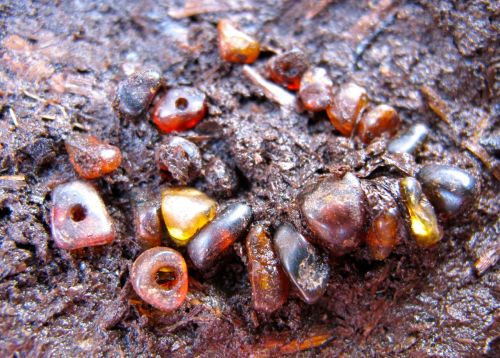
Collection of amber beads from the Nunalleq Site. Source: Nunalleq Blog. https://nunalleq.wordpress.com/2015/07/15/artefact-of-the-day-147/

Collection of amber beads from the Nunalleq Site. Source: Nunalleq Blog. https://nunalleq.wordpress.com/2015/07/15/artefact-of-the-day-147/

One of the benefits of running this blog is I get to decide what counts as Northwest Coast Archaeology, and today I’m including the amazing Nunalleq site in SW Alaska. Strengthening my claim this belongs to the NW Coast is that the indispensable Dr. Madonna Moss of U. Oregon has been working there lately – which makes it NW Coast, right? Q.E.D.  Anyway the project has been running for about five years, and their blog for three, so there is lots to read up on, and see.  The site, lying in Yup’ik territory, contains deposits (house and otherwise) up to around 2,000 years old and has been rapidly eroding of late.  What started as a salvage project quickly turned into a major effort as deposits of incredible richness were encountered, with preservation enhanced by frozen soil/permafrost.  I’m currently in a fairly remote spot with slow internet and bandwidth constraints, so I am just going to link to a few highlights of the blog and let you explore the rest.

Continue reading

Grace Islet and the Equifinality of Bad Process

Grace Islet human burial cairn intersected by concrete house foundation. The cairn is under the plywood and concrete square structure. Source: Grace Islet on Facebook.

Grace Islet human burial cairn intersected by concrete house foundation. The cairn is said to be under the plywood and concrete square structure. Could there be a more poignant picture of the present day management of archaeological sites in this province? Source: Grace Islet on Facebook, https://www.facebook.com/graceislet

Grace Islet – Shmukw’elu – is a small island (map, pic) in Ganges Harbour, Saltspring Island.  It is a Coast Salish cemetery, and it is a settler construction site.  How do we reconcile these contradictory uses of this island? I’ve been hesitant to post about this case because I know it’s a long and complicated story of how we got to 2014, when we see burial cairns being literally encased into concrete house foundations. I am quite sure that many people of goodwill made many decisions that seemed right to them at the time. I don’t know what all these decisions are, what happened when, exactly, what the consultant said, how the house owner sleeps at night – I just don’t know all these variables and I am schooled in the idea you should know everything before you say anything. It’s clear though that, somehow, the practice of archaeology in this province led to the Grace Islet outcome. Shouldn’t we try to understand the process? That’s fine in principle, but can be silencing in the face of complexity: as Pierre Bourdieu wrote, “the most successful ideological efforts are those which have no need for words, and then ask no more than complicitous silence.” No more silence, then.

Continue reading

Reburial at Hagwilget: A Video

Click to Play Video

Click to play Sacred Ground video.

Archaeological encounters with human remains bring into sharp relief the competing values surrounding cultural heritage.  It doesn’t always go well – powerful emotions are uncovered alongside the burials.  So it’s refreshing and informative to come across a short video, Sacred Ground: In honour and in memory of our ancestors, made by Crossroads Cultural Resource Management, which follows the aftermath of the accidental disturbance of human remains at Hagwilget, on the Skeena Bulkley River.

Continue reading

BC Archaeology Forum is in Nanaimo, Saturday October 18th

Petroglyph from Petroglyph Park, Nanaimo. Source: danielleen.org

Panel from Petroglyph Park, Nanaimo. Source: danielleen.org

I’m about to disappear off the grid for a couple of weeks (fieldwork in Gwaii Haanas) but before I do, I want to give some publicity for the Annual BC Archaeology Forum.  It’s great to have some advance notice of this and as you can see below it is co-hosted by VIU and the Snuneymuxw First Nation.

edit: they now have a website including the program.

British Columbia Archaeology Forum

Saturday, October 18th, 2014

Nanaimo, BC

We are pleased to announce that the 2014 British Columbia Archaeology Forum will be hosted by Vancouver Island University in the territory of the Snuneymuxw First Nation in Nanaimo, BC this coming October.

A reception will be held on the evening of Friday, October 17th, with Saturday the 18th reserved for a full day of speakers and presentations followed by an evening event, and optional Sunday excursions in the local area.

We are currently consulting with downtown hotels about the event and securing discounted rooms for forum participants; more information on this will be provided asap.

In the meantime, save the date — Saturday, October 18th, 2014 — and we’ll be in touch soon!

For more information, email: archforum2014 (at) gmail.com

Two talks in Victoria next seven days

Burial cairn on Race Rocks.  Source: RaceRocks.com

Burial cairn on Race Rocks. Source: RaceRocks.com

Two very cool talks in Victoria over the next few days.  The first is a unique opportunity to hear from Cowichan (Coast Salish) “gravedigger” Harold C. Joe, who for more than 30 years has worked with archaeologists and anthropologists to care for the disturbed ancestral dead, among his other responsibilities.

The second talk is the monthly ASBC event which features Dr. Andreas Fuls of the Berlin Institute of Technology, who will address a topic in Mayan astronomy and the Mayan collapse.

If you’re not in Victoria you can probably stop reading, but if you click below then you’ll find  more details, including abstracts and the where and when.

Continue reading

Upcoming archaeology talks in Nanaimo

Millennia hearth model screenshot.

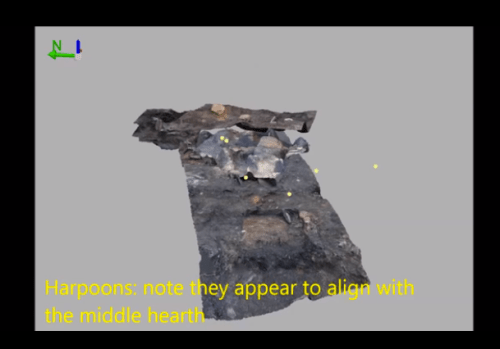
Millennia hearth model screenshot from video. Click to go to blog post and view video.

I’ve been asked to post about some upcoming talks in Nanaimo with archaeological interest.  Below I list the talks, which are all co-sponsored to one degree or another between VIU and the Nanaimo ASBC chapter.  The linked posters below give you more information about parking, times, room numbers, abstracts, bios, etc.  All these talks are free and open to the public. For further information then contact mail@asbcnanaimo.ca .

I know many of you are stuck in other lovely places in the world and can’t make it, but for those more local then the details follow.

First up – in just a day or two – is Morley Eldridge of Millennia Research, speaking on his cool uses of digital technology in site recording and excavation.  This is really cool stuff and probably the way of the future for at least some scales of archaeological research. There’s  sneak preview of some of the new methods on the Millennia Blog.

Lecture: A New Methodology for Archaeological Excavation: Mitigative Excavation of GbTo-13 and GbTo-54, Prince Rupert.

Date: Thursday February 6, 2014

Location: VIU Nanaimo campus, Building 356, Lecture Hall 109 (Education/Social Sciences) Time: 11:30 AM – 1:00 PM
ASBC Members, Students and the Public Free! Everyone Welcome.  More instructions on the poster (PDF)

The other talks are by Andrew Martindale (UBC) and Quentin Mackie (UVIC) (no relation).  Details below:

Continue reading

Tagging along with Archaeologists in Quatsino Sound

Quatsino - Cave at Heater Point. Source: bcmarinetrails.org

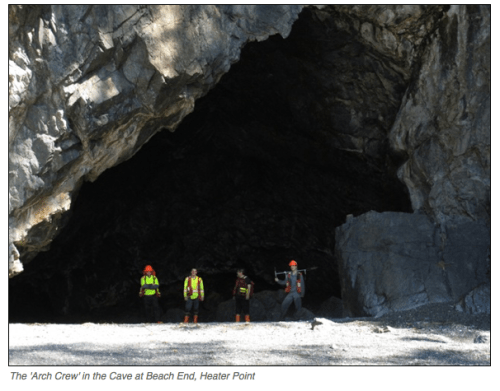
Archaeology Crew at Quatsino: Cave at Heater Point. Source: bcmarinetrails.org

How does the general public perceive archaeologists?  There’s a lot of ways to get at this question, not least the comments section of any newspaper article!  But a positive and slightly unusual perspective is found in this article by Stephanie Meinke at the BC Marine Trails website.  In the course of establishing some new marine trails in the Quatsino Sound area of NW Vancouver Island (map), concern arose that there might be archaeological sites at some of the campsites. Kayakers generally having solid ethics about leaving no trace, but all the same there might be some unintentional impacts.  So an archaeological consulting team (Kennedy Richard and Morgan Bartlett) was hired to assess these spots with potential impact. They were guided by Stephanie and by Janis Leach of Recreation Sites and Trails BC, as well as by two field assistants from the Quatsino First Nation: Mark Wallas and Mark Hunt.

The article gives something of a participant-observation view of the archaeological consulting business in its coastal survey guise, as well as some nice pictures of gorgeous scenery.

Continue reading

‘Namgis Arborglyph

Dawn Cramer inspects an arborglyph deep in the heart of the Nimpkish Valley.  Photo courtesy of the 'Namgis Nation via Jim Stafford

Dawn Cramer inspects an arborglyph deep in the heart of the Nimpkish Valley. Photo courtesy of the ‘Namgis Nation via Jim Stafford

Hard on the heels of my recent post on a newly discovered arborglyph in Klahoose traditional territory, I’ve heard of another one in ‘Namgis territory, in the Nimpkish Valley on Northeastern Vancouver Island.  Local archaeologist and friend of this blog Jim Stafford, who owns the well-regarded Coast Interior Archaeology company (which has a long relationship with the ‘Namgis), sent me the following note and some photographs which are cleared for publication here.  There is also an account of the arborglyph in this PDF document (a newsletter) from the ‘Namgis. Jim writes:

Please find attached images of the arborglyph we found recently in the heart of the Nimpkish Valley.  The photos are provided courtesy of the ‘Namgis Nation and Dawn Cranmer is pictured in two of the photos.  I’ve also included an image of a ‘bark board’ we found nearby with Lee Waddams pictured. Continue reading

Klahoose Arborglyph

Klahoose Arborglyph Ceremony. Source: Klahoose First Nation.

Klahoose Arborglyph Ceremony. Source: Klahoose First Nation.

There has been a mini-flurry of new arborglyphs found in BC – well two of them –  but they are extraordinarily rare.  First up for this blog is the example above, which comes from Klahoose First Nation territory, roughly around Toba Inlet in the extreme NE corner of the Salish Sea (map).  This human face was carved into a tree some time in the 19th century.  It’s in rather stunning condition, setting aside the cut block it finds itself in.  Risk of blowdown is probably why, after appropriate ceremony, it has been moved to the Klahoose offices at T’oq (Squirrel Cove).  As the page describes:

The Klahoose Cultural Leader Norman Harry Sr. and a Tla’amin Cultural Leader Erik Blaney witnessed and performed a ceremony to ensure cultural protocol was observed. The heartfelt moments before the tree was harvested was both moving and surreal on that snowy winter Friday. Needless to say that the emotional event was a historical moment for those who witnessed.

Continue reading

Controversy at Cherry Point site WA, 45WH1

Foreshore near 45WH1.  Source: Re-Sources.

Foreshore near 45WH1. Source: Re-Sources.

I haven’t been following the story at all, but there seems to be quite the controversy going on at Cherry Point, not far north of Bellingham on the coast of Washington State (map).  This large site, in Lummi Nation territory and known to them as Xwe’ chi’ eXen, has seen a lot of archaeological work over the years: about 300 cubic metres was  excavated in a series of WWU fieldschools in the 1970s and 80s under the direction of Garland Grabert. Dating back to at least 3500 years old, has some unusual features, such as being on a wave cut bank over a cobble beach with unusual offshore topography, suggesting proximity to a reef-netting site.

As its site number indicates, it’s the first site recorded by archaeologists in Whatcom County – which usually means it’s a very prominent site.  Indeed, it’s both culturally and scientifically important, and, unfortunately, has seen a lot of impact and is currently threatened. The source of the problem is a major coal port which is being planned. Interestingly enough, when the developer jumped the gun and started core-sampling the site before authorization, they were  taken to court and recently fined 1.6 million dollars.  Which is a lot of dollars. Continue reading