Tag Archives: art

Boundary Maintenance

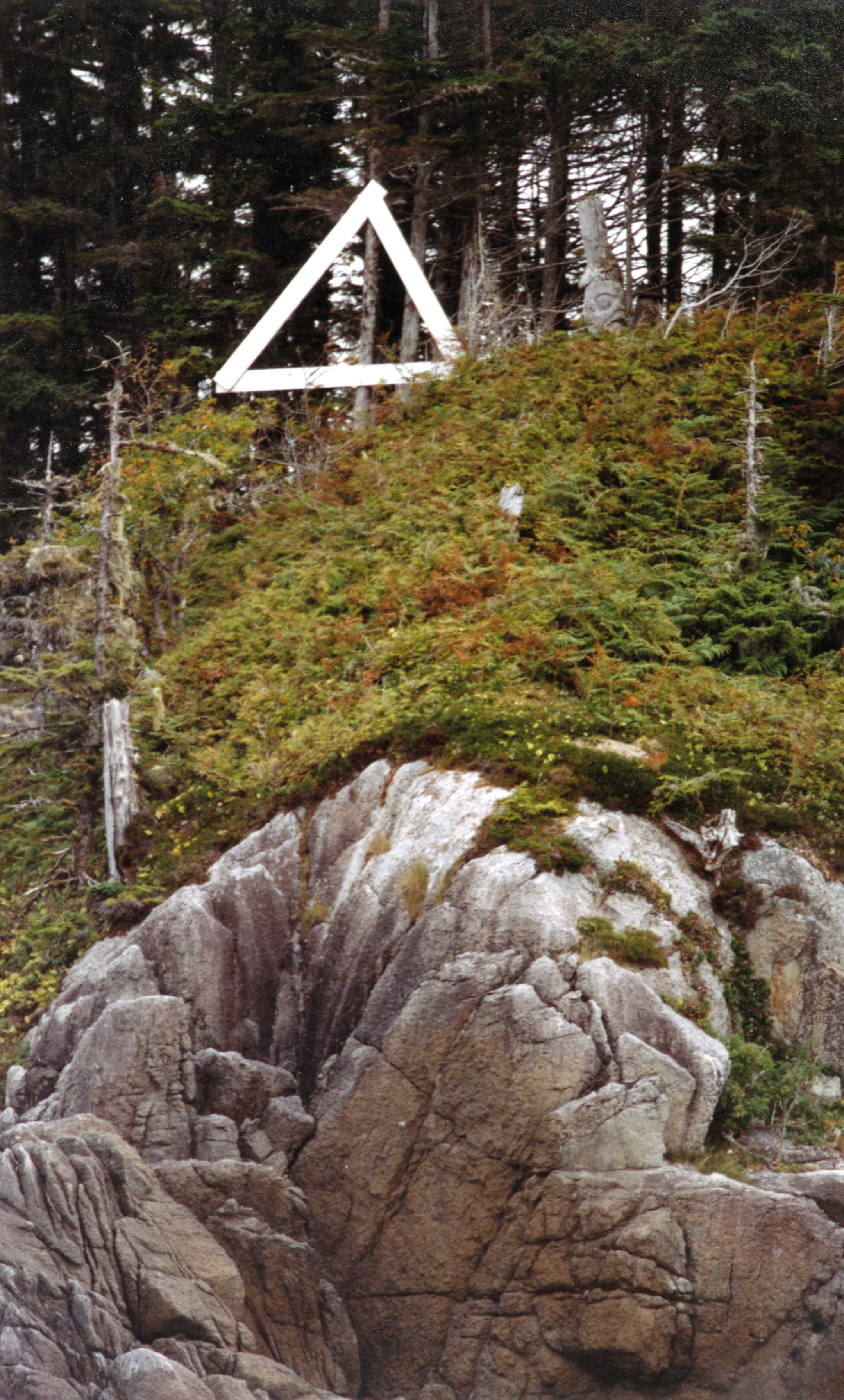
Headland with wooden markers. Click to zoom.

This is one of my favourite pictures of B.C. Archaeology, even though  it doesn’t look like much.  It’s a bit fuzzy: I took it with a zoom lens in about 1985 , rounding a headland in a small boat  on the Central Coast.  In fact, you might think it doesn’t look all that archaeological.  Look closer: sticking up to the right of the white triangle you can see the carved head of a pole.

The white triangle is a standard device used by Fisheries to demarcate the different fishing zones on the coast, for management purposes.  On one side of the triangle there might be different catch limits or closures or seasons of harvest enforced than on the other.

I don’t know much about the pole, but its location on such a prominent headland, facing the open Pacific, next stop Japan, is suggestive it marked a change of territory, a boundary shift, a movement from the control of one lineage or house to another. You don’t often see such a pole away from a village site.

Both wooden markers may ultimately serve the same purpose: boundary maintenance between zones of control; advertisements for power; watchful symbols of formal rights; the means of resource management.  It is intriguing and almost poetic to see them standing, side by side, on the same headland, guarding the same water.

Detail of wooden markers.

Flickr user CanadaGood’s pictures of poles

Fallen pole at Gitsegulka. Source: flickr.com user CanadaGood.

Someone posting under the username “CanadaGood” at flickr.com has put up an impressive array of over 100 photos of “totem poles”.  What I like about this set is that most of these are not the iconic ones from coffee table books or museums but rather are still standing (or lying) in communities, mostly along the Skeena River.  They aren’t the most technically accomplished photos or anything but they are undeniably atmospheric and they document the process of renewal and decay of poles which was an important part of the carving complex.  Each pole is the material instance of the right to carve and display a set of crests or images, often as a memorial to a dead person of high status, and therefore the “thing” must be set against the intangible, non-material property of rights and titles which it represents.  Proper treatment of the pole might therefore well include letting it return to the earth, replaced by a fresher copy.  I like the matter of fact way this one is set up on stumps and this rotting masterpiece at Gitanyow.  This figure is unusual for being “sculpture in the round”.   Kudos to CanadaGood for putting pictures of these less commonly seen poles on flickr, in high resolution, and under a Creative Commons licence to boot.

Tops of standing poles at Gitsegulka. Source: flickr user CanadaGood.

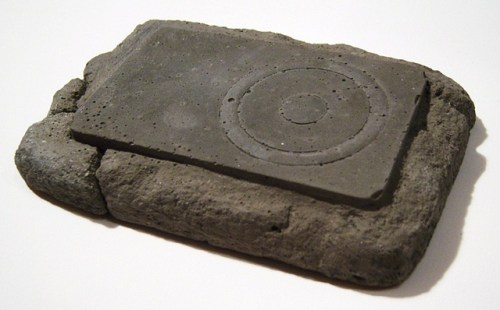
Christopher Locke’s modern fossils.

Egosiliqua malusymphonicus

Christopher Locke is an artist whose work includes a number of fun “modern fossils“, like his palaeofuturistic rendering of an iPod (Egosiliqua malusymphonicus), above, or a Nintendo game controller (Dominaludus sexagentaquad) below.  I take the work to be a slightly sarcastic commentary on the work of palaeontologists and archaeologists as well as on the flukey preservation of ephemera – see his specimen notes alongside each piece at his website.

They are also very reasonably priced — tempting!

Dominaludus sexagentaquad.

High Resolution Pictures from the Smithsonian

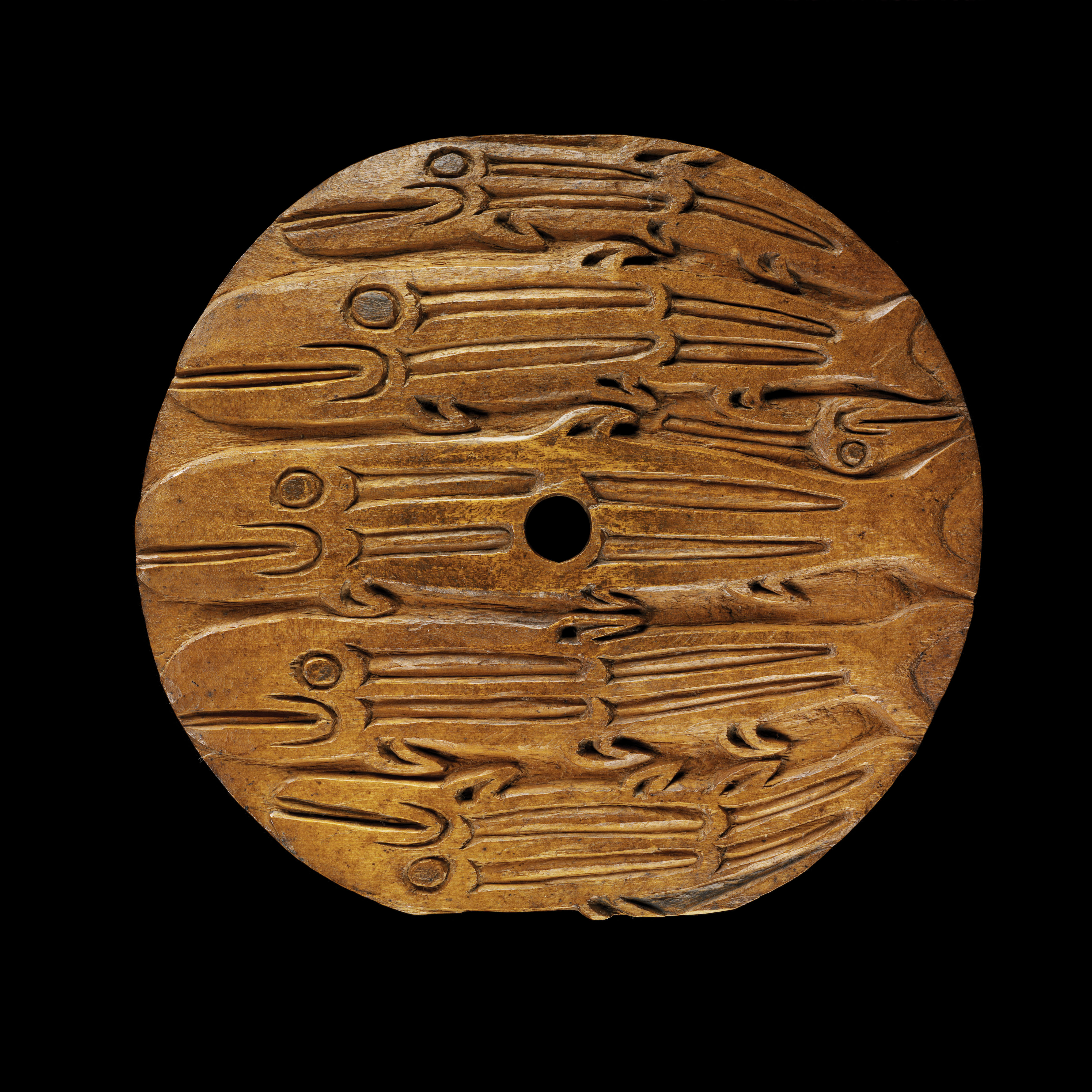
Cowichan Spindle Whorl, ©National Museum of the American Indian, Smithsonian Institution (15/8959)

Cowichan Spindle Whorl, ©National Museum of the American Indian, Smithsonian Institution (15/8959)

These seem to be squirreled away on the website in the “media releases” section at the Smithsonian! It is well worth getting the high-resolution images.  There is one solid, NWC art page here (from where the lovely Cowichan spindle whorl to the left is from)  but additionally here are high resolution pictures of:

an Alutiiq (Koniag) hunter’s hat, ca. 1950  Kodiak Island, Alaska (Spruce root, paint, glass beads, dentalium shells, wool cloth, sea lion whiskers National Museum of the American Indian, Smithsonian Institution Image: 6/9253)

Quinalt woman’s dentalia breastplate ca. 1880 Washington state (Hide, dentalium shells, glass beads, cordage National Museum of the American Indian, Smithsonian Institution Image: 2/7703)

Tlingit Rattle, ca. 1880 Alaska  (Alder or maple wood, hide National Museum of the American Indian, Smithsonian Institution Image: 8/1650AQ)

Raven Steals the Sun (in blown glass! by Preston Singletary (Tlingit) Seattle, Washington, 2003)

Continue reading