Category Archives: underwater archaeology

The Wreck of the Kad’yak

Cannon from the Kadyak on the seafloor near Kodiak Island. Source: Archaeology Magazine.

Off Alaska’s Kodiak Island lie the remains of the Russian-American Company ship Kad’yak, which sank in 1860.  The wreck of this Barque was rediscovered in 2003, as this first-hand account documents.  (It is full of the usual intrigue between divers and dirters and is rich with interesting links about the discovery).  Almost immediately, an underwater archaeological research project was formed, participants included people from the Kodiak Maritime Museum, the Baranov Museum, the Alutiiq Museum, the State of Alaska Department of Natural Resources, NOAA National Marine Fisheries Service in Kodiak, and East Carolina University.  This was the first underwater archaeology project in Alaska, and it is ably documented by the Alaska Office of History and Archaeology.

Continue reading

Photo Essay on the Qwu?gwes Site

EDIT February 22, 2010: Pictures removed after communication from Lee Rentz (see comments).

Dale Croes has been doing great work for years on wet site archaeology, most notably a long association with the Hoko River wet and dry sites on the Olympic Peninsula.  More recently he has spent a decade or so at the Squaxin Tribe’s Qwu?gwes waterlogged site near Olympia, Washington.  I see that Lee Rentz’s Photography blog has a nice photo essay on the Qwu?gwes site called Ghosts Dwell in the Lowering Tide.

Wet sites can produce locally anaerobic (oxygen depleted) environments, preventing or slowing bacterial degradation of organics.  This allows survival of many artifact types which rapidly deteriorate in normal archaeological settings.  At Hoko, there are well preserved wooden artifacts over 2,000 years old, at Qwu?gwes the material is mostly about 700 years old.  Similar sites elsewhere on the Northwest Coast are mostly  less than 5,000 years old, with the notable outlier of Kilgii Gwaay, which is 10,500 years old.  Since some estimates put wood artifacts at 90% or more of NW Coast technology, you can imagine how revealing these rare, and increasingly threatened, waterlogged sites are.

The photos at Lee Rentz’s blog are excellent, and the text is accurate and informative.  Good to see!  If you want to find out more, some scholarly and other articles can be downloaded here, or you can work at Qwu?gwes yourself as part of a field school.

State Underwater Archaeology Overviews

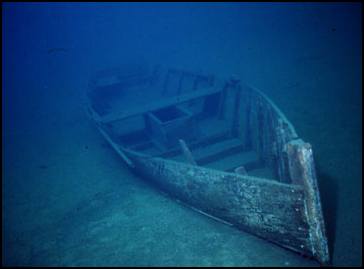
Part of a sunken fleet of recreational dories, Emerald Bay, California.

The US National Parks Service has a useful page summarizing policies and laws regarding “submerged resources” – which includes underwater archaeological sites.  The sections most of interest to the six readers of this blog are probably the pages on Washington State, Alaska, Oregon and California — though the fact that Idaho has a page is, at least, surprising until you remember the importance of paddle-wheelers in the earlier interior historical period all over the west.

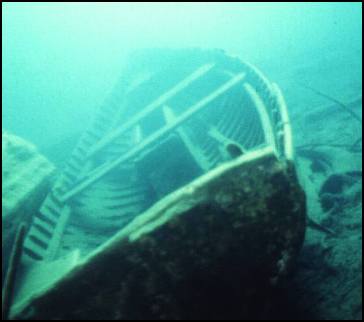
Another Emerald Bay dory. Source: http://www.parks.ca.gov/default.asp?page_id=22707

Shipwrecks of Vancouver Island

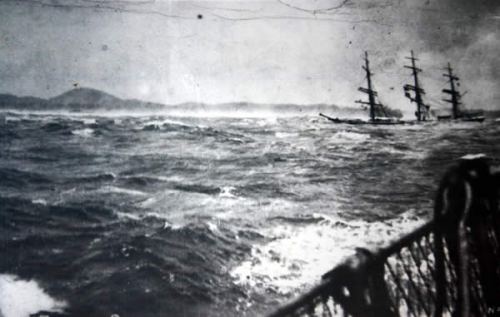
The three-masted ship Carelmapu with decks awash, dragging her anchors into Schooner Cove, near Tofino, in 1915

The ‘Virtual Museum of Canada”  has been responsible for some nice online exhibits, although a lot of these are now fairly dated.  One with what we could call a “retro web design”, but some good content, is the Shipwrecks of Vancouver Island site, apparently put together mainly on the watch of the Maritime Museum of BC with help from the Underwater Archaeological Society of BC.  There are some nice videos of underwater archaeology, and other informative materials.

Site navigation, though, is much easier if you just go to the site map here — the absurdly finicky navigation does weird things like, say, means using the back button always takes you to a splash introduction screen — is a crime against the web.  Especially since museum people are involved: why such disdain for solid future-proof web design values?  This page, for example, has a nifty slider to scroll through an interactive map: but if you don’t pay attention (e.g., if you use your back button) you will always end up on a “loading XML – introduction to the database” overlay screen page which gets tired after about the third time.  The VMC should consider a legacy fund to make sure that the sites which they poured money into for a while can all be kept up to date for both content and also compliance or at least ease of use.  It would not surprise me in the slightest if the VMC had spent over $100,000 on this site — the one site of their I know something about they spent $140,000 and it is no flashier than this thing.  Almost all that money went into design and mounting of content, very little went to the content creators themselves.  If that  applied here, I think we have a right to expect more – is this site design worth $100,000?  It seems to me that, even in 2004, a competent web designer working alone, with content given by others, could have put this together in about a month.

Canadian Navy diver goes overboard in 1959 to examine the 1853 wreck of the Lord Western, near Flores Island.

Videos of Gwaii Haanas Archaeology

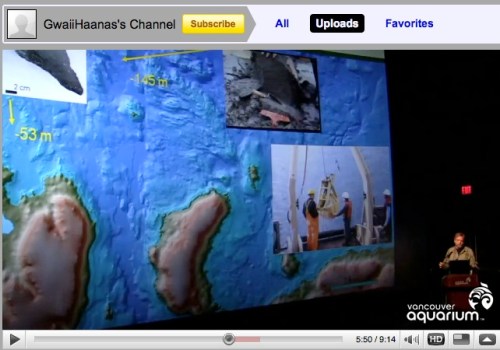
Daryl braves the barrage of bras to set the Vancouver Aquarium straight on the value of dead fish over living fish. Click to play part 1.

Rockwash superstars Nicole and Daryl show off their cool wares in a couple of videos I just found online – I vaguely remember them going off to give this talk at the Vancouver Aquarium.  It’s in two parts: 1 and 2.  Nicole looks fabulous and Daryl has trimmed his beard!  Win-Win.  The projects they describe sure were a lot of fun to take part in.   There are a few other talks up including Lyle Dick and Norm Sloan on Sea Otters on the Gwaii Haanas Youtube Channel.

A sandhill crane is a tough act fo follow but Nicole hammers home the righteous message of dead fish. Click to play part 2.

dSpace: Caldwell on Comox Harbour Fishtraps

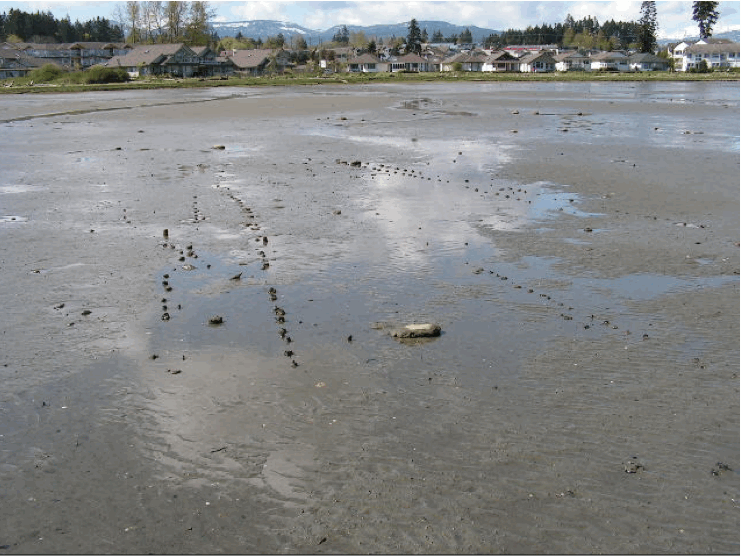
Chevron-shaped fishtraps in Comox Harbour. From Caldwell 2008.

The University of Manitoba is in on the dSpace trend.  The most notable thesis I found there was Megan Caldwell’s excellent analysis of some Comox Harbour fishtraps in relation to the Q’umu?xs Village site (DkSf-19).  Sixteen carbon dates are now available on these traps, thanks mainly to the work of Nancy Greene.  Caldwell takes a theoretical stance of Optimal Foraging Theory, arguing that fishtraps amount to “artificial patches” which can alter choices made under Patch Selection principles.  Essentially, a similar and more holistic argument could be made using principles of the “built environment” in an Ingoldian sense, but OFT is more structured and maybe more suitable for an MA thesis.  Interestingly, Caldwell’s work on auger sampling of the Q’umu?xs Village site shows a preponderance of herring, which is also interpreted as the target prey of the fishtraps.  This runs against the grain of the ethnographic work she conducted, where she was told that salmon were more important — mind you, salmon have difficult taphonomy and site formation processes, which she acknowledges.  In any case, this is a well organized, focused thesis which reflects a lot of high quality original work and while I haven’t read the whole thing I intend to do so!  Caldwell mentions Nancy Greene is still working on her fish trap study and I hope to see the results of that soon as well — these Comox Harbour trap complexes are very likely the finest of their type anywhere on the Northwest Coast and may well offer key insight into cultural construction of the landscape and its resources.  Download her thesis here!

Map of Fishtrap Stakes in Comox Harbour. From Caldwell 2008.

Schematic of two basic fishtrap designs. From Caldwell 2008.

dSpace: Dentalia Shells on the Northwest Coast

Dentalia Source "mu7is" in Hesquaht Harbour.  From Barton M.A. p. 116

Dentalia Source "mu7is" in Hesquiat Harbour. From Barton M.A. p. 116

Andrew Barton did an excellent job reviewing the biology of the Scaphopoda, the archaeological record of dentalia use and trade, and the technology available to harvest these small creatures with tusk-shaped shells.  Overall, he brought a lot of nuance to a topic that had been somewhat over-simplified.  For example, there is no real evidence that these shells were only available at depth from the NW corner of Vancouver Island.  Barton reports on attempts to replicate ethnographic dentalia “spears” (more like a rake, or a pasta fork).  You should be able to download a copy of Fishing for Ivory Worms : a review of ethnographic and historically recorded Dentalium source locations from SFU dSpace.

Dentalia necklace by Josephine Ingraham, Clatsop/Chinook Tribes

Dentalia necklace by Josephine Ingraham, Clatsop/Chinook Tribes

Fieldwork Picture of the Day 9

Danny at the helm,  aaaargh Billy.

Danny at the helm, aaaargh Billy.

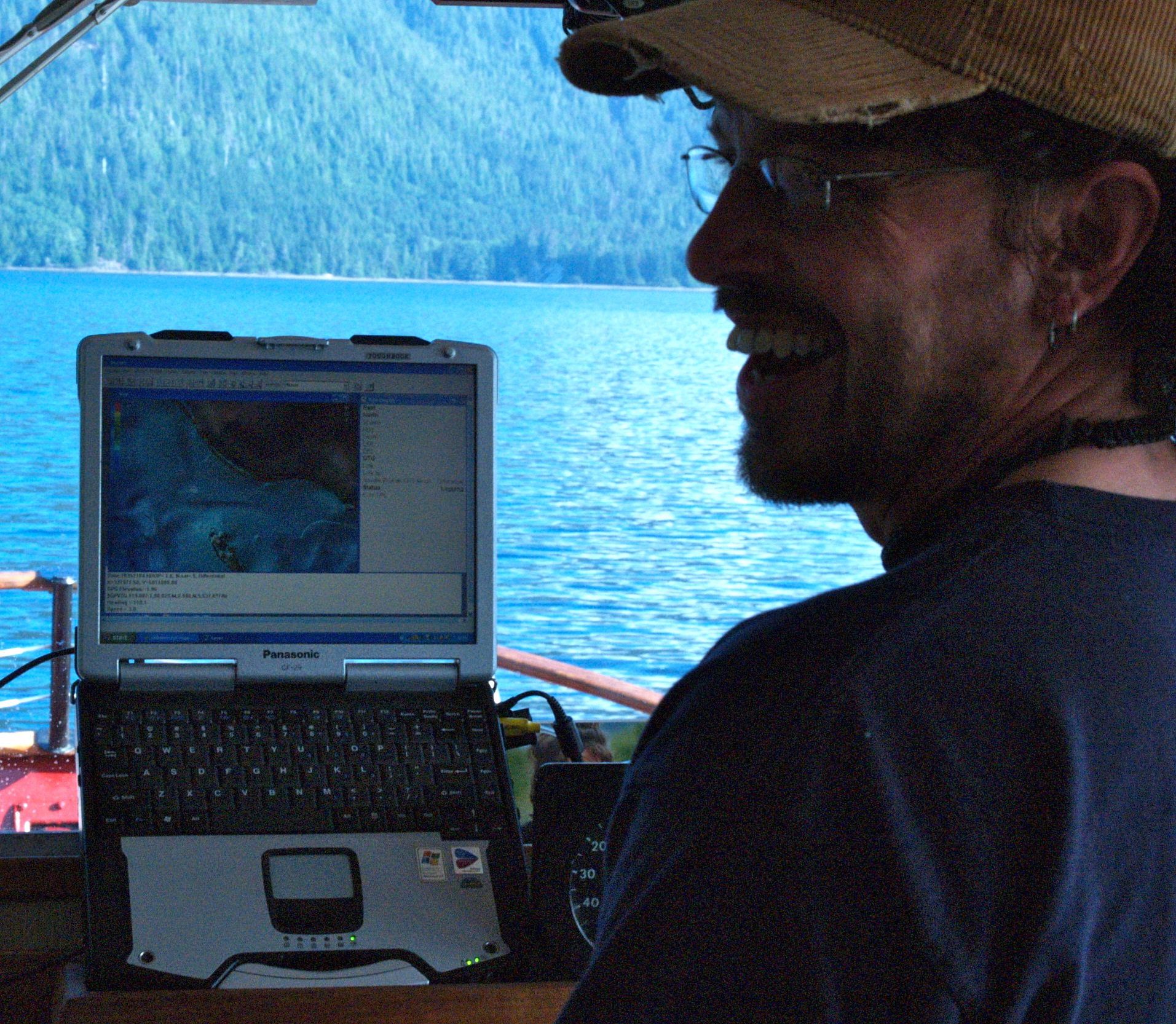
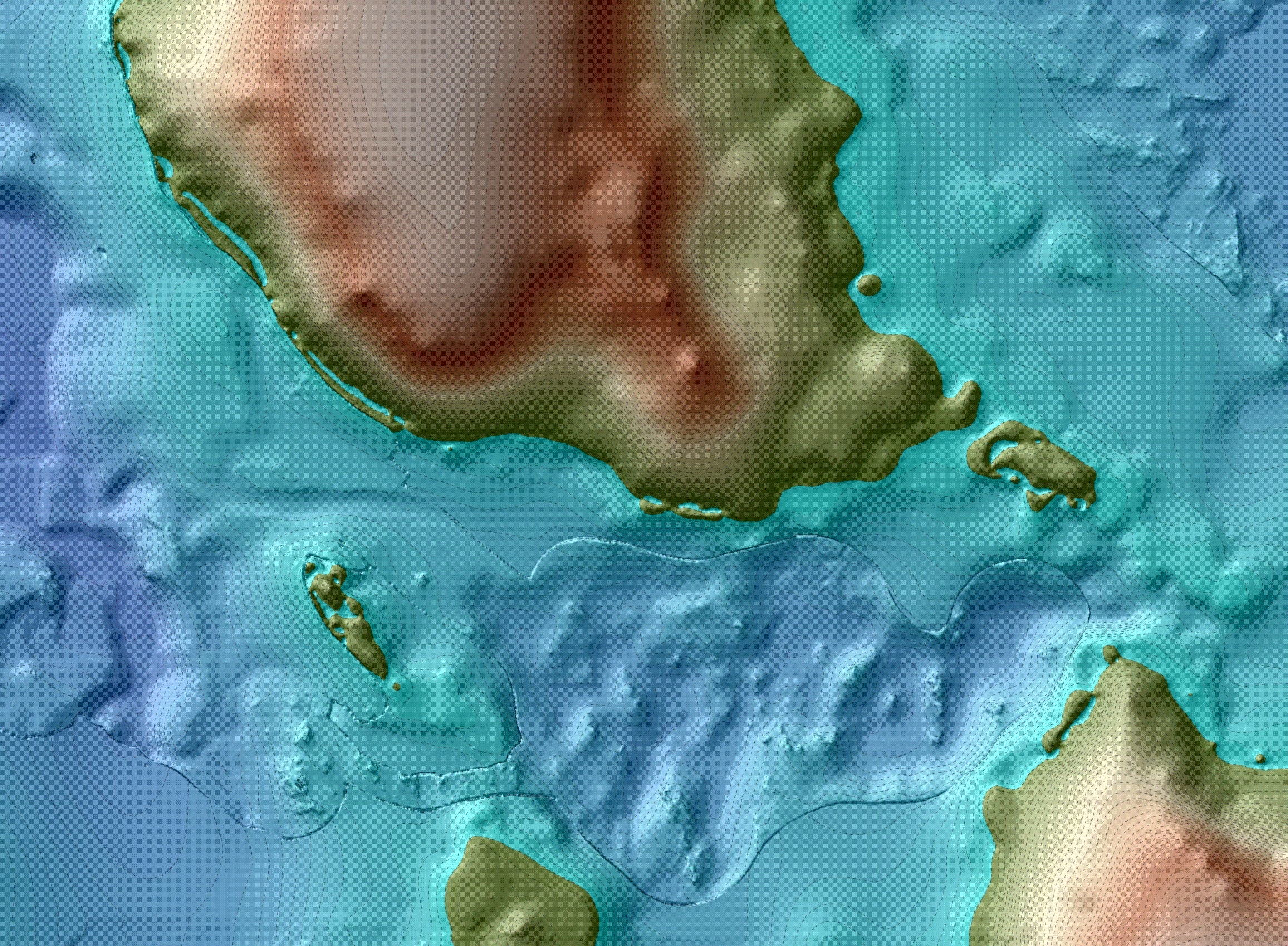
Underwater research at Section Cove, near Gaadu Din. I posted a picture earlier of a diver on the bottom.  Here is a view from topside — Danny, boat skipper, wise-ass and all round rock solid good guy — has a GPS-linked laptop in front of him which is displaying the bathymetry of Section Cove.  (see the image on Danny’s screen here, courtesy of Daryl).  This enables him to tow the sonar fish exactly where required, or, on this occasion, help position a small dredging bucket for bottom sampling purposes.  With differential GPS, you can position the ship to within less than a metre of where you want it, relative to the bottom.  This means measuring the distance between the GPS antenna and the crane and building in an offset, which is trickier than it sounds. The bathymetry is also sub-metre in resolution.  Thus, we can target the bucket exactly where we want it — of course strong currents and bucket flutter can still move it around some.  It has been slow progress on this work but all the pieces are in place for what could be an exciting breakthrough –  a base camp on a small lake, now drowned, dating to sometime older than 11,500 solar years ago would be most welcome considering most of our other sites of this age are rather one-dimensional.

The purpose of the camp could be base camp for bear hunting in the nearby Gaadu Din caves, or more likely sockeye fishing in the lake-stream system that used to flow along the terrain here, under Danny’s  keel.

The lake, the salmon, the cave, the creek.  Green tones are now underwater.

The lake, the salmon, the cave, the creek. Green tones are now underwater. Image prepared by Daryl.

Fieldwork Picture of the Day 6

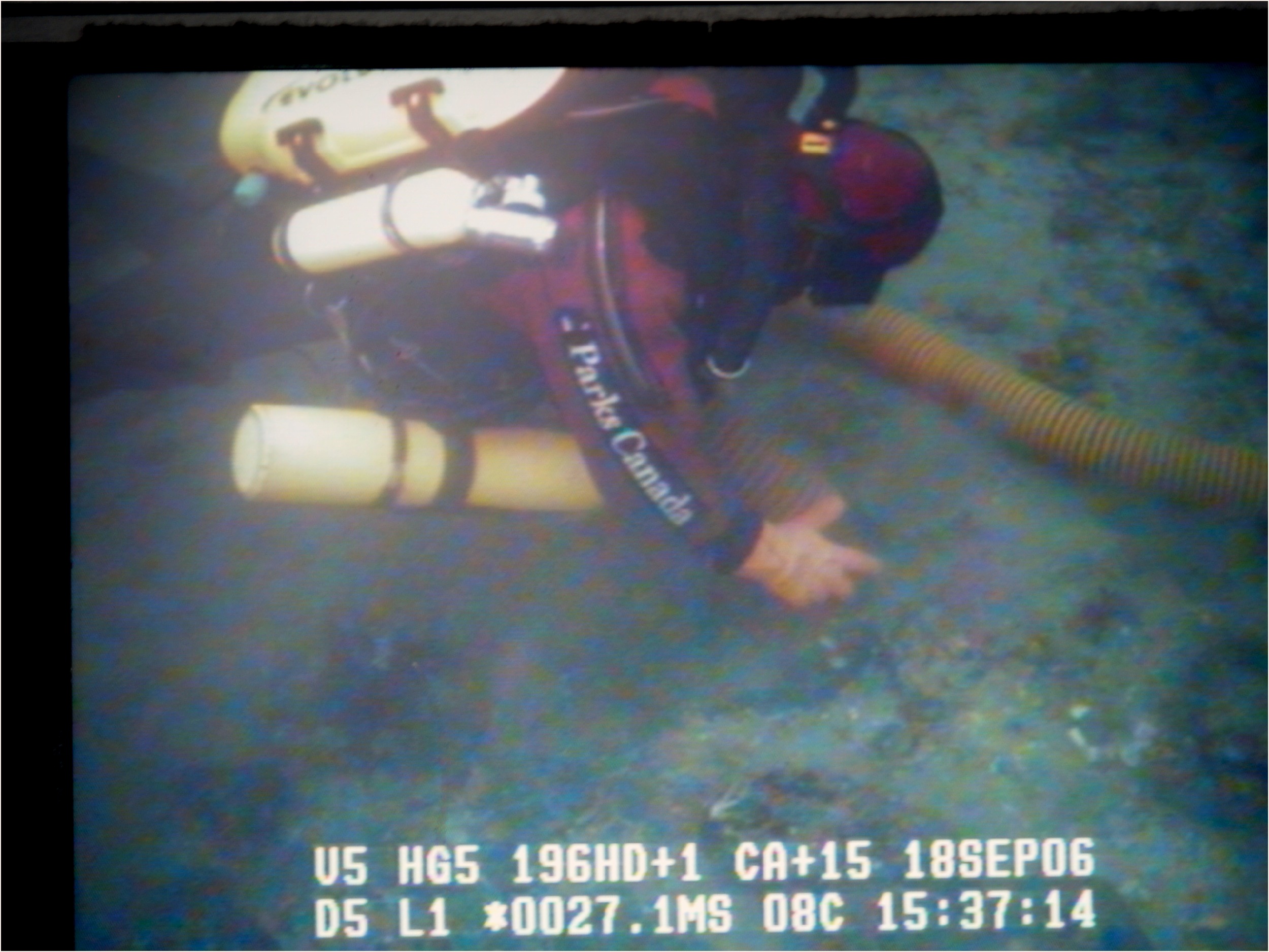
Parks Canada Underwater Archaeologist at Section Cove, 2006

Parks Canada Underwater Archaeologist at Section Cove, 2006

Parks Canada has a great underwater archaeology unit.  They have been coming out to dive on targets we’ve identified on the drowned terrestrial landscape of Haida Gwaii.  This picture shows an archaeologist with a suction hose on the bottom near (though, sadly, not on) the target we identified at the outlet of the lake that formerly sat in Section Cove, near Huxley Island. This target is at about 33 metres below the surface, while the diver here is at about 27 metres down, so on a small bump above ancient landform of interest – not a place with zero potential, but not a huge amount either, we don’t think. The hose sucked out the bottom sediments into a mesh bag which could then be lifted by crane onboard the mother ship, and screened on deck.  Therefore, it was not really a lift hose, but the system worked pretty well though as I say, it was not applied to the precise location of the high potential.  In future years once this dive team perfects their procedures for working in this difficult location and at challenging depths we hope to find some very cool archaeological stuff dating to the terminal Pleistocene / end of the last ice age.

Fieldwork Picture of the Day 5

Submersible at Section Cove

Submersible at Section Cove

A few years back I fulfilled a lifetime ambition by going down in a submersible.  This shows the Nuytten craft “Aquarius” on the surface in front of the warden’s cabin on SW Huxley Island in Gwaii Haanas (map).  We tried diving onto the ancient lake that now lies drowned at 33 metres below sea level,  more or less in front of the cabin.  This lake would have been last exposed to air about 10,000 14C years ago.  We started at about 110 metres down and then worked our way up a palaeo-river channel towards the lake, but unfortunately got off course and ended up a lot closer to the beach than we had anticipated.  These things are flown by a pilot, but the basic navigation is by transponders on the bow and stern of the mother ship which allow triangulation from a known point.  Apparently, not foolproof!  The lake we were diving onto shows huge potential for an archaeological site.  We are thinking there may have been a base camp for bear hunting at Gaadu Din 1 or 2, which are less than a kilometre away.   Possibly, too, there was a sockeye salmon fishing camp here, since the nearby caves contain numerous salmon bones from the late Pleistocene.  Anyway, it was pretty cool to go down in the submersible!