Category Archives: Miscellaneous

Heather Pringle: Dogs for the Dead

Smell a corpse, not smell like one, Arbuthnot.

B.C.’s own Heather Pringle has a new blog these days, and her recent post on the use of forensic dogs to detect archaeological sites and human remains in particular, in Washington State, is worth a read:

According to the staff at the Institute for Canine Forensics, dogs can smell human remains that are buried as much as nine feet below the surface.  And they can detect remains as old as 2000 years.  ”Human remains have a scent that never,  ever goes away,  especially a bone,  even after it dries out,” one of the institute’s staff members told The Peninsula Daily News.

La Brea Woman: Image Controversy

La Brea Woman forensic reconstruction.

I came across this interesting article chronicling an emerging controversy in Los Angeles.  I never knew that human remains had been found in the La Brea tar pits, but a partial skeleton of a young female had been on display until recently in the George C. Page Museum there.  At some point, a museum  volunteer made forensic-style reconstructive drawings of this young woman.  Now the museum is trying to prevent their publication, a move which some claim is designed to help prevent their repatriation.

Are illustrations of human remains tantamount to display of the human remains themselves?  Is the display of a cast any different?  The forensic reconstructionist apparently used the cast, not the actual skull. But consider the process of making a cast: is not that a greater insult to the dead than merely handling their bones would be?  In any case, these forensic reconstructions contain a little too much interpretive latitude: consider the Kennewick man reconstruction whose resemblance to Patrick Stewart has done nothing to quell the notion Kennewick man was ‘Caucasian’. Further, the forensic reconstructions include disturbing “cutaways” revealing the reconstructive process and producing an otherworldly, inhuman appearance (see below).

Continue reading

Tattrowel

Inkulkation.

I hereby challenge rockwash to go out and get one of these trowel tattoos.  Or be like Brad and get the coveted Ötzi tattoo.  Or check here for more science tattoo inspiration.  (Ötzi really did have tattoos, BTW).

Icey Dead People.


Another snag for “Clovis First”

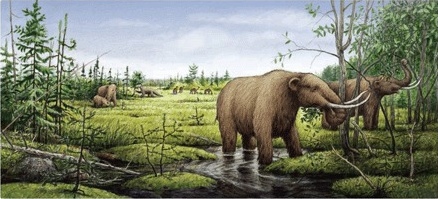
Mastodon! From: Science 20 November 2009

Abundant megafauna are important to the Clovis-First model of the peopling of the Americas because the mechanism for what was considered to be an exceptional event or series of events was overkill of these large, naive, critters .  Overkill led first to localized extirpations (moving the Clovis folks along on a bow-wave of blood) and ultimately to megafaunal extinctions across the hemisphere.

Sad, then, for that particular story and its storytellers, to see recently reported results in Science which track (through samples of dung fungus) a millenium-long decline in mastodon and other megafauna before the arrival of Clovis.  This decline might relate to climate change or to the influence of pre-Clovis humans – it’s too early to say.  But as the graph below shows, the decline set in pre-Clovis at about 14,800 cal B.P., and by the time of Clovis (ca. 13,500 cal B.P.), far from being hyperabundant, herbiferous megafauna seem to have been at a historically low level of population.  Vegetation change (often used to track climate) was a result of this die-back, not the cause of it.   Perhaps this remnant megafauna population was then finished off by Clovis, but that is hardly a bow-wave of blood scenario, but rather a “mopping up” of increasingly scarce game.  Has there ever been as misunderstood an archaeological concoction as the Clovis Culture?

Update: The Guardian has coverage, incongruously illustrated by the RBCM’s life-sized mammoth model.

Reference:

Jacquelyn L. Gill, John W. Williams, Stephen T. Jackson, Katherine B. Lininger, Guy S. Robinson.

Pleistocene Megafaunal Collapse, Novel Plant Communities, and Enhanced Fire Regimes in North America.

Science 20 November 2009: Vol. 326. no. 5956, pp. 1100 – 1103

DOI: 10.1126/science.1179504

Pre-Clovis decline of large herbivores. Source: Science 20 November 2009

Argillite Beaver

Haida argillite pipe representing the SS Beaver. Photo: University of Aberdeen.

The SS Beaver was a prominent early side-wheel trading ship on the NW Coast.  Nice to see it memorialized by Haida argillite pipe in the Marischal Museum collection of the University of Aberdeen, along with some other exceptional Haida pipes.  Apparently donated to the museum by the former Captain of the SS Beaver, William Mitchell, this pipe sports a rotating side wheel carved from whale bone, a beaver figurehead, and someone peeking out of the cabin windows, perhaps Capt. Mitchell himself who probably commissioned this carving.  Some other close ups (in an awkward zoomable interface) are  available on the Scots and Aboriginal People in the Fur Trade site.  More on the SS Beaver here.

A figure looking out the window of the SS Beaver pipe.

NorthWord Archaeology

Layer 1: snow.  Layer 2: littermat.

Layer 1: snow. Layer 2: littermat.

I just found a pretty good article from NorthWord, a community newspaper that covers northern BC’s coast and interior.  Nice quotes and insights from Rick Budwha, Farid Rahemtulla and David Archer – but what caught my eye was the surreal photo used to illustrate the piece.  Is that a light dusting of snow on the clipboard?  Is that wind down the plumber-butt?  Is that a marginally insane unit location right in the root mat of a huge tree?  Is this winter impact assessment under Oil and Gas Commission guidelines? How did they establish the glorious sidelight?   Is there snow on the soles of their boots?  Could this be a painting?  I want to know more about this picture, dammit!

Speaking of Clovis

Michael Collins' Licence Plate - Just needs a "pre" fix.

Michael Collins' Licence Plate - Just needs a "pre" fix.

The Gault Site in Texas is a classic Clovis site, though one which awaits full and complete recording.  The site was purchased by old-school Clovis archaeologist Michael Collins to protect it – the previous owners would rent out digging time to pothunters.  Collins  then donated it to an archaeological trust – a stunning example of putting your money close to your mouth!  It has always been on my radar as a big site down in Texas with tons of Clovis stuff but frankly I had never looked into it that closely – other than indirectly through Collins’ excellent studies of Clovis blade technology, and an awareness that it had produced some of the earliest art known in the Americas (2, 3).  Any Clovis site is of interest, not just because Clovis is an unusual archaeological phenomenon, but also because the history of the discipline will see “Clovis First” archaeology as a classic example of a paradigm that got shifted, reluctantly.  And anyone working on the early periods in BC Archaeology is profoundly influenced by Clovis — whether that be the northeastern Ice Free Corridor sites, or on the coast where Clovis ages of 11,000 radiocarbon years ago are a benchmark for first peopling.

So I was interested to learn that there is 400 years of Clovis occupation here — pretty much the whole span of the Clovis Culture as now understood.  That’s not very overkill-and-move-on-ish.  Then I find out the dominant resources at Gault include frogs, small mammals, and turtles — not very big-gam-hunterish.  Now I read the Collins is reporting pre-Clovis deposits at the Gault Site — certainly not very Clovis-Firsty.  As  this article from a local newspaper in Waco states:

The latest evidence to debunk this theory may come from the Gault site. In the dig site now covered by the big white tent, archaeologists took a core sample in 2007 and found something startling: what appear to be manmade stone artifacts that differ from Clovis technology. That could mean Gault was inhabited some 14,500 years ago, Gault School officials said.

“That would be the nail in the coffin of Clovis First,” said Collins, the University of Texas archaeologist who has been the site’s chief excavator.

Collins, 68, said that when he started in archaeology in 1960, almost nobody questioned the Clovis First theory. Collins grew to doubt it, based on new discoveries in Chile and elsewhere, but it took a long time for alternative theories to gain traction in the world of archaeology.

“What I despised most among my colleagues was that they would simply dismiss your argument when they didn’t know anything about it,” he said. “Or they would ignore it.”

Today, the question of the first Americans is a wide-open debate, with scientists such as Collins suggesting Asian and even European colonization by boat between 15,000 and 24,000 years ago.

“When I first started doubting Clovis First a long time ago, maybe 2 percent of professional archaeologists considered the possibility of an earlier date, Collins said. “Now, that number is probably 95 percent.”

Maybe I haven’t been paying attention but, wow.  Gault Site has pre-Clovis and Michael Collins slams the “Clovis Police.  It’s a good day.

Clovis Exceptionalism Craters

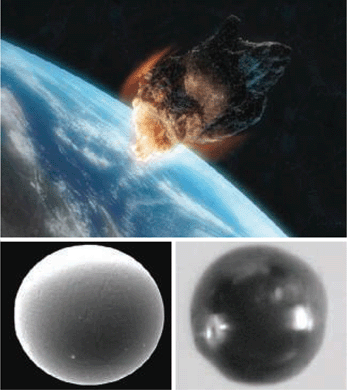
An impactor (top) may have produced magnetic spherules (lower right), but similar spherules (lower left) continually fall from space.

An impactor (top) may have produced magnetic spherules (lower right), but similar spherules (lower left) continually fall from space.

John Hawks has a good writeup about the latest news on the theory put forward a couple of years ago that a comet impacted the Laurentide ice Sheets, overkilling Clovis culture, megafauna, and instigating the Younger Dryas Event to boot.  The new paper by Todd Surovell et al. completely fails to replicate a key bit of support for the theory, namely that magnetic iron spherules, said to be the comet’s smoking gun, were associated with terminal Clovis stratigraphy across the Americas.   Other studies have chipped away at the theory as well. I’m not an expert and it’s hard to judge the state of debate — though as Hawks notes, the paper is unusually unequivocal in its conclusions of ‘no evidence”.

I have to say, I don’t mind seeing more theories of Clovis exceptionalism shot down — it is an unusual archaeological phenomenon to be sure, but it hardly takes white-hot fallout across the Americas to bring it down.  Let’s start looking at Clovis on a more human scale! Enough with the megafaunal overkill models, when the most ubiquitous fauna associated with Clovis are turtles and tortoises.  Enough with the ignoring of plant remains — the Clovis Policemen’s longstanding refusal to accept Monte Verde tells us everything we need to know about their knowledge of ethnobotany.  Enough with the phallocentric failure to look beyond the Clovis Point to see that the rest of lithic Clovis  is pretty much a standard Upper Palaeolithic toolkit.

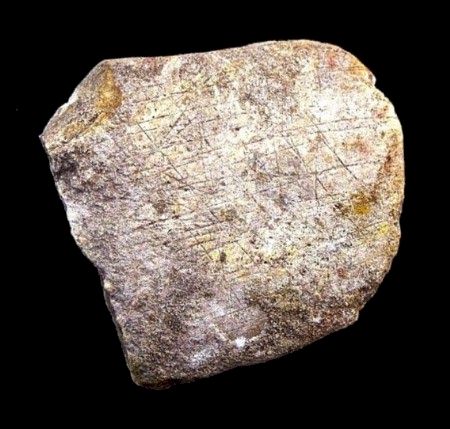
Smoked mammoth.

Smoked mammoth.

Thinking about that the other day,  I realized that Clovis is (ironically, counter-intuitively) ripe for a post-processualist analysis. Not a critique – an analysis.  Why?  What makes Clovis different is style – widespread projectile point style as a sort of hyperkinetic effort to maintain social cohesion through semiotics, if you like.  When something is so unusual we have to posit its arrival in a river of blood through the parting of a white sea, and then see it off with a rain of fire from heaven, surely it is time to turn it over to the school of archaeology that deals with histories, not generalities.

Surovell TA, Holliday VT, Gingerich JAM, Ketron C, Haynes CV, Jr, Hilman I, Wagner DP, Johnson E, Claeys P. 2009. An independent evaluation of the Younger Dryas extraterrestrial impact hypothesis. Proc Nat Acad Sci USA (early) doi:10.1073/pnas.0907857106 (subscription required)

Keatley Creak

An unusually strong review of Brian Hayden‘s Keatley Creek excavations on the middle Fraser River, near Lillooet can be found at this site:

” […]Hayden was able to show that the aristocratic owners lived on one side of the house, where the larger hearths, the larger storage pits, and the better tools and ornaments were all found, and their servants or poor relations on the other side.  The bones from the good side of the house were mostly ribs and vertebrae from the best parts of the fish, while the tail bones came mostly from the poor side.  The deer bones were also mostly from the rich side.  So we can imagine the rich folks keeping warm with big fires and eating the best parts of the fish, while their inferiors watched them from the other side of the same room, huddling by tiny fires and gnawing on fish tails.  To this visual image we must add the smell.  Air-drying salmon protects it from harmful rot, but European observers all thought the process left the fish “half tainted.”  The smell in a closed house full of the stuff “was such as nobody who has not grown up with the stench can endure it for even a few minutes.” The more I think about this strange place, the more disoriented and disgusted I become. […] ”

I look forward to more such insight into how the public perceives the fruits of archaeological labours.

Meanwhile in Dinosaur Land

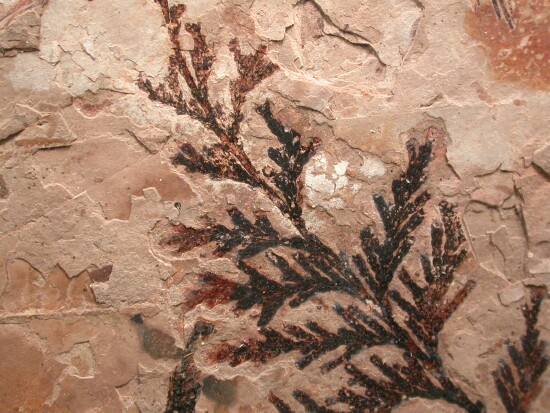
White Cedar fossil from McAbee Fossil Beds.

White Cedar fossil from McAbee Fossil Beds.

It’s not just petroglyphs that have a hard time getting protected in this province.  PalaeoBlog raises the issue of the unusual, exceptionally rich, 50 million year old McAbee Eocene fossil beds near Cache Creek, in the BC interior.  It seems the BC Government has reneged on a deal to help protect and manage these beds, which are exposed in a highway cut.  This deal involved the B.C. Paleontological Society, the RBCM, and Thompson Rivers University.  The Kamloops News has the story.  Once again, the Powers that Be are shown to be Philistines in shark’s clothing.  Maybe if someone told them that Adam and Eve lived in those ancient meadows, frolicking with dinosaurs, they would have a little more interest.  The Fossil Museum has a nice page which makes the importance of the McAbee beds quite clear.