Tag Archives: ASBC

Victoria ASBC Talk – Tuesday Oct. 19 – Vikings!

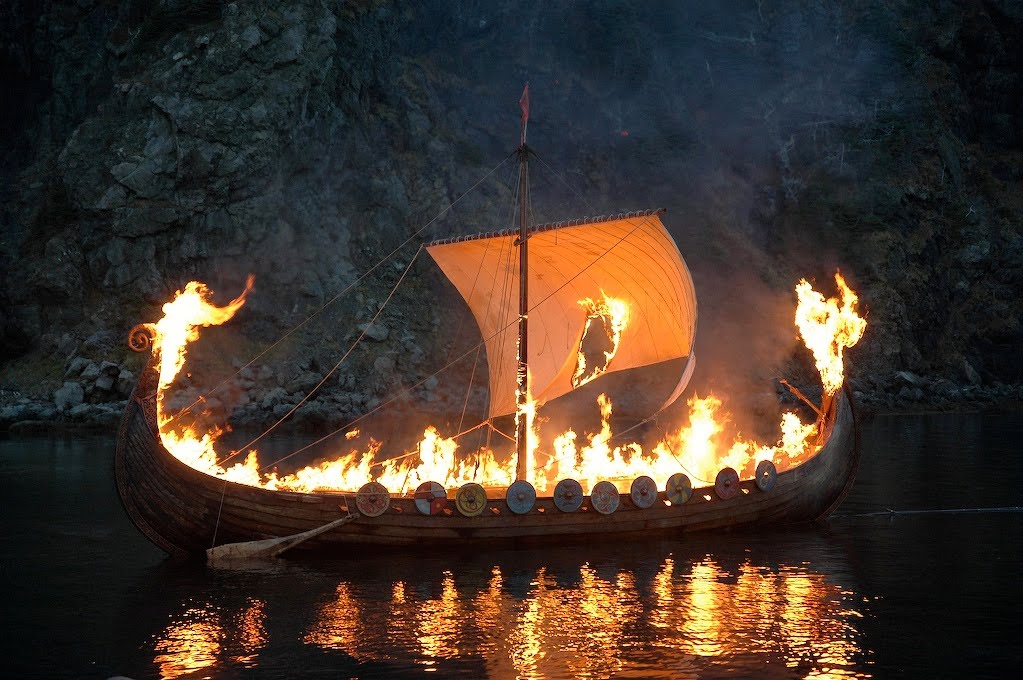
Being crudely made of more than one piece of wood, their ships were fire hazards.

The Vikings are better known as the Haida of the North Atlantic, so I am sure  locals will be delighted to know that Victoria’s newly emplaced Viking Archaeologist, UVIC’s own Dr. Erin McGuire, will be speaking at this month’s Archaeological Society of BC, Victoria Chapter meetings.  As ever, these talks are free and open to the public – they just require a modicum of navigational skill to make it to the Pacific Forestry Centre (see the map below).  Unfortunately, I am on a bad skid of not being able to make the ASBC so regrets in advance, and if the winner of the mystery quiz (below) shows, they will not be getting their free beer.

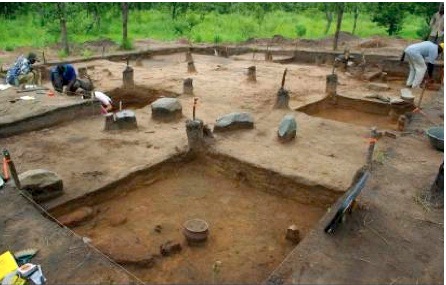
You want to live where?  Living and dying in Viking Iceland

Dr Erin McGuire, University of Victoria

Tuesday October 19th at 7.30, Pacific Forestry Centre, 506 West Burnside Road (map)

Continue reading

Two upcoming events in Vancouver and Victoria


1936 Field Trip by the Vancouver Natural History Society to Musqueam. Source: Vancouver Public Library. VPL Accession Number: 19483

In Vancouver this Sunday, September 19 at 1.00 there is a guided walk of the Ancient Salmon Stream and Musqueam Village, starting at Jericho Beach (details here) with Victor Guerin, “a cultural/linguistic consultant and historian, a member of the Musqueam First Nation and a speaker of the Musqueam dialect of the Central Coast Salish language Halkomelem. He has been learning about his people’s culture and history his entire life, including some 16 years of consultation and documentation with family elders and 4 years formal training in the Musqueam language with linguistic analysts at UBC.”

This talk/walk is one in a series from the False Creek Watershed Society, most of which look like they hold promise for an interesting conversation between historical ecology, traditional knowledge, and landscape development.  It would be good to see connections built or strengthened between restoration groups and archaeologists, who share many of the same values.  You can see the other talks and walks they sponsor here – two of them are actually today, Saturday September 18th.  OK, go to those as well!

The other upcoming event is the  Archaeology Society of B.C. monthly public lecture in Victoria, which is on Tuesday 21 September.  This month’s speaker is Grant Keddie from the Royal B.C. Museum.

Continue reading

ASBC Victoria: May Public Lecture Tuesday 18th

Quartz Crystal projectile point with Stave Watershed in background.

Seven Thousand Years of Occupation at the Ruskin Dam Site, Stave River Watershed

Duncan McLaren, Ph.D. and Brendan Gray, M.A.

This month’s Archaeological Society of B.C. (Victoria Chapter) free public lecture will be about a fascinating site recently excavated by Cordillera Archaeology in the Stave River watershed, near Vancouver:

Excavations of the Ruskin Dam Site, located on the north side of the Fraser Valley, were conducted over four months in 2009 as part of a salvage project.  Our talk will discuss the significance of the major discoveries at the site including: the house features, quartz crystal tools, biface styles, woodworking technology, objects of personal adornment, and faunal remains which contain a high proportion of sturgeon bones.  Combined, the artifacts, radiocarbon dates, and site stratigraphy provide a unique opportunity for gaining a perspective on the long-term occupation of this strategically located archaeological site.

I expect this talk will also indirectly exemplify the leading role B.C. Hydro is playing in enlightened Cultural Resource Management in this province.

This talk is free and open to any member of the public.

Tuesday May 18 at 7.30 P.M.

Pacific Forestry Centre, 506 West Burnside Road.

For information,  e-mail asbcvictoria@gmail.com , or leave a comment/question below.

ASBC Victoria April Meeting: Tuesday 20th

Excavations at Banda, Ghana.

This month’s Archaeological Society of B.C. public lecture is coming up soon, on Tuesday April 20th, in Victoria.  Everyone is welcome to attend these free talks.  The details are as follows:

Ann Stahl

Professor and Chair of Anthropology, University of Victoria

Ritual & Metallurgy: Genealogies of Practice in Banda, Ghana.

The goal of the Banda Research Project has been to investigate the dynamism of African village life in relation to shifting global connections ranging from the imposition of colonial rule at the end of the 19th century and extending to the early first millennium AD when Banda villagers participated in the Saharan trade. Our 2008 and 2009 field seasons at Ngre Kataa revealed extensive primary metal- working contexts dating to the period cal AD 1200-1400 where the site’s inhabitants produced copper alloy and iron objects. These metal-working features and deposits co-occur with a series of apparent shrine deposits. The evening’s presentation will explore the nature of these deposits, and share preliminary insights into the implications of our findings for our understanding of craft specialization and the genealogies of metallurgical practice in the Banda area.

Time: 7.30 p.m.

Place: Pacific Forestry Centre, 506 West Burnside Road.

For information,  e-mail asbcvictoria@gmail.com

A poster for this talk can be downloaded here (PDF)

Forthcoming Vancouver Archaeology Talks

Once in a while I yawn, stretch, and look across the Moat of Georgia and notice something interesting happening in Vancouver.  This time I see there are two forthcoming events for those within striking distance of the Velvet Rut.

First, UBC is holding its annual Archaeology Day this weekend, Sunday March 21st.  The program, which looks great, can be viewed here.  The event is free and open to the public and is held in the Anthropology and Sociology Building on the UBC Campus.

Second, the Vancouver Chapter of the Archaeological Society of BC is holding a public lecture featuring SFU professor Eldon Yellowhorn.  His topic is “Encountering Modernity: the Piikani Historical Archaeology Project.  The poster is below, click for a legible version.  The talk is Wednesday March 24th at 7.00 at the Museum of Vancouver (who don’t seem to have it listed on their calendar), and it is free and open to the public.

Memo to the ASBC-Vancouver: update your web site if you want people to come to your talks.

Click to enlarge

March ASBC Talk: GvonP on UP Art

UVIC's own, Langford's own, Genevieve von Petzinger. Source: Goldstream News-Gazette

I had the pleasure of serving on this month’s ASBC speaker’s graduate committee and I know if you are in the Victoria area you will be entertained and educated at this talk – which unfortunately I can’t make due to pre-existing public speaking commitments of my own.  Genevieve has recently been featured on the cover of New Scientist magazine and there has been something of a global storm of publicity stemming from her Master’s research.

ARCHAEOLOGICAL SOCIETY OF BRITISH COLUMBIA, VICTORIA CHAPTER

March 2010 Monthly Meeting: Tuesday, March 16, 2010, 7:30 pm

Pacific Forestry Centre, 506 West Burnside Road.

The talk is free and open to the public.

Genevieve von Petzinger

Making the Abstract Concrete: The Place of Geometric Signs in French Upper Paleolithic Cave Art.

In Paleolithic cave art, geometric signs tend to outnumber figurative images and yet, they remain relatively understudied. To address this gap in our knowledge, I compiled a digital catalogue of all known geometric signs found in parietal art in France, and then trended the results looking for patterns of continuity and change over time and space. I focused on parietal art, as I could be certain of its provenance, and picked France as my region due to its abundance of decorated sites and its natural boundaries of water and mountain ranges. The database is searchable by a variety of criteria such as sign category, method of production, date range, site type, geographical coordinates and region. It is now being converted into an online resource. To provide a visual dimension, it includes a selection of linked photographs and reproductions of the different signs. In this thesis, I detail the chronological and regional patterning in sign type and frequency and the implications of these patterns for understanding where, when and why the making of these signs was meaningful to the Pleistocene peoples who created them.

(editor’s note: you can download her thesis free of charge here)

Biography Having been interested in the cognitive evolution of modern humans since her undergraduate days at the University of Victoria, Genevieve von Petzinger was finally able to explore this in more depth at the Master’s level. Working with Dr April Nowell, again at the University of Victoria, she was able to pursue this interest, and received her MA in June 2009. Using the geometric signs of Upper Paleolithic rock art, Genevieve discovered some very interesting information about these early examples of symbolic behaviour, and presented her findings at the Paleoanthropology Society meeting in Chicago, Illinois in April 2009. This presentation was the catalyst for her research being featured as the Feb. 20th, 2010 cover story in New Scientist magazine. This exposure then led to a strong media follow-up, which included an interview on the Discovery Channel, a feature in the Tuttoscienze supplemental of La Stampa in Italy, an article in the Globe and Mail, and a full page feature in the Vancouver Sun, as well many other popular press articles and radio interviews in French and English, both nationally and internationally. While being slightly overwhelmed by all the attention, Genevieve has been very excited about the positive response, and is just thrilled that other people want to hear her talk about her favourite subject!

For information, phone 384-6059 or e-mail asbcvictoria@gmail.com

Media Links

http://www.newscientist.com/article/mg20527481.200-the-writing-on-the-cave-wall.html?full=true

http://www.timescolonist.com/news/UVic+researcher+taps+into+cave+language/2599510/story.html

ASBC Talk: Tuesday, February 16th

Surveyors in the Uplands development, Victoria, using a burial cairn as a surveying aid. Source; BC Archives.

ARCHAEOLOGICAL SOCIETY OF BRITISH COLUMBIA, VICTORIA, February 2010 MEETING

Feb. 16, 2010, 7:30 pm

Pacific Forestry Centre, 506 West Burnside Road, Victoria, B.C.

Darcy Mathews

The Powerful Dead: The Rocky Point Cemetery and Straits Salish Identity.

Burial cairns and mounds are two types of pre-contact burial features in the Strait of Georgia region of south-western British Columbia. More than a millennium ago, the Straits Salish people, an ethno-linguistic group centered on present day Victoria, constructed a cairn cemetery at the Rocky Point site. Located 18 km southwest of present-day Victoria, this cemetery has over 300 cairns which occur in a variety of patterned shapes and sizes. Analysis of cairn construction and the use of space within this cemetery suggests that there was a strategic use of both material culture and landscape in Salish mortuary ritual, simultaneously expressing individual, household and perhaps even village-wide group identity. Underlying these statements of identity is the material expression of relationships between the living and the powerful dead, which were carefully navigated through the process of the funerary ritual, of which building cairns and mounds was but one part of a long-term process; a process that may have an antiquity of several thousand years. Biography Darcy Mathews is a PhD candidate at the University of Victoria. Working with the Scia’New First Nation, his ongoing dissertation research focuses on the identification, preservation, and study of pre-contact burial cairn and mound cemeteries in the Strait of Georgia.

For information, phone 384-6059 or e-mail asbcvictoria@gmail.com

ASBC Victoria January Meeting

Haida Gwaii watershed above Sunday Inlet.

The Archaeological Society of British Columbia is a long-established society which promotes knowledge and conservation of BC Archaeology.  The Victoria Chapter is particularly active (though they need to update their website and blog).  They aim for a public lecture every month. There are also chapters in Nanaimo and Vancouver.

This month’s Victoria talk, which is free and open to the public, is:

Watersheds and Coastal Archaeology: A Northwest Coast Perspective.

Jan. 19, 2010, 7:30 pm Pacific Forestry Centre, 506 West Burnside Road.

Rich Hutchings

The watershed or basin has been considered a primary unit of analysis for hydrologists, geologists, ecologists, human geographers, and historians. On the Northwest Coast, the economic significance of riverine settlement has long been a central focus, yet it is only in the last decade that anthropologists have begun to contemplate the social, political and ideological implications of rivers, river edges, and, to a lesser degree, basins. In this lecture, I will explore the concept of watersheds as a unit of analysis for archaeologists working on the Coast. Specifically, I consider the notion of what I call ‘watershed identity’, the issue of territorial boundaries, and the social implications of changing basin landscapes. Finally, these issues are highlighted in relation to the increasing threat of coastal erosion and its impact on maritime heritage, a concern for archaeologists and communities alike in this region.

Biography: Rich Hutchings was born and raised in Seattle, Washington. Having trained and worked as a diver in the marine industry, Rich completed his undergraduate degree at the University of Idaho, Moscow. He then undertook research in the area of alluvial and coastal geoarchaeology on the Nooksack River, earning his Masters degree from Western Washington University, Bellingham in 2004. Rich is currently pursuing Doctoral research at the University of British Columbia, looking at maritime cultural landscapes, coastal erosion, and marine heritage management in the Sechelt area. For information, phone 384-6059 or e-mail asbcvictoria@gmail.com