Category Archives: Northwest Interior

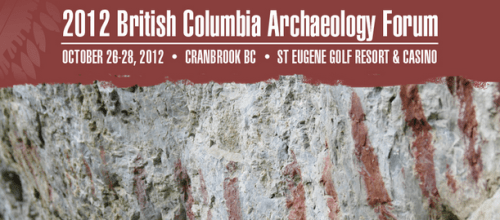
BC Archaeology Forum 2012 is October 26-28 in Cranbrook, hosted by Ktunaxa Nation.

2012 BC Archaeology Forum Announcement screenshot

Screenshot of BC Archaeology Forum Website.

It came up in comments a week or so ago on this blog, but the annual wondering where the archaeology forum is over — it’ll be in Cranbrook October 26-28, with the main day of presentations and a dinner/drumming/dancing on Saturday the 27th. Indeed, the evening festivities are scheduled to go until 1.00 a.m., so it should be a good party.  The Sunday field trip will be to a quarry site. The Ktunaxa First Nation will be hosting, for which they deserve all our thanks.

Continue reading

Highlights from the Kwäday Dän Ts’ìnchi Project

Screenshot from the online document about Kwäday Dän Ts’ìnchi, showing his iron-bladed “man’s tool”, and a small copper bead found with the body. Source: Royal BC Museum.

[Edit Nov 2017: The Book is now available, also through Amazon, etc.]

Many readers of this ever-more occasional blog will be aware of the exciting and profound discovery in 1999 of the well-preserved remains of a young man frozen in a glacier in Northwestern British Columbia.  Found within the traditional territory of the Champagne-Aishihik First Nation, the man was given the name Kwäday Dän Ts’ìnchi, or “Long Ago Person Found.”  In the spirit of discovering what messages from the past that Kwäday Dän Ts’ìnchi might bearing, a remarkable collaborative research project was commenced. Results of this study have been presented at numerous conferences and in the scientific literature, but a landmark event hopefully just around the corner is the publication of a book recounting all the cultural and scientific knowledge borne into the present by this unfortunate young man.

While we wait for the book, it is very exciting to see that the Royal BC Museum has made a non-technical, well-illustrated overview document online which tells the main threads of the story of Kwäday Dän Ts’ìnchi. (edit, try this link instead, RBCM seems to have killed this document?)

Continue reading

BC Archaeology Forum 2011: Squamish, November 11 and 12

Detail of Archaeology Forum announcement. Click for PDF

I recently received the notice that the B.C. Archaeology Forum is to be held this November 11 and 12 in Squamish.  The event will be hosted by the Sḵwxwú7mesh (Squamish) Nation, and is being organized largely by Rudy Reimer/Yumks.  Anyone can register for this event for a highly reasonable $10.00: full information is given in this PDF file. The Forum is a great event, bringing together Consultants, First Nations, Academics and Government Archaeologists in one place to share the latest discoveries and to talk policy and matters relating to the practice of archaeology.  The deadline for presenting is October 28th, but you can decide to simply attend closer to the last minute, I believe.

That said I won’t be making it this year because of an unbreakable commitment.  This highlights an unfortunate part of “Forum Culture” – it is routinely announced only a month or so in advance, even when the location is known much further ahead. Many people have to arrange to take time off, or gain advance permission or funding to travel, organize a ferry load of students, or at least keep their schedule clear for this event.  I think I’ve missed three of the last four for this reason. It’d be great if we could change this, and at least get the location and date out earlier – maybe by the beginning of summer.  Speaking of, next year it would be cool to have it on the Island.  Who’s up for it?

Rock Art Talk in Vancouver BC, Wed. April 27

Source: ASBC

With hockey sidelined for a few days, there’s no excuse for Vancouverites not to take in an interesting-looking talk on rock art of the Stein River Valley tonight, sponsored by the Archaeological Society of British Columbia, “Vancouver Chapter”.

The talk, entitled “Rock Art Science in the Stein River Valley, British Columbia”, will be given by Chris Arnett, a UBC graduate student and experienced rock art researcher.  It is open to the public and free of charge, starting at 7.00 p.m. at the Museum of Vancouver, 1100 Chestnut Street in Kitsilano (map).  The link at the ASBC website is borked, so the abstract is here for posterity:

Rock art is found on every continent and is part of the cultural heritage of many peoples but there are few places in the world where direct historical and cultural continuity exists between those who made the art and the contemporary people. In places where this continuity does exist knowledge regarding rock art is controlled and not always accessible to non-indigenous people. When access is made available and information shared there can be prejudice towards indigenous ways of knowledge in favour of fashionable (historically contingent) theories of researchers. Early 21 century research shifts from a hermeneutic rock art research to a rock art science that combines forensic archaeology with Indigenous theory. My presentation will trace the dynamics of rock art research over a 125 year period in a place renowned for its rock art, the Stein River Valley of British Columbia, and suggest that the combined interests of researchers and indigenous people has potential to produce mutually constructed histories.

Imaging of Yukon Shipwrecks

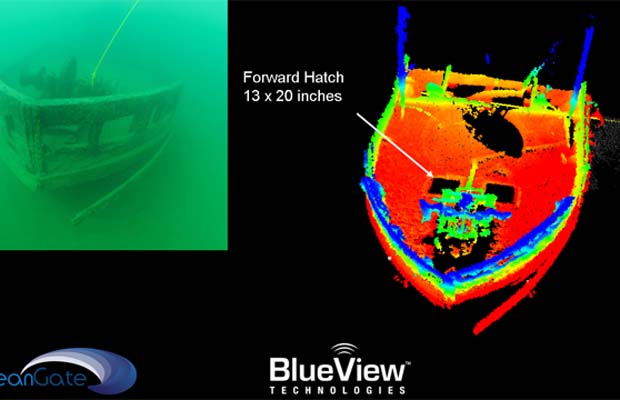
3-D Sonar Scan of A.J. Goddard historic sternwheeler from Yukon. Source: Montreal Gazette.

A year or two ago, the well-preserved wreck of the Klondike-era paddlewheeler A.J. Goddard was found in Lake Lebarge on the Yukon River.  The find (which is now protected) got a lot of attention because of the ghostly images (click on the very high resolution pop-up ones here) as much as the historical significance.  The wreck was recently in the news again because divers had found some vinyl phonograph records which had the potential to be played. Listening to the music of the dead crewmen of a ship evocative of the Cremation of Sam McGee would create close, perhaps emotional, connection with these poor unfortunates.

Being made of stern stuff (heh) what I am more interested in is the intriguing  sonar image (above) that accompanied the mainstream press coverage.  The phonograph is cool, but archaeologically the more significant development are the new technologies being used on wrecks in general and some Yukon wrecks in particular.

I found more images and a very short article at Wired magazine and they are worth a look, as is much of the background info from the Institute of Nautical Archaeology (INA), which includes a photo galleryEdit: you can view a nice video of BluView and OceanGate’s sonar model of the wreck here.

Continue reading

BC Archaeology Forum Program

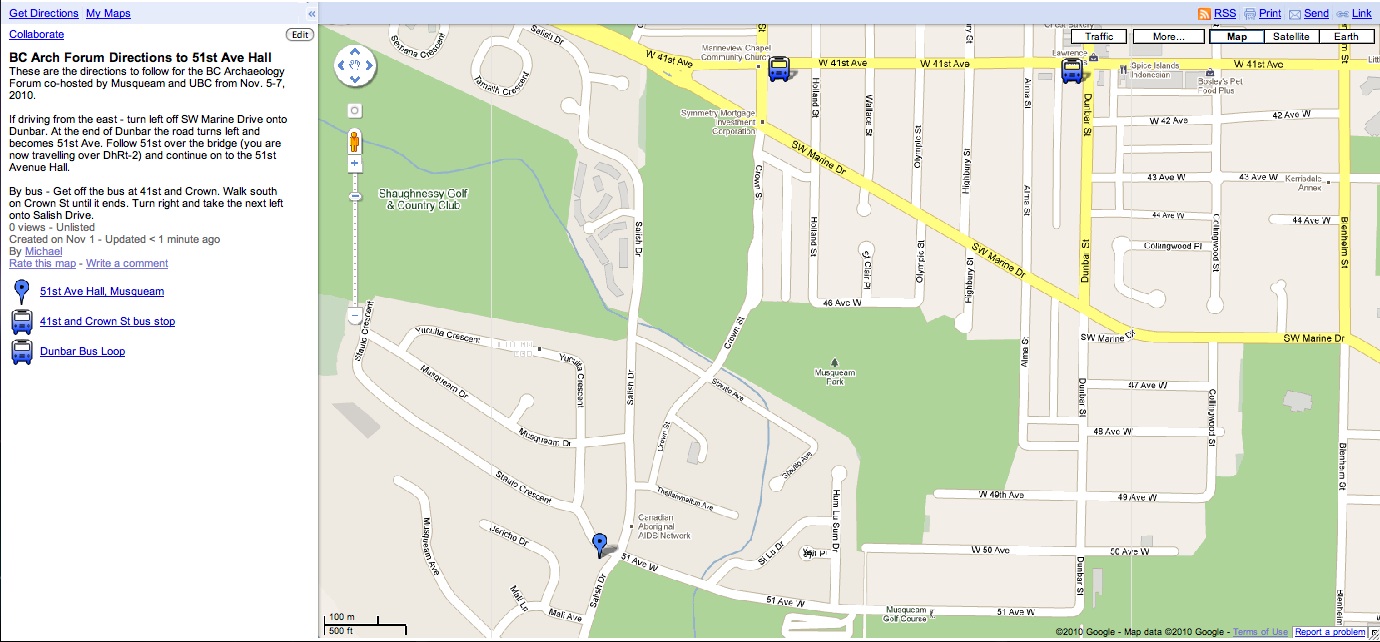
I’m a big supporter of the B.C. Archaeology forum and posted about it a while back.  The forum is an annual gathering of archaeologists, students, First Nations and others with an interest in B.C. Archaeology. It’s a rare chance for all the different stakeholders to get together, catch up, and socialize.  This year the forum is co-hosted by UBC and the Musqueam First Nation, and will be held near SW Marine Drive (i.e., not on the UBC campus: map).  Since I am getting tons of hits from google queries looking for information about it, and since this can also serve as a reminder to get out to the forum this Saturday, November 6th, I am pasting in the program of events below.

Remember, everyone is welcome.  The registration fee is only 20$, and half that for students.  You can walk up to register on Saturday morning.  It would be most welcome to see lots of public and community members there.

The program (PDF) (I refuse to call it an agenda)  is pasted in below with some comments.

Continue reading

Bridge River Housepit Geophysics

Magnetometry map of the Bridge River Site housepits. Source: Prentiss et al. 2009

Wouldn’t it be nice to be able to see what was underground without having to go through the time-consuming, expensive and destructive process of digging it up?  There are some nice geophysics techniques in archaeology for doing just that, though none are yet a substitute for excavation.  I noticed the other day (and you were quizzed on it) that there is a very comprehensive recent report online (45 meg PDF) by Anna Marie Prentiss and colleagues, on work at the middle Fraser pithouse village of Bridge River (EeRl-4).  This village lies in the territory of Bridge River Band (Xwisten) and the St’át’imc Nation.  While there is a huge amount of archaeological interest across the 350 page report as a whole, it was the use of geophysics on an interior pithouse village which got my attention.

Continue reading

Salmon species now knowable from vertebrae

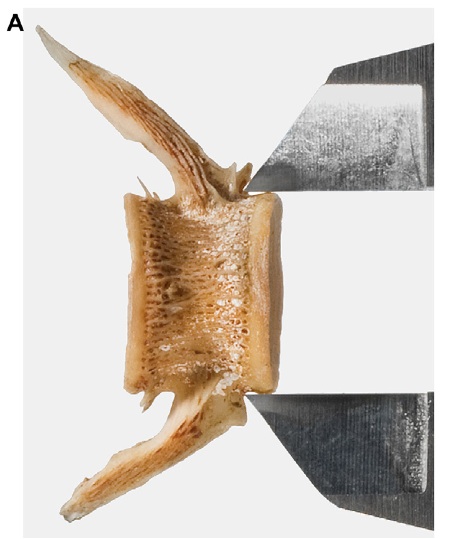
Measurement of vertebral height. Source: Huber et al. 2011

Salmon are a crucial cultural keystone species across most of the Northwest,  of very high importance to many coastal and interior cultural groups for thousands of years.  Many archaeological sites are chock full of salmon bones, and the oldest of these are around 10,000 years old.  As a cultural story, the importance of salmon is obvious.  Increasingly though, the archaeological data are also invoked to tell the history of salmon themselves.  The very long-term view of the archaeological record provides  knowledge of their ranges, their relative abundance, their life histories, etc.  These data can then be harnessed as part of conservation and fisheries management of these threatened species of fish.

Each species offers different things to people: some run early, some late; some are more fatty, some leaner; some run in huge compact numbers, others tend to dribble by; some can be caught in large numbers in the open ocean, others can only be caught efficiently in streams.  There’s just one problem with using salmon bones in archaeology: until recently, you really couldn’t tell one species of salmon from another based only on their bones.

Continue reading

Raven Bluff: another dated Alaskan fluted point site

Northern fluted point from Raven Bluff site. Source: flickr usr The Arctic Archaeologist.

Some time ago I posted about the Serpentine Hot Springs site in Northwestern Alaska, at which several fluted points have been found, apparently dating to about 12,000 years ago.  That’s about a thousand years more recent than Clovis, which is the best known of the early “fluted point” archaeological cultures from the Americas. I was interested to come across another site – Raven Bluff – which has recently come to light from the same general area, and which also has fluted points.  At Raven Bluff, at least one of  these dates to between about 12,000 and 12,500 years ago – also younger than Clovis, which is mainly confined to a narrow window around 13,000 years ago.

Continue reading

BC Archaeology Forum 2010

I got the news yesterday that the annual B.C. Archaeology Forum has been scheduled.  The event will be co-hosted by the Musqueam First Nation and the UBC Laboratory of Archaeology and held November 5-7.  You can download a registration form here (MS-Word document)

Continue reading