Tag Archives: Victoria BC

Wapato, Camas, Tyee

4,000 year old Wapato tubers from archaeological site in Katzie territory.

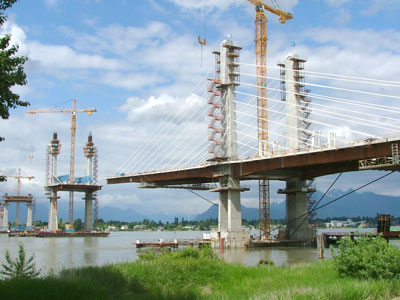
The Tyee has a nice feature on invigoration of traditional use of Wapato (“Indian Potato”) and Camas.  I visited an open house at an archaeological site in Katzie territory a year or two ago and so here’s a couple of pictures of 4,000 year old Wapato tubers and a digging stick of presumably the same age which would have been used to help cultivate the wet beds.  At that site (almost completely destroyed by the new Golden Ears suburban commuter bridge), there were signs of the creation of enhanced “water gardens” for Wapato, and not just the harvesting of what occurs naturally.  Similarly, camas productivity was greatly enhanced by selective weeding and by the practice of tilling and selective bulb harvesting as well as deliberate burning to manage the camas fields.  All in all, exploitation of many plant foods (and shellfish) formed a practice intermediate between farming and gathering, and thereby are a powerful line of evidence for traditional use of large areas of SW British Columbia.  The Tyee article seems to me to be clear, accurate and informative.  I recommend it.
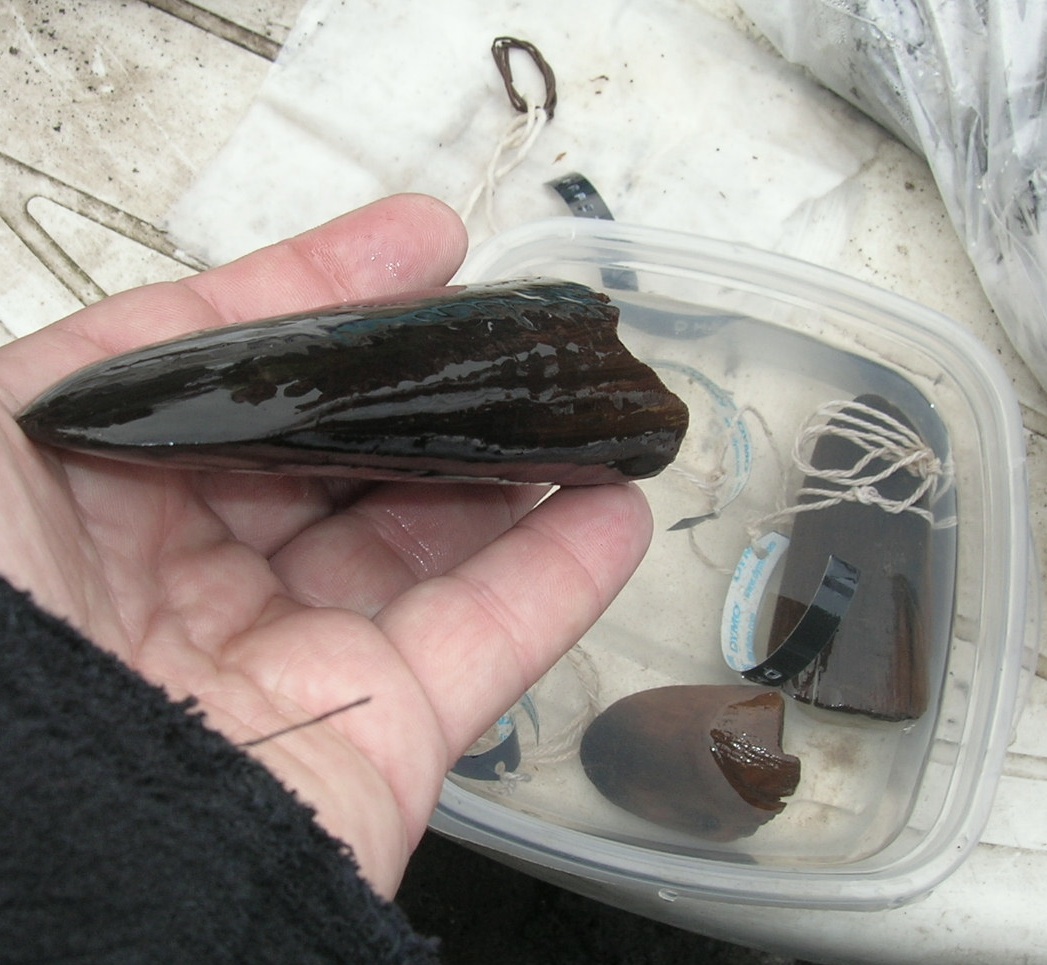
Tip of a wooden digging stick, ca. 4000 years old, Katzie territory. Two others of the dozens found can be seen in the background.

ASBC Victoria January Meeting

Haida Gwaii watershed above Sunday Inlet.

The Archaeological Society of British Columbia is a long-established society which promotes knowledge and conservation of BC Archaeology.  The Victoria Chapter is particularly active (though they need to update their website and blog).  They aim for a public lecture every month. There are also chapters in Nanaimo and Vancouver.

This month’s Victoria talk, which is free and open to the public, is:

Watersheds and Coastal Archaeology: A Northwest Coast Perspective.

Jan. 19, 2010, 7:30 pm Pacific Forestry Centre, 506 West Burnside Road.

Rich Hutchings

The watershed or basin has been considered a primary unit of analysis for hydrologists, geologists, ecologists, human geographers, and historians. On the Northwest Coast, the economic significance of riverine settlement has long been a central focus, yet it is only in the last decade that anthropologists have begun to contemplate the social, political and ideological implications of rivers, river edges, and, to a lesser degree, basins. In this lecture, I will explore the concept of watersheds as a unit of analysis for archaeologists working on the Coast. Specifically, I consider the notion of what I call ‘watershed identity’, the issue of territorial boundaries, and the social implications of changing basin landscapes. Finally, these issues are highlighted in relation to the increasing threat of coastal erosion and its impact on maritime heritage, a concern for archaeologists and communities alike in this region.

Biography: Rich Hutchings was born and raised in Seattle, Washington. Having trained and worked as a diver in the marine industry, Rich completed his undergraduate degree at the University of Idaho, Moscow. He then undertook research in the area of alluvial and coastal geoarchaeology on the Nooksack River, earning his Masters degree from Western Washington University, Bellingham in 2004. Rich is currently pursuing Doctoral research at the University of British Columbia, looking at maritime cultural landscapes, coastal erosion, and marine heritage management in the Sechelt area. For information, phone 384-6059 or e-mail asbcvictoria@gmail.com

Capital Regional District Report

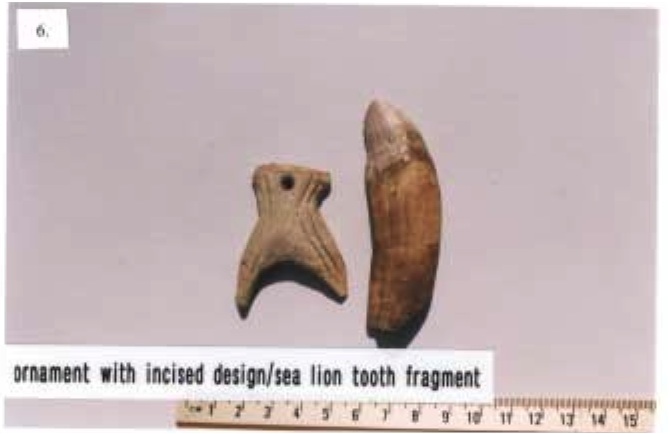
Decorated antler?, and a worked sea lion tooth from the Elchuk collection, Mill Hill.

I just came across this interesting document from 1999 by Liz Crocker (PDF) which is a cultural history of three CRD Parks: Mill Hill, Francis/King and Thetis Lake.  While I wouldn’t put a lot of stock in the archaeological component of this report, there are at least two notations of considerable interest.

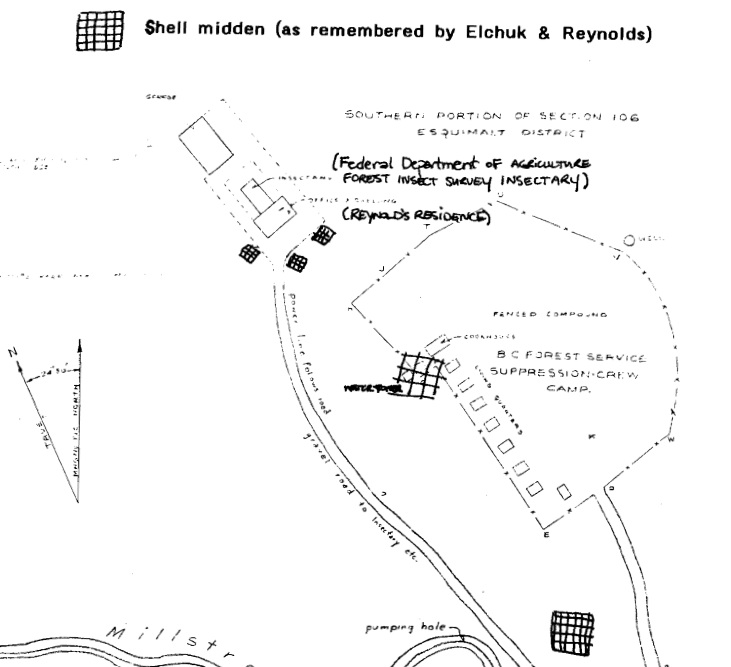
The first is the documentation of an unrecorded shell midden at Mill Hill, not DcRu-70 but another site, including a sketch map of the location which is about 2 to 3 kilometres inland.  There are also reports of unrecorded inland shell middens at Thetis Lake Park. Since such sites are rare and poorly know,  then this is something worth following up.  Indeed, I wish the CRD took their stewardship role seriously enough to commission an intensive, comprehensive, and professional inventory of the archaeological heritage of all their Parks.  This kind of baseline information is so essential that I honestly don’t understand how they think they can discharge their duties without it.

The other point of interest in Crocker’s report is the documentation of a fairly large private collection, also from Mill Hill and also well inland.  Included in this collection are Locarno-style artifacts as well as more recent ones such as a flat-topped handmaul.  Appendix 2 of the linked report includes some snapshots  of this collection.  Despite the poor quality, it is great to see private collections being documented.  The small decorative piece shown above is interesting and unusual, and the abundance of organic remains suggests again that these were collected from or near a shell midden.  Again, something to follow up. If only there were a Ph.D. student at UVIC, say, who was interested in inland shell middens…..

Sketch map of reported but unrecorded inland shell midden patches at Mill Hill.

Victoria-Songhees reburial

Mayor Fortin builds a bridge to the Songhees First Nation. Picture: Johnstonstreetbridge.org

Last summer there was a sad incident with human remains being disturbed in the Dallas Road area of Victoria. The remains, of a young SLENI (woman) were subsequently reburied and since then a burning ceremony has been held.  I’ve been privileged to attend burning and reburial ceremonies and they are powerful and sincere events.  Interesting then to see this news snippet today , focusing on the cost ($9,400) — I can hardly wait for the informed and balanced commentary to ensue.  But kudos to Dean Fortin for doing the right thing – it is no more (or less) than most developers have done over the last decade when human remains were disturbed.  I have to say, though, it is disingenous for Mayor Fortin to note the Songhees reserve is not in the City of Victoria — memo to the Mayor: Victoria is within Songhees territory; the remains are from Songhees territory, the current reserve boundaries are completely irrelevant to this issue.

Victoria News

The cost of being freindly [sic]

By Lisa Weighton – Victoria News

Published: January 11, 2010 3:00 PM

Updated: January 11, 2010 3:34 PM

Mayor Dean Fortin is making First Nations relations a priority.

Last month, the city invested $9,400 in a traditional reburial ceremony after discovering 300-year-old human bones during a sewer retrenching project on Dallas Road, Aug. 27.

“We feel like we have an obligation to work with all other levels of government including our First Nations,” said Fortin.

The cost was a drop in the bucket in the overall $2.4 million-project said Derk Wevers, the city’s sewer and storm water quality technician.

Following consultation with Esquimalt First Nation elder Mary Anne Thomas and Songhees First Nation elder Elmer George, a reburial service was held Dec. 8.

The city also financed a traditional burning ceremony and feast on the Songhees First Nation reserve late last month, which included wages for a city contractor, gifts, food and the gravestone.

Fortin said he was eager to take part despite the reserve not being within Victoria’s boundaries.

Maps and Charts at the RBCM

1849 Indian Fort at Cadboro Bay

Indian Fort at Cadboro Bay, 1849

The Royal BC Museum was ahead of the curve in putting significant parts of its collection.  One thing I like is their small but relevant collection of maps and charts.  The 1849 chart inset to the left shows an “Indian Fort” in Cadboro Bay, for example.  There is a good selection of Admiralty Charts from the mid 19th Century, Pemberton’s 1861 map of Victoria (the “Bay” in this section is the real “James Bay”, now landfill under the Empress Hotel , where the bridge shows is now the causeway), and a 1911 map showing the Economic geography of Haida Gwaii (which interestingly includes Sea Otter as part of the fauna “on the west coast” since that species is thought to have been extirpated much earlier).  It is always surprising and sobering to see just how quickly remote areas were divided up and labelled according to their perceived economic value in a way that borders on propaganda, but there is realism too check out the instructions to family men.  Now the bad news: the price of being first is often not being very good.  I suspect when these went online bandwidth was a realy problem.  Each chart is split up into 100kb segments and it is not possible to download the entire thing at once.  The full size images must exist, so how about a quick project at the RBCM to make them downloadable in their entirety?  Same goes for the picture archives.