Happy “Birthday”, Vancouver

Unidentified Musqueam Chief as portrayed by Cardero in 1792. Source: Vancouver Sun.

The City of Vancouver had its 125th anniversary yesterday, and the local press was full of reflective pieces on civic leaders, famous visitors, notable crimes and, of course, sports.  Well, it would be churlish not to wish Vancouver Happy Birthday!  Well done, Vancouverites.  But in all the coverage of this momentous event, I only see one single article which acknowledges that people might have lived at the mouth of the Fraser River for a tad longer than 125 years.  And a curious article (PDF)  it is: Ancient history of Vancouver’s first peoples: The city’s history predates its 1886 founding, with a native midden dating back 9,000 years

Continue reading

Willows Beach Archaeological Site Landowner to Appeal, Again

These darn, hidden sites that no one expects: archaeology at the Willows Beach Site, ca. 1990. (Not the MacKay Property) Source: Millennia Research 1990.

I apologize to readers from afar who may not be interested in the apparently parochial matter of a local woman’s encounter with archaeology on the Oak Bay waterfront, and the incomplete journalism which accompanied it.

But with the news Saturday (PDF*) that the Willows Beach landowner, Wendi MacKay, intends to appeal the earlier decision of Justice Fitzpatrick to the B.C. Court of Appeal, it becomes possible this case (previously 1, 2) will have repercussions for the practice of archaeology across the entire province.  I hadn’t really thought about the implications of an appeal since, well, Fitzpatrick (section 33-38)] essentially says, “I would find the case in your favour if I could, but you gave up your rights to appeal, so I can’t.”

I might be calling wolf in my fears aired below.

But, bear with me.

Continue reading

Update – Willows Beach Site Controversy

Landowner Wendi MacKay in front of her house at DcRt-10. Source: Oak Bay News.

There is a new local newspaper article out on the Willows beach issue, below, which contains some important information and I think warrants  new post.  The article (PDF) from the Oak Bay News, confirms what was proposed in my previous post.

Namely,  the archaeological work at the site did not cost anywhere near the  $600,000 which was widely reported.

Continue reading

Willows Beach Site Controversy

Archaeological site DcRt 10, Willows Beach, at 2072 Esplanade Avenue, in 2007. Source: Bruce Stotesbury, Timescolonist.com

Sorry for the lack of recent updates everyone, and also for jumping in with a “feel-bad” story, but since the Willows Beach site (DcRt-10) takes up a decent chunk of the most expensive waterfront near me,  I was interested to read the coverage of a recent court judgment with an archaeological focus.  The Times-Colonist‘s coverage is notable for an egregious misrepresentation in their opening sentence:

“An Oak Bay woman who built a house on an unregistered aboriginal midden has had her bid to recoup $600,000 from the provincial Archeology Branch struck down.”

This is true only for meanings of “unregistered” which include “a site recorded since approximately 1965, and subsequently the object of dozens of archaeological studies, including at least two on that very lot”.  Sheesh.

Continue reading

This Blog [still] on Hiatus

Update: The emergency referred to below is now a long-term medical problem which will demand my full attention for at least four months.  Nonetheless, since the problem is no longer acutely balanced on a knife’s edge, I’ll probably make the occasional post to this blog as a diversion, if nothing else.   I’ll start by responding to some of the comments placed in the last month.   Please feel free to keep leaving comments on posts old or new: it’s welcome to get the notification, read a new opinion, and to think about archaeology a little, at least.

November 9th: Due to an urgent family emergency I will not be updating this blog for an indefinite time.  If you wish to be notified when posts are made in the future, please add your name and email under the “Email Subscription” list to the right.  Quentin

This Blog On Hiatus

Due to an urgent family emergency I will not be updating this blog for an indefinite time.  If you wish to be notified when posts are made in the future, please add your name and email under the “Email Subscription” list to the right.  Quentin

BC Archaeology Forum Roundup

Musqueam Potlatch Dish, made 1895. Photo by Derek Tan. Source: MoA, CC Licenced.

It was fun to attend the BC Archaeology Forum on the weekend.  First and foremost, the Musqueam First Nation were gracious hosts who provided a warm and thoughtful welcome, and plentiful, delicious meals. Together with the organizing committee from the UBC’s Laboratory of Archaeology, the event was an incredible bargain for 30 bucks, including dinner. I took in most of the talks. The short review is that it was an extremely successful forum, well attended, with interesting papers spanning the province and important issues raised.  The long review has become really long, so you’ll have to continue reading on page 2.

Continue reading

Imaging of Yukon Shipwrecks

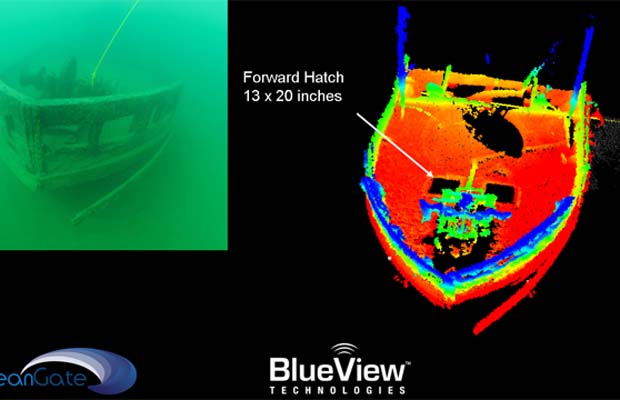
3-D Sonar Scan of A.J. Goddard historic sternwheeler from Yukon. Source: Montreal Gazette.

A year or two ago, the well-preserved wreck of the Klondike-era paddlewheeler A.J. Goddard was found in Lake Lebarge on the Yukon River.  The find (which is now protected) got a lot of attention because of the ghostly images (click on the very high resolution pop-up ones here) as much as the historical significance.  The wreck was recently in the news again because divers had found some vinyl phonograph records which had the potential to be played. Listening to the music of the dead crewmen of a ship evocative of the Cremation of Sam McGee would create close, perhaps emotional, connection with these poor unfortunates.

Being made of stern stuff (heh) what I am more interested in is the intriguing  sonar image (above) that accompanied the mainstream press coverage.  The phonograph is cool, but archaeologically the more significant development are the new technologies being used on wrecks in general and some Yukon wrecks in particular.

I found more images and a very short article at Wired magazine and they are worth a look, as is much of the background info from the Institute of Nautical Archaeology (INA), which includes a photo galleryEdit: you can view a nice video of BluView and OceanGate’s sonar model of the wreck here.

Continue reading

BC Archaeology Forum Program

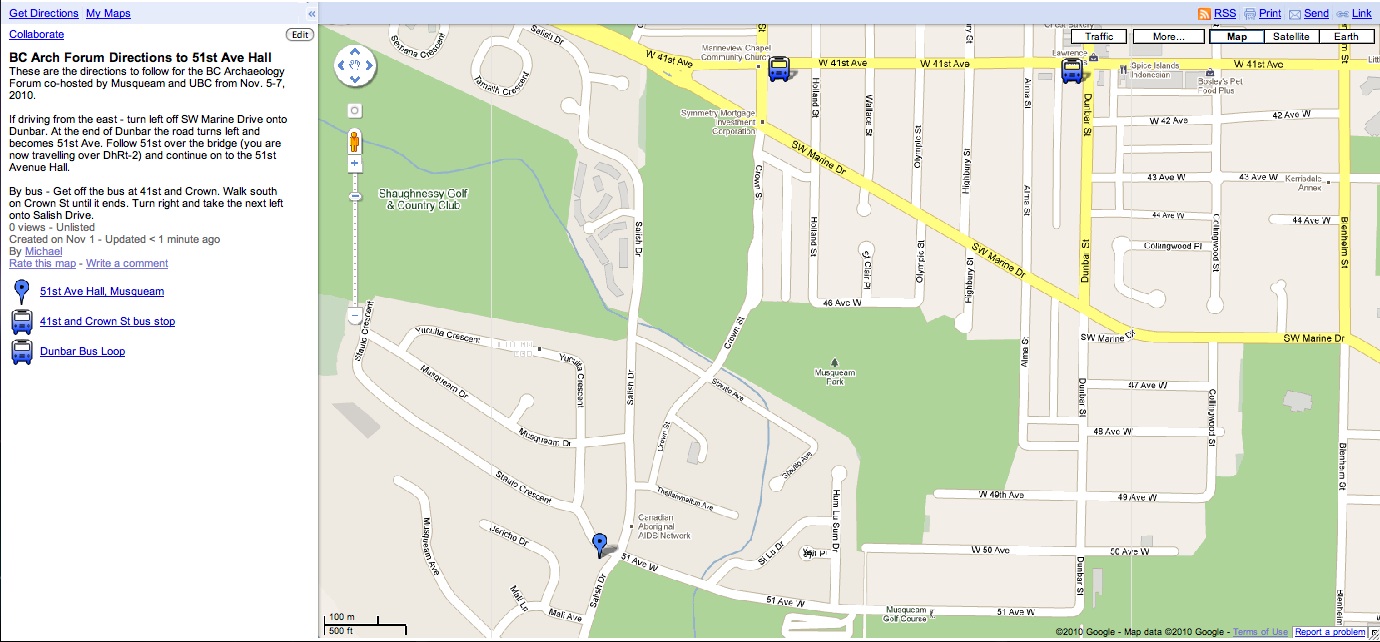
I’m a big supporter of the B.C. Archaeology forum and posted about it a while back.  The forum is an annual gathering of archaeologists, students, First Nations and others with an interest in B.C. Archaeology. It’s a rare chance for all the different stakeholders to get together, catch up, and socialize.  This year the forum is co-hosted by UBC and the Musqueam First Nation, and will be held near SW Marine Drive (i.e., not on the UBC campus: map).  Since I am getting tons of hits from google queries looking for information about it, and since this can also serve as a reminder to get out to the forum this Saturday, November 6th, I am pasting in the program of events below.

Remember, everyone is welcome.  The registration fee is only 20$, and half that for students.  You can walk up to register on Saturday morning.  It would be most welcome to see lots of public and community members there.

The program (PDF) (I refuse to call it an agenda)  is pasted in below with some comments.

Continue reading

Historic Newspaper Archive on Google

Sooke Freight! Vancouver Daily Post, 1865.

Via the Northwest History blog, I recently found that Google has been quietly archiving a large number of  historical newspapers, including many defunct ones from the west.  Old newspapers are a rich source of social history and can fill in some details of everyday life in the early historical period.  For example, it still costs me about 2 & 1/2 cents per pound to get my sorry self from Victoria to Leech River.  Or, see the table below from 1864 recounting the travel time and cost by stage or foot from New Westminster to the Columbia River. That’s better history than some dumb vote of useless politicians.

As Larry Cebula at Northwest History points out, Google has buried this feature somewhat.  There is a master list of all newspapers here, though, and you can work your way through that.  Many of the newspaper names are cryptic, though, and since I usually do the grunt work for you, here are some of the historic, often defunct, newspapers of particular interest to readers of this blog:

Continue reading