Category Archives: fieldwork

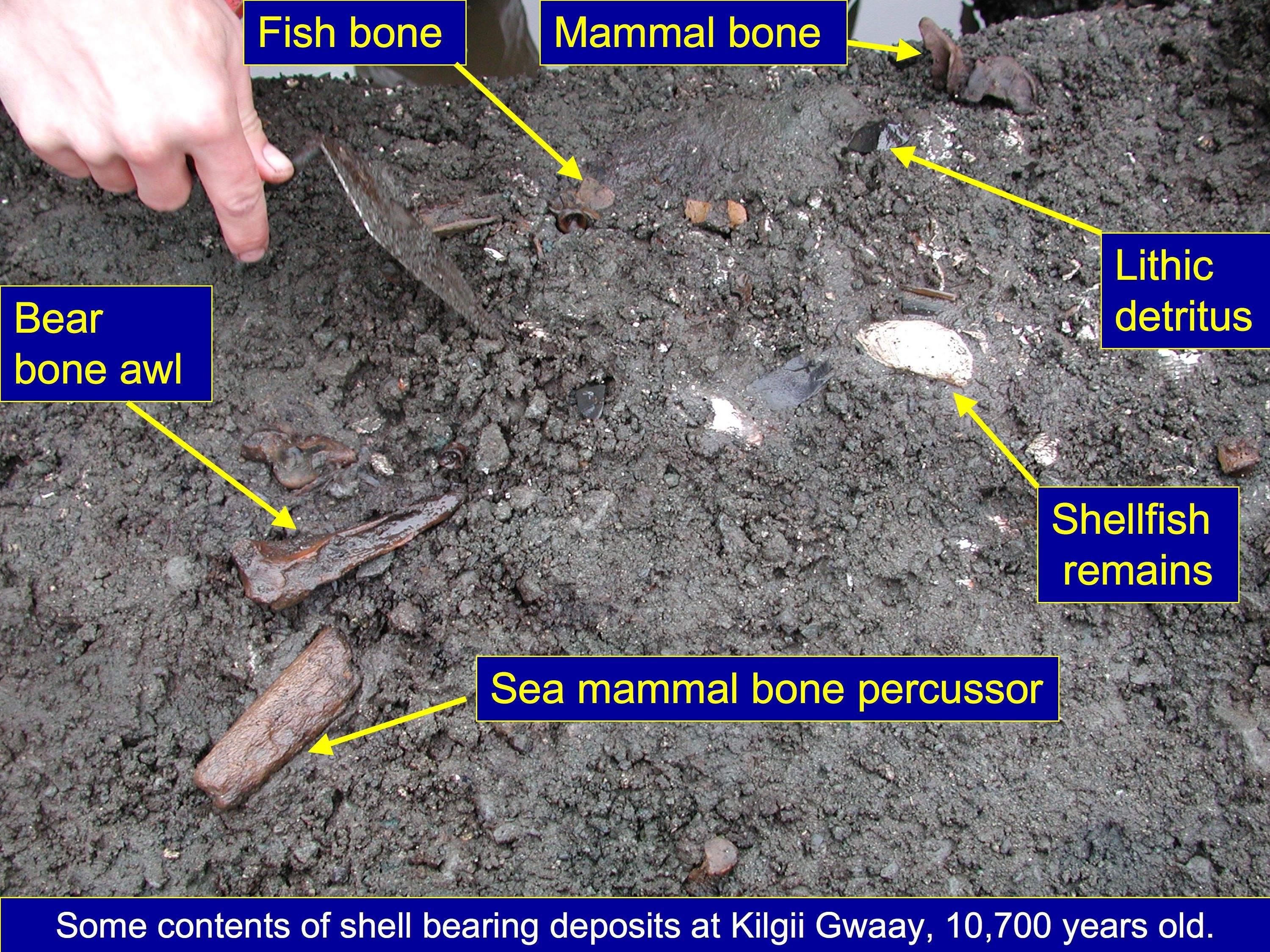
Annotation: Kilgii Gwaay excavations.

Excavation at Kilgii Gwaay, southern Haida Gwaii.

I’ve found that individual powerpoint slides can be saved as JPG images, complete with their annotations.  Since I have a lot of these I may share some.  The above shows excavation in the shell-rich component of the intertidal site at Kilgii Gwaay.  The combination of shellfish remains and saturation in slightly alkaline sea water has produced remarkable preservation for a site which is firmly dated via about 20 carbon samples to 9450 14C BP, or around 10,700 calendar years ago.  In this picture you can see some of the evidence: bone tools, stone tools, and the remains of shellfish, fish and mammals which, together with birds, formed the basis of the diet at this summertime camp.

Continue reading

Dog Burial Field Guide

From PacificID's Dog Burial Field Guide.

From PacificID's Dog Burial Field Guide.

Dogs are such an important source of evidence for past human life.  Not just as “man’s best friend” and all that but because of the insight they give into domestication, into evolutionary processes, as proxies for stable isotope studies of human diet, and so forth.  So, pretty great to see PacificID is putting out a field guide to dog burials and in situ dog remains in archaeology, complete with snazzy laminated ID card. The book itself is also printed on waterproof paper.  There are also downloadable diagrams (PDF) for recording dog burials.  The author, Dr. Susan Crockford, is an authority on the evolution of dogs and other domestication and evolution issues, and on dog osteology.  This looks like excellent value for money.

Fieldwork Picture of the Day 9

Danny at the helm,  aaaargh Billy.

Danny at the helm, aaaargh Billy.

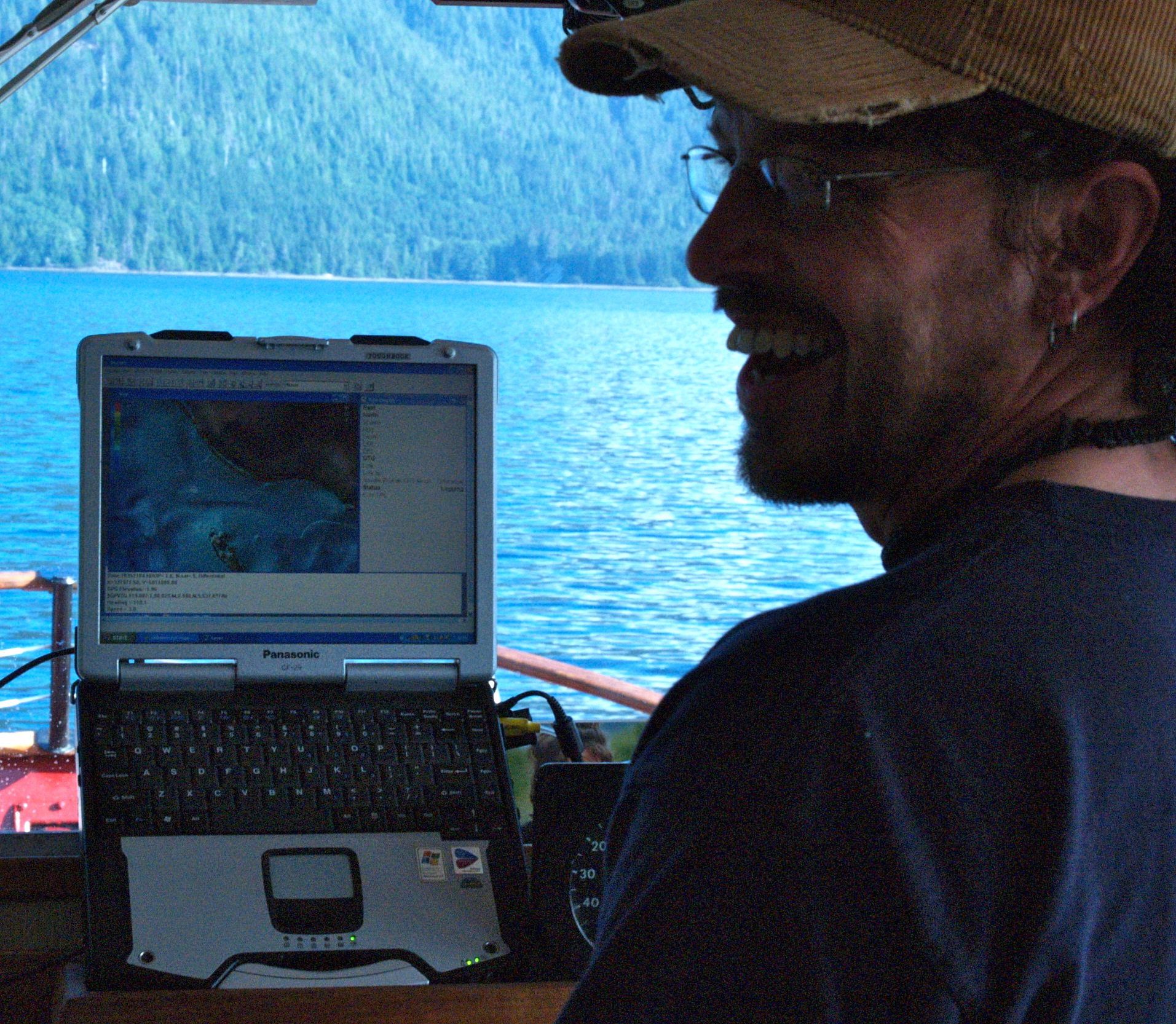
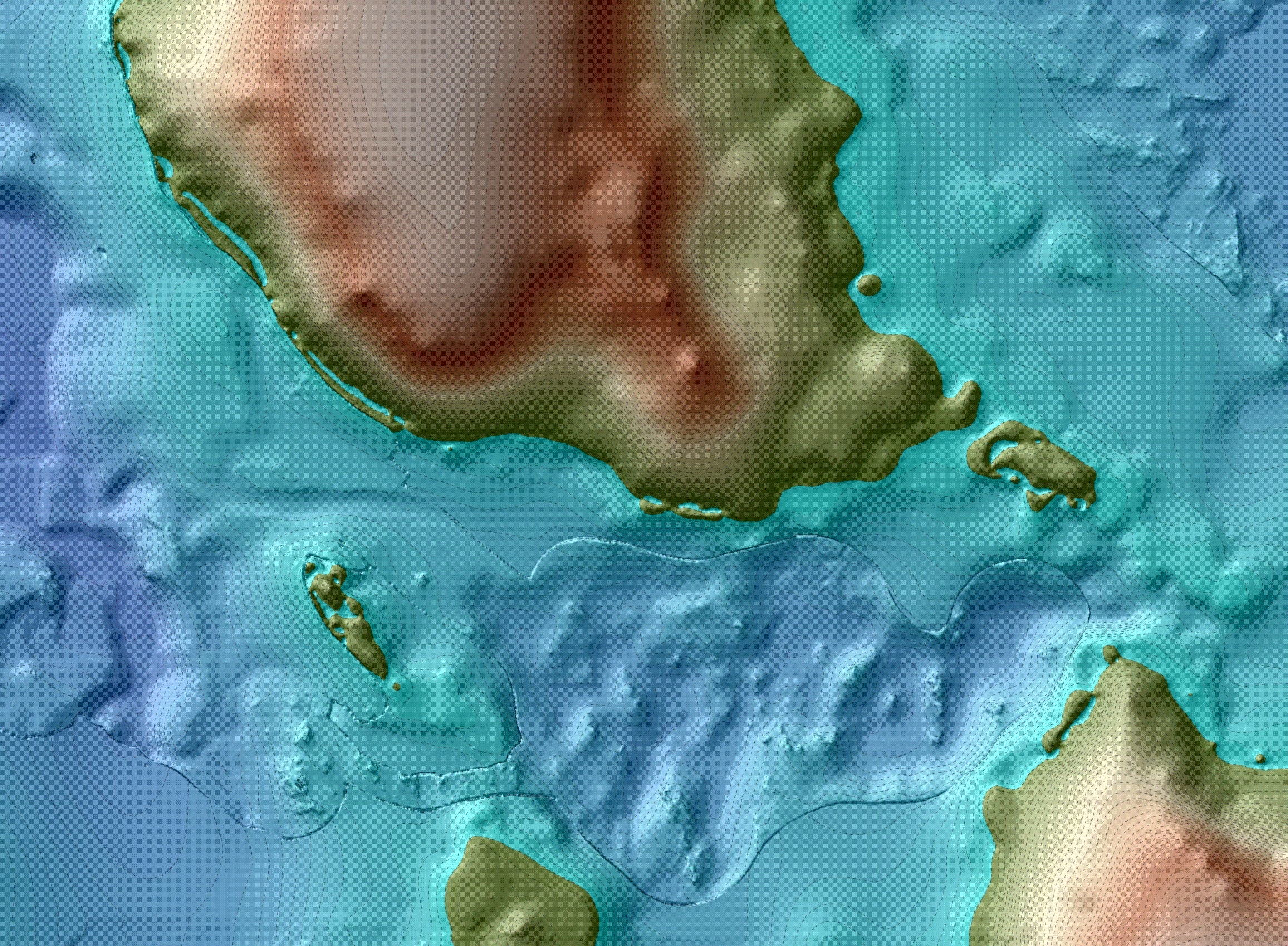
Underwater research at Section Cove, near Gaadu Din. I posted a picture earlier of a diver on the bottom.  Here is a view from topside — Danny, boat skipper, wise-ass and all round rock solid good guy — has a GPS-linked laptop in front of him which is displaying the bathymetry of Section Cove.  (see the image on Danny’s screen here, courtesy of Daryl).  This enables him to tow the sonar fish exactly where required, or, on this occasion, help position a small dredging bucket for bottom sampling purposes.  With differential GPS, you can position the ship to within less than a metre of where you want it, relative to the bottom.  This means measuring the distance between the GPS antenna and the crane and building in an offset, which is trickier than it sounds. The bathymetry is also sub-metre in resolution.  Thus, we can target the bucket exactly where we want it — of course strong currents and bucket flutter can still move it around some.  It has been slow progress on this work but all the pieces are in place for what could be an exciting breakthrough –  a base camp on a small lake, now drowned, dating to sometime older than 11,500 solar years ago would be most welcome considering most of our other sites of this age are rather one-dimensional.

The purpose of the camp could be base camp for bear hunting in the nearby Gaadu Din caves, or more likely sockeye fishing in the lake-stream system that used to flow along the terrain here, under Danny’s  keel.

The lake, the salmon, the cave, the creek.  Green tones are now underwater.

The lake, the salmon, the cave, the creek. Green tones are now underwater. Image prepared by Daryl.

Tla’amin Archaeology

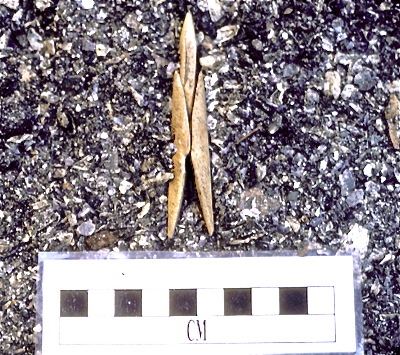
Toggling Composite Harpoon head, articulated in situ.

Toggling Composite Harpoon head, articulated in situ.

The Tla’amin (Sliammon)  First Nation on the Sunshine Coast (map) have been engaged in a wonderful community-based archaeology project with Dana Lepofsky at SFU and her team.  It’s not surprising when you think of what a great person Dana is – brilliant, yet nice, warm, generous. (Hi Dana!)

The website for this project is well worth browsing to see what meaningful partnerships with First Nations looks like.  I think it is a model for the future of BC Archaeology to work together – for then the project becomes not all about the past, but all about the present.  As they say – the past is over; it only exists in the present. Old things exist, but they exist now.   So how can we, as archaeologists, use our particular skills to help communities and the public appreciate the past as a meaningful part of the present, and hence of the future?  This impressive web site shows many great ways how.

Check out this page on Kleh Kwa Num – Scuttle Bay, for example, whih deftly points to the parallel stories of oral history, ethnohistory, and archaeology.  Or, this video of “what happens when an archaeological site is logged?”  As Elsie Paul, a Tl’amin elder says, their ancestral land was hammered for a century and what did aboriginal people get from it?  “Nothing”.  And as Dana says, it became very difficult to find intact archaeological sites around Powell River and the industrial areas, in particular.

These downloadable posters are also really well done, as is their prospectus/report (PDF) – very accessible stuff.   I do wish they didn’t use the silly flash interface for their pictures, though they do allow access to them otherwise – this project is really turning archaeology on its head!

Upside Down Archaeology in Tla'amin Territory.

Upside Down Archaeology in Tla'amin Territory.

Fieldwork Picture of the Day 8

black bog abbey road

John, Walrus, George and the Sandhill Crane

In which we do our best impression of the Beatles Abbey Road cover on Porcher Island (map).  Lining up like this was necessary because the surface of this bog was so mucky we had to dismantle an old grow-op to make a trail across the surface (yes, we then dismantled our trail).  This bog is a few metres  above sea level, but quite quickly down in the core sample there was a clear break to marine sediments, showing sea level had once been higher than today and then dropped to or past modern.  Carbon dating a piece of sediment from the interface showed sea level had fallen past this point by  10,000 years ago.

Terrestrial (left) overlay marine (right) sediments.

Terrestrial (left) overlay marine (right) sediments.

The picture to the right shows the core sample, with the clear distinction made between the brown, terrestrial, pond deposits to the left (upper) side of the core) while in the right (lower, older) part of the core you can see the sediments turn to a greenish marine clay, which contained small shell fragments and salt-water diatoms.  Taking a number of these core samples from different elevations (and therefore of preumptively different dates of sea level change) allows us to stitch together a curve or graph of sea-level history.  Using this curve, we can then identify ancient coastlines (both underwater and above high tide) with greater certainty and accuracy, allowing for more efficient and productive archaeological survey on these ancient landforms.  On the map linked above, you can see the long linear lakes and ponds paralleling the modern shoreline.  These lakes highlight the former  eastern shores of  Oval Bay at higher sea levels.

Fieldwork Picture of the Day 7

Excavations at Collison Bay, 2006

Excavations at Collison Bay, 2006

This is another intertidal dig – the Collison Bay site, which shares a lot of similarities with Kilgii Gwaay.  Both sites date to about 9450 C14 years ago and contain buried deposits in primary context below the modern beach.  While Kilgii Gwaay contains a rich organic assemblage, Collison Bay does not, though there is evidence for a brown palaeosol at varyiong depths.  In and around that palaeosol are numerous pristine lithics: stones tools and flakes that are sharp and clearly have not een rolled on a beach.  One of the striking things about these two sites is they show how a major event like a marine transgression can nonetheless leave intact cultural deposits.  We suspect that much of this has to do with the local topography.  Ideally, a bedrock rock rim allows for a small lagoon to form, creating an interlude of very low wave energy between when sea level rises over the site and when the full weight of waves can start to act on the surrounding shore.  By the time the waves are able to penetrate, the archaeological materials are already several metres below low tide which affords quite a lot of protection.

As with Kilgii Gwaay, working in the intertidal zone poses certain challenges, such as having only a six hour window to work.  In the case of Collison Bay, we compounded the issue by timing the project for when the best tides were in the middle of the night, which meant getting up at midnight and working to dawn in some cases (though we did have some good daytime digging as well).  In this picture you can see we are using electric lights run off a generator while Cynthia does the hard work down on the beach; this is probably around 2.00 in the morning.

Fieldwork Picture of the Day 6

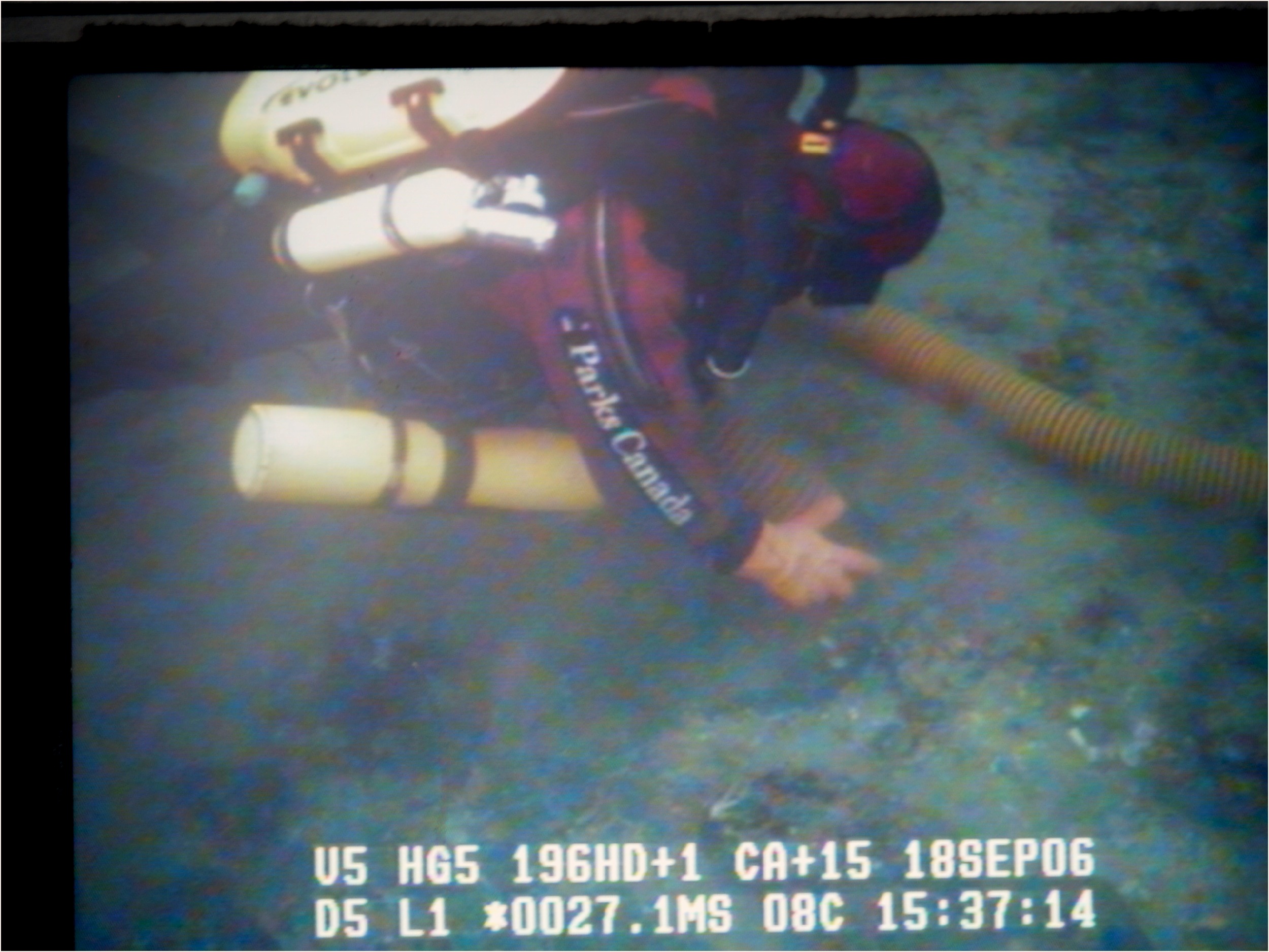
Parks Canada Underwater Archaeologist at Section Cove, 2006

Parks Canada Underwater Archaeologist at Section Cove, 2006

Parks Canada has a great underwater archaeology unit.  They have been coming out to dive on targets we’ve identified on the drowned terrestrial landscape of Haida Gwaii.  This picture shows an archaeologist with a suction hose on the bottom near (though, sadly, not on) the target we identified at the outlet of the lake that formerly sat in Section Cove, near Huxley Island. This target is at about 33 metres below the surface, while the diver here is at about 27 metres down, so on a small bump above ancient landform of interest – not a place with zero potential, but not a huge amount either, we don’t think. The hose sucked out the bottom sediments into a mesh bag which could then be lifted by crane onboard the mother ship, and screened on deck.  Therefore, it was not really a lift hose, but the system worked pretty well though as I say, it was not applied to the precise location of the high potential.  In future years once this dive team perfects their procedures for working in this difficult location and at challenging depths we hope to find some very cool archaeological stuff dating to the terminal Pleistocene / end of the last ice age.

Fieldwork Picture of the Day 5

Submersible at Section Cove

Submersible at Section Cove

A few years back I fulfilled a lifetime ambition by going down in a submersible.  This shows the Nuytten craft “Aquarius” on the surface in front of the warden’s cabin on SW Huxley Island in Gwaii Haanas (map).  We tried diving onto the ancient lake that now lies drowned at 33 metres below sea level,  more or less in front of the cabin.  This lake would have been last exposed to air about 10,000 14C years ago.  We started at about 110 metres down and then worked our way up a palaeo-river channel towards the lake, but unfortunately got off course and ended up a lot closer to the beach than we had anticipated.  These things are flown by a pilot, but the basic navigation is by transponders on the bow and stern of the mother ship which allow triangulation from a known point.  Apparently, not foolproof!  The lake we were diving onto shows huge potential for an archaeological site.  We are thinking there may have been a base camp for bear hunting at Gaadu Din 1 or 2, which are less than a kilometre away.   Possibly, too, there was a sockeye salmon fishing camp here, since the nearby caves contain numerous salmon bones from the late Pleistocene.  Anyway, it was pretty cool to go down in the submersible!

Fieldwork Picture of the Day 4

Gaadu Din 2007

Gaadu Din 2007

In 2007 we returned to Gaadu Din 1, a cave on the east side of Huxley Island (map) in Haida Gwaii.  In the front is Jenny (Jinky, Sniffer, Killer), while behind left to right you see her fellow UVIC graduate students Brendan (Binky, Loafer, Skipper, Dumper) and Adrian (Goat-Boy), while to the right is Jordan (Haida Watchman – which is not a nickname!).  The cave entrance can be glimpsed between Brendan and Adrian. Gaadu Din has revealed an incredible record of terminal Pleistocene fauna and artifacts, showing Ancestral Haida winter-time bear hunting as early as 10,600 14C years ago (13,000 calendar years ago).  Among the fauna are black bear, which still live on Haida Gwaii, but also brown (grizzly) bear and coast deer, neither of which were known to be native to these islands (deer are common on Haida Gwaii, but these are historically introduced). The deer in Gaadu Din all date to a narrow time window just prior to the onset of the Younger Dryas cold period, and presumably could not survive those harsh, snowy conditions, and had no way of repopulating the now-remote archipelago after modern climatic conditions arose.

Fieldwork Picture of the Day 3

Profiling the south wall of the Richardson Island site 2002

Profiling the south wall of the Richardson Island site 2002

The Richardson Island site (map) is a deeply stratified raised beach site.  In this picture, Duncan’s feet are at about 9300 14C years ago, while the top of the gulch is about 8400 14C years ago.  The horizontal 2 X 4 more or less demarcates the lower “Kinggi Complex” from the “Early Moresby Tradition” – the latter being marked by the introduction of bifacial technology to the stone toolkit, but also characterized by continuity between the two in many other regards.  There are some 20 major depositional units in that span, and more than 100 separable layers.  We think the site formation process is of a supra-tidal marine berm which was “pushed uphill” during a period of rising sea level — people lived on top of this berm but would periodically come to the site and find a fresh dump of finely-sorted pea gravels.   Although high-energy, the berm formation was also surprisingly gentle, allowing for numerous features such as hearths and post-moulds to preserve, not to mention pristine flakes which, in some cases could be refit one to another.  The thick reddish band just above Duncan’s head is a major berm deposit which was dumped as a single event, or several shortly-spaced events, around 9200 14C years ago.   Digging this site was a challenge – some of the layers were concreted together like iron and required some chiseling, and colour differences between some layers were often very slight.  Indeed, it became a full body experience as the texture and looseness of the gravels was very important, and on occasion, it was noted that some layers smelled differently than others.